Social media brand guidelines are the written rules that tell everyone who posts for a brand how it sounds, how it looks on each platform, how posts are made accessible and who approves what. A good set covers voice, visual rules per platform, templates, alt text and captions, community and crisis rules, approvals and consent for content you did not create.
Last updated: 19 October 2026.
This guide explains each part a buyer needs, sets out what to define per platform in a table, gives the steps to write the document and ends with a checklist you can copy. It is written by Odduel, a creative and technology agency in Barcelona and São Paulo, from the way we hand over identities in our branding work.
In short: a brand guide says who you are; social media guidelines say how that identity behaves in a feed, in a reply and in a bad week. They should be short enough to be used daily and precise enough that two people working apart produce posts that look and sound alike. Without them, every new hire, freelancer or agency invents the brand again.
What are social media brand guidelines?
Social media brand guidelines, often called a social media style guide, are a practical extension of your main brand guidelines. The main guide fixes the logo, the colours, the typefaces and the voice. The social guide translates those decisions into the formats, sizes, habits and risks of each platform you use.
They are different from a social media policy for staff. A staff policy tells employees what they may say about the company on their own accounts. Brand guidelines govern the brand’s own accounts: what is published, how it looks, how replies are written and who signs off. Many companies need both, and the two should point to each other.
If your core identity is not settled yet, start there. Our branding guide covers the foundations a social guide depends on.
Why does a brand need a social media style guide?
Social is where most people meet a brand most often, and it is also where the most hands touch it. Posts are made quickly, by different people, on small screens, often from templates someone downloaded years ago. That is how a careful identity drifts into something nobody chose.
A style guide prevents three common problems:
- Drift. Colours, crops and type sizes change post by post until the feed no longer looks like the brand.
- Slow decisions. Without agreed rules, every post becomes a discussion, and every reply to a complaint waits for whoever can decide.
- Avoidable risk. A repost of a customer’s photo without permission, a joke during a crisis or a video without captions can each harm trust more than a dull post ever could.
The gap between how you mean to be seen and how you are actually seen is the subject of our article on brand image vs brand identity. Social is where that gap opens fastest.
What should social media brand guidelines include?
The sections below are the ones a buyer should expect in a complete document. Each can be a page or two; the whole thing rarely needs more than twenty.
Voice and tone
Voice is constant; tone changes with the moment. Write the voice as three or four traits, each with a short line on what it means and what it does not mean. “Direct, not curt” is more useful than “direct” alone.
Then give tone by situation: a launch, an everyday post, a reply to praise, a reply to a complaint, a post during bad news. For each, show one example that is right and one that is wrong. Add the practical rules people actually look up: spelling (British or American), emoji use, hashtags (how many, which ones, never inside a sentence), capital letters, and words the brand never uses.
If your brand has a manifesto, quote the lines that should colour social writing. Our piece on writing a brand manifesto shows how one sets the attitude a voice section then makes practical.
Visual rules: what stays fixed and what flexes
The most useful visual section separates what never changes from what may vary. Fixed elements are usually the logo or mark, its clear space, the typefaces and the core colours. Flexible elements are the accent colours, the photography mood, the layout grid and the motion.
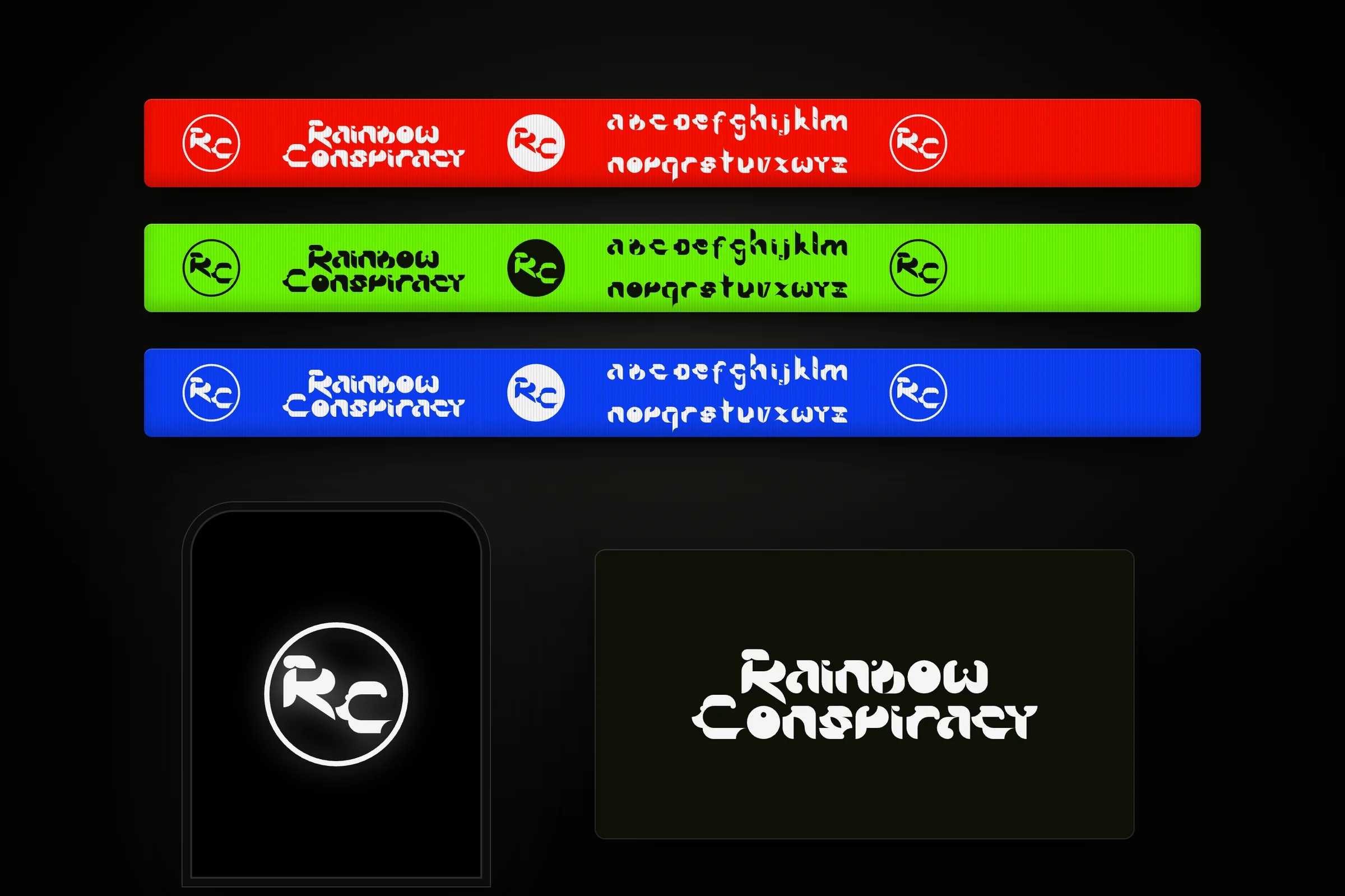
State the rules for the profile picture (usually the mark alone, centred, tested at very small sizes), the cover images, the safe areas where platform buttons cover the image, the photography style (light, crop, people or product, what to avoid) and the use of illustration or motion. For our identity for Rainbow Conspiracy, an electronic music label, the mark and wordmark stay fixed while the ground colour is allowed to change, which is the kind of rule a social guide writes down in one line with a picture.
Templates and formats
Templates are where guidelines become daily work. Provide editable files for the formats you post most: a square or portrait feed post, a carousel cover and inner slide, a story or vertical video frame, a quote card, an announcement and a link preview image.
For each template, say which parts may be edited (the headline, the picture) and which are locked (the logo position, the margins, the type sizes). Give a maximum headline length so text does not shrink to fit. Keep templates in one shared place with a version date in the file name, and retire old ones openly so nobody keeps using them.
Accessibility of posts
Accessible posts reach more people and are easier to understand for everyone. The principles come from the Web Content Accessibility Guidelines published by the W3C: text alternatives for images, captions for video, sufficient contrast and no meaning carried by colour alone.
In a social guide, turn those into rules:
- Alt text on every image where the platform allows it: describe what is shown and why it matters, in one or two sentences, without “image of”.
- Captions burned in or added as a caption file on every video with speech, checked by a person rather than left to automatic captions.
- Text in images kept short, with the same words repeated in the post itself, because text inside an image cannot be read aloud.
- Contrast between text and background checked for every colour pair in your templates.
- Hashtags written in camel case (#BrandWeek, not #brandweek) so screen readers say them as words.
- Emoji used sparingly and never in place of words, since each one is read out in full.
Community and crisis rules
Decide in advance how the brand replies, so nobody improvises under pressure. Set a target reply time for each platform, the kinds of message that get a public reply, those moved to private messages and those that are hidden or reported (abuse, spam, personal data posted in public).
Then write a short crisis plan. It names who decides when something is a crisis, the first holding statement (written now, adjusted later), the scheduled posts to pause at once, who may speak for the brand, and when to return to normal posting. A page is enough; the point is that it exists before it is needed.
Approvals and roles
List who does what: who drafts, who checks, who approves and who publishes. Many brands use two levels. Routine posts from approved templates go out after one check. Anything new, sensitive, paid or involving a partner needs a named approver.
Record who holds the account logins and two-step sign-in, who can add or remove people, and how access is removed when someone leaves. Lost access to a brand account is a common and entirely avoidable problem.
Consent for user content and GDPR
Reposting a customer’s photo or a creator’s video uses their work and, often, their image. Ask for permission in writing (a reply in the platform is a written record), credit them as they ask, and keep a simple log of what was approved and when.
Where a post shows an identifiable person, their image is personal data under the EU’s General Data Protection Regulation, so you need a lawful basis, usually their consent, and a way to take the post down if they withdraw it. Be stricter still with children. Contests and giveaways that collect names or addresses need their own privacy notice. Your guide should state these rules plainly and point to whoever handles data questions; a lawyer should confirm the details for your case.
What should you define for each platform?
Platforms differ in formats, audience habits and what the feed rewards. Rather than copying the same post everywhere, define a role and a set of rules for each one you actually use. The table shows what to decide; the answers are yours.
| What to define | Feed and photo platforms | Short vertical video | Professional platforms | Conversation platforms |
|---|---|---|---|---|
| Role of the channel | Showcase of the work and the look | Reach and personality | Credibility, hiring, partners | News, replies, quick updates |
| Voice and tone | Brand voice, lighter tone | Most relaxed tone allowed | Most measured tone | Short, direct, quick to reply |
| Visual rules | Grid or feed rhythm, crops, cover frames | Safe areas, opening frame, logo placement | Clean layouts, documents and carousels | Link previews, simple cards |
| Templates | Post, carousel, story | Video frame, title cards, end card | Carousel, announcement, job post | Quote card, link image |
| Accessibility | Alt text on every image | Captions on every video | Alt text, readable document type | Alt text, camel-case hashtags |
| Community | Comments and messages, reply times | Comments moderated often | Comments and mentions | Mentions and replies, fastest reply time |
| Approval level | Template posts: one check | New formats: named approver | Company statements: named approver | Replies within agreed limits |
| Posting rhythm | Set per week | Set per week | Set per week or month | As news arises |
Check the official help pages of each platform for current image and video sizes before you set them in templates, since they change more often than your brand does.
How do you write social media guidelines, step by step?
The document is quicker to write than most teams fear, provided the main identity is already settled. A working sequence:
- Audit what exists. Collect your last few months of posts on every account, the templates in use and any old rules. Mark what looks and sounds like the brand and what does not.
- Pick the platforms and their roles. Drop the accounts you cannot keep alive. A quiet, abandoned profile does more harm than none.
- Write the voice section. Traits, tone by situation, right and wrong examples, the small rules people look up.
- Set the visual rules. Fixed and flexible elements, profile and cover images, photography, motion, safe areas.
- Build the templates. Only the formats you post most, with locked and editable parts marked.
- Add accessibility, community, crisis, approvals and consent. Short sections, each with an owner.
- Test it. Ask two people to make the same post from the guide alone. Where their results differ, the guide is unclear.
- Publish it where people work and set a review date, usually every six to twelve months or when you add a platform.
A social media guidelines template checklist
Copy this list into your own document and tick each line when it has an answer. It works as a social media guidelines template for most brands.
Foundations
- Link to the main brand guidelines and the current logo files
- The platforms the brand uses, and the role of each
- Owner of the document and the next review date
Voice
- Three or four voice traits, each with “is” and “is not”
- Tone for launches, everyday posts, praise, complaints and bad news
- Spelling, emoji, hashtag and capital letter rules
- Words and topics the brand avoids
Visual
- Fixed elements: mark, clear space, typefaces, core colours
- Flexible elements: accents, photography, layouts, motion
- Profile picture, cover images and safe areas per platform
- Photography and video style, with examples to follow and to avoid
Templates
- Editable files for every format used, with locked parts marked
- Maximum headline lengths
- One shared folder, version dates, retired files removed
Accessibility
- Alt text rule and examples
- Captions on every video with speech, checked by a person
- Contrast checked for every template colour pair
- Camel-case hashtags, sparing emoji, short text in images
Community and crisis
- Reply times and what is answered in public or in private
- Moderation rules: what is hidden, reported or blocked
- Crisis owner, holding statement, pause list for scheduled posts
Approvals and access
- Who drafts, checks, approves and publishes
- Which posts need a named approver
- Who holds logins and two-step sign-in, and the leaver process
Consent and data
- Written permission and credit for every repost
- A log of approvals for user and creator content
- Rules for identifiable people, children, contests and giveaways
- Contact for data and legal questions
How long should social media guidelines be?
As short as they can be while still answering the questions people ask every week. For most brands that is ten to twenty pages, mostly pictures and examples. A long document nobody opens protects nothing.
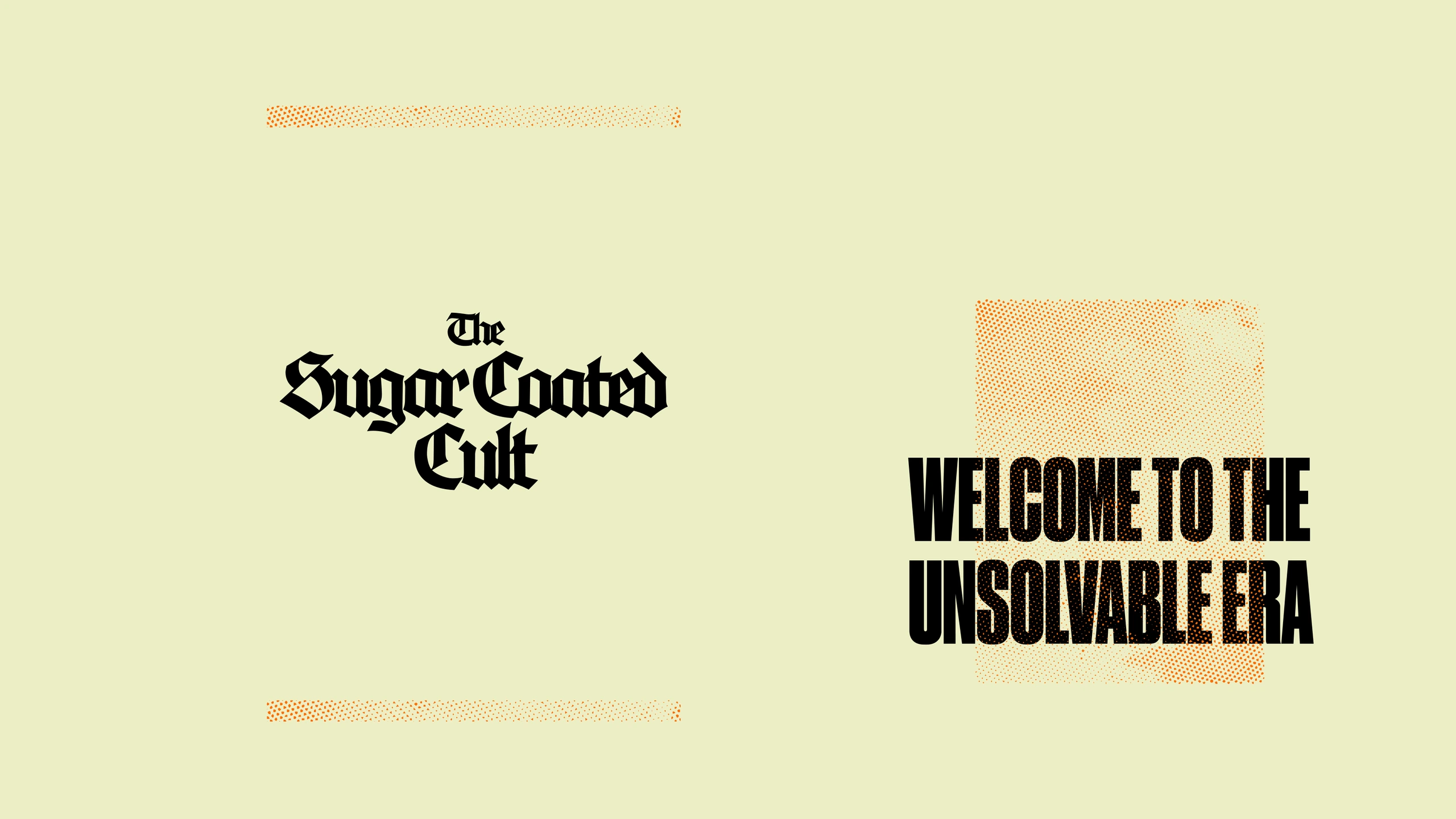
A useful shape is a one-page summary at the front (voice traits, the fixed visual rules, the approval levels), the detail behind it and the templates linked rather than pasted in. For our identity for The Sugar Coated Cult, the fixed pairing of the blackletter wordmark with condensed capitals is the kind of rule that belongs on that first page, because it is what makes a post recognisable before anyone reads it.
Questions people ask
What is the difference between brand guidelines and social media guidelines?
Brand guidelines define the identity itself: logo, colours, typefaces, voice and values. Social media guidelines apply that identity to each platform, adding formats, templates, alt text and caption rules, reply times, crisis steps and approvals. The social guide should never contradict the main guide; it should link to it and only add what social needs.
Who should write a social media style guide?
The people who own the brand and the people who post daily should write it together. Brand or creative leads set the voice and visual rules; the social team adds formats, habits and community rules; legal or data contacts check the consent section. An agency can draft it, but your team must test it, since they will use it every day.
Do small businesses need social media brand guidelines?
Yes, though a short version is enough. A small business often has one person posting, but that person changes, takes holidays or hands over to a freelancer. Five pages covering voice, fixed visual rules, a few templates, alt text and captions, and who approves what will keep posts consistent and save time on every new post.
How often should social media guidelines be updated?
Review them every six to twelve months, and whenever you add a platform, refresh the identity or change who approves posts. Platform image sizes and features change often, so check the template section most. Keep a version date on the document and on every template, and retire old files openly so nobody keeps using them.
What should a social media crisis plan include?
It should name who decides that something is a crisis, who may speak for the brand and who approves statements. It needs a holding statement written in advance, a list of scheduled posts to pause at once, rules for replying to comments in that period and a clear point at which normal posting resumes. One page is usually enough.
If your identity is settled, use the checklist above to write the first version this month and test it with two people. If the identity itself still needs work, or you want the guidelines and templates made with it, see our branding service or tell us about your brand.
Further reading: How to create brand guidelines people actually use, Micro influencer cost: what creators and agencies charge for.