Brand identity is what a company decides and controls: its positioning, name, voice, logo, colours, type and the rules for using them. Brand image is what people actually believe about the company, formed from every encounter they have with it. Identity is the intention; image is the result, and the work of branding is to make the two match.
This guide sets brand image vs brand identity side by side, explains why the gap between them opens, shows how to measure each and gives a five-step method to close it, with a short audit you can run with your team this week. For the work itself, see our branding service.
Brand image vs brand identity in short
| Brand identity | Brand image | |
|---|---|---|
| What it is | The brand as the company defines it | The brand as people perceive it |
| Who owns it | The company | The audience |
| Made of | Strategy, name, voice, visual system, guidelines | Experiences, reviews, word of mouth, news, comparisons |
| How it changes | When the company decides | Slowly, with every encounter |
| How it is measured | Consistency audits, use of the guidelines | Interviews, reviews, search terms, lost deals, surveys |
| The question it answers | “Who do we say we are?” | “Who do they think we are?” |
A simple way to hold the two apart: identity is the signal a company sends, image is the signal received. Everything between sender and receiver can distort it.
What is brand identity?
Brand identity is the set of deliberate choices that make a company recognisable and distinct. It has two layers, and the order between them matters.
The strategic layer
What the company stands for, for whom, and against whom: positioning, purpose, personality and the few messages it repeats. This layer is mostly words. It decides which clients the company wants, which it turns away, and what it will be known for in three years. A strategic layer is good when it is specific enough to say no to things. If any company in your sector could use your values statement unchanged, it is not yet an identity.
The expressive layer
The name, the logo, colour, typography, photography and illustration style, motion, tone of voice, and the guidelines that keep them consistent across a website, a proposal, an invoice, a social post and a shop window. This is the layer people usually mean when they say “branding”, and it only works when it carries the decisions of the first layer.
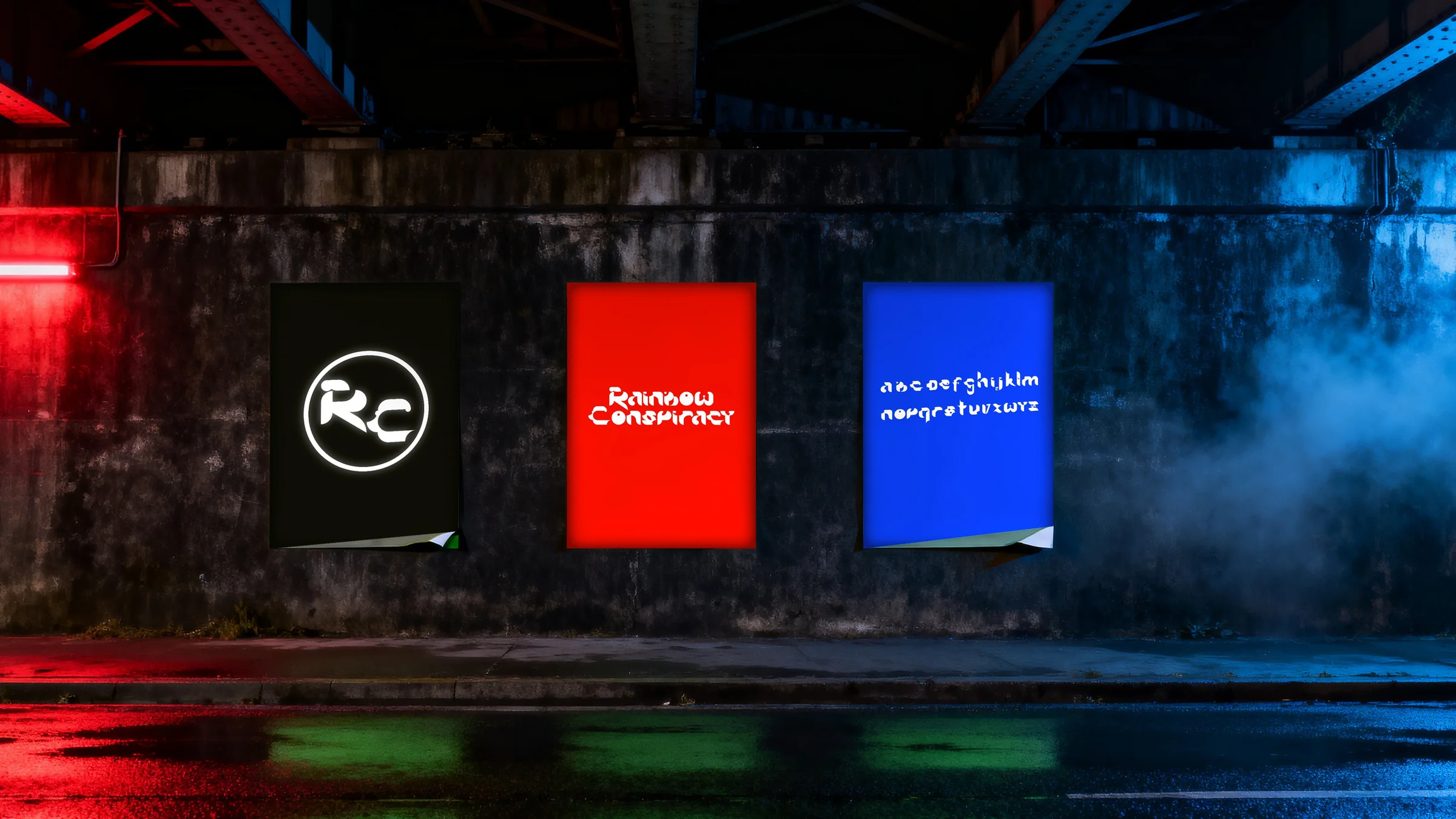
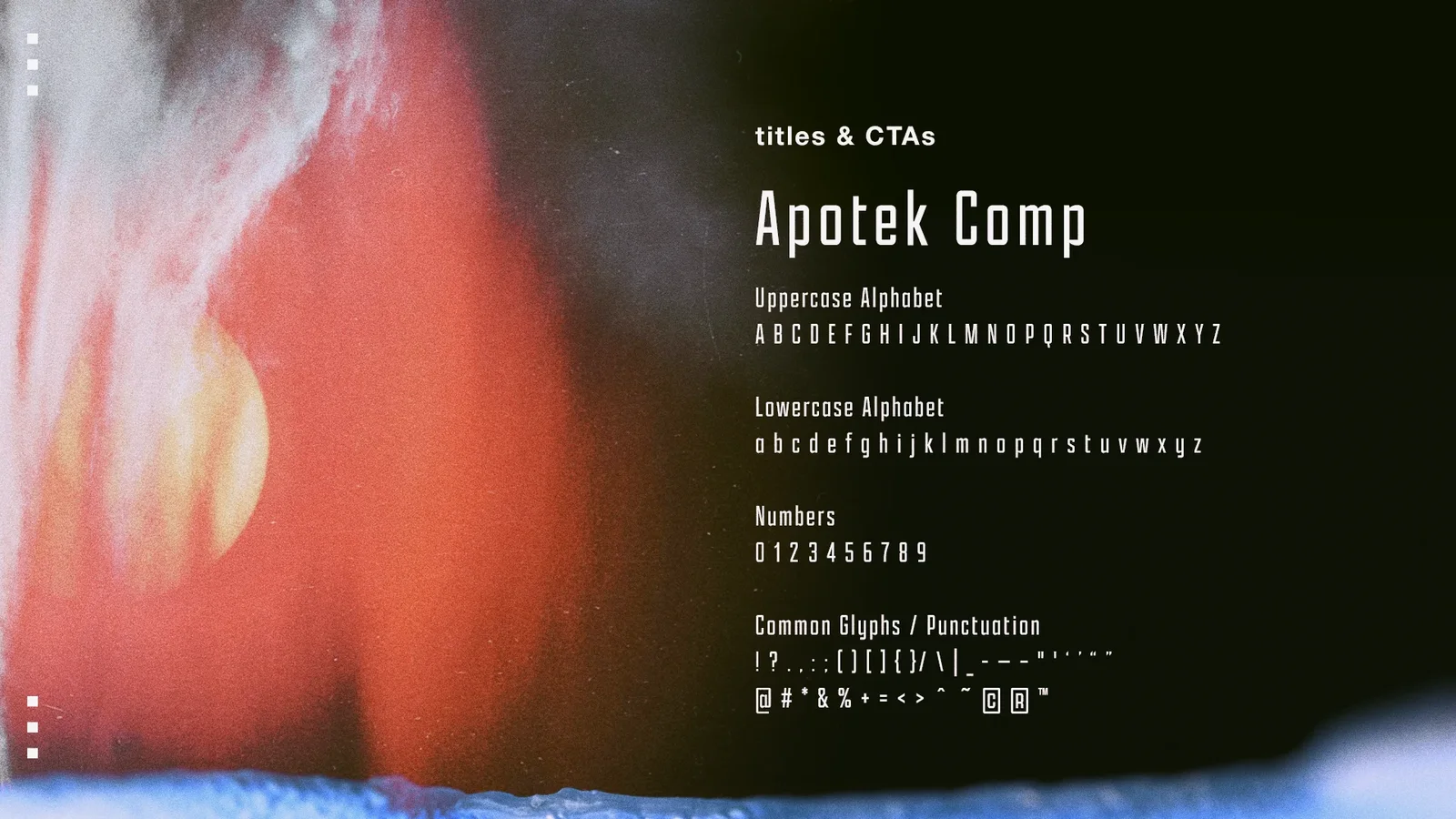
When we built the identity for Rainbow Conspiracy, an electronic music label, the visual system came after the decisions about who the label speaks to and how it sounds. The display alphabet, the mark and the three colours of light then carried those decisions onto posters, record sleeves, wristbands and a phone pass, so that every surface tells the same story.
What identity is not
Identity is not a logo file, and it is not a mood board. A company can own a beautiful logo and still have no identity, because nobody has decided what it should mean or how it should be used. It is also not a slogan: a line on the home page is one output of the identity, not the identity itself.
What is brand image?
Brand image is the sum of what people remember, feel and say about a company. It is built from far more than the identity: how quickly an email is answered, what a proposal looks like, what a former employee says, a review on a directory, a comparison article, the way a complaint was handled, a price, a delay.
Three things make image hard to manage.
- It is plural. Customers, prospects, employees, partners, investors and the press each hold a different image of the same company.
- It lags. A company that has changed still carries the image of what it used to be, often for years. A rebrand changes the identity on the day of launch; the image follows only as people meet the new company again and again.
- It forms where marketing is absent. Most of the moments that shape image happen in service, product, delivery and conversation, not in advertising.
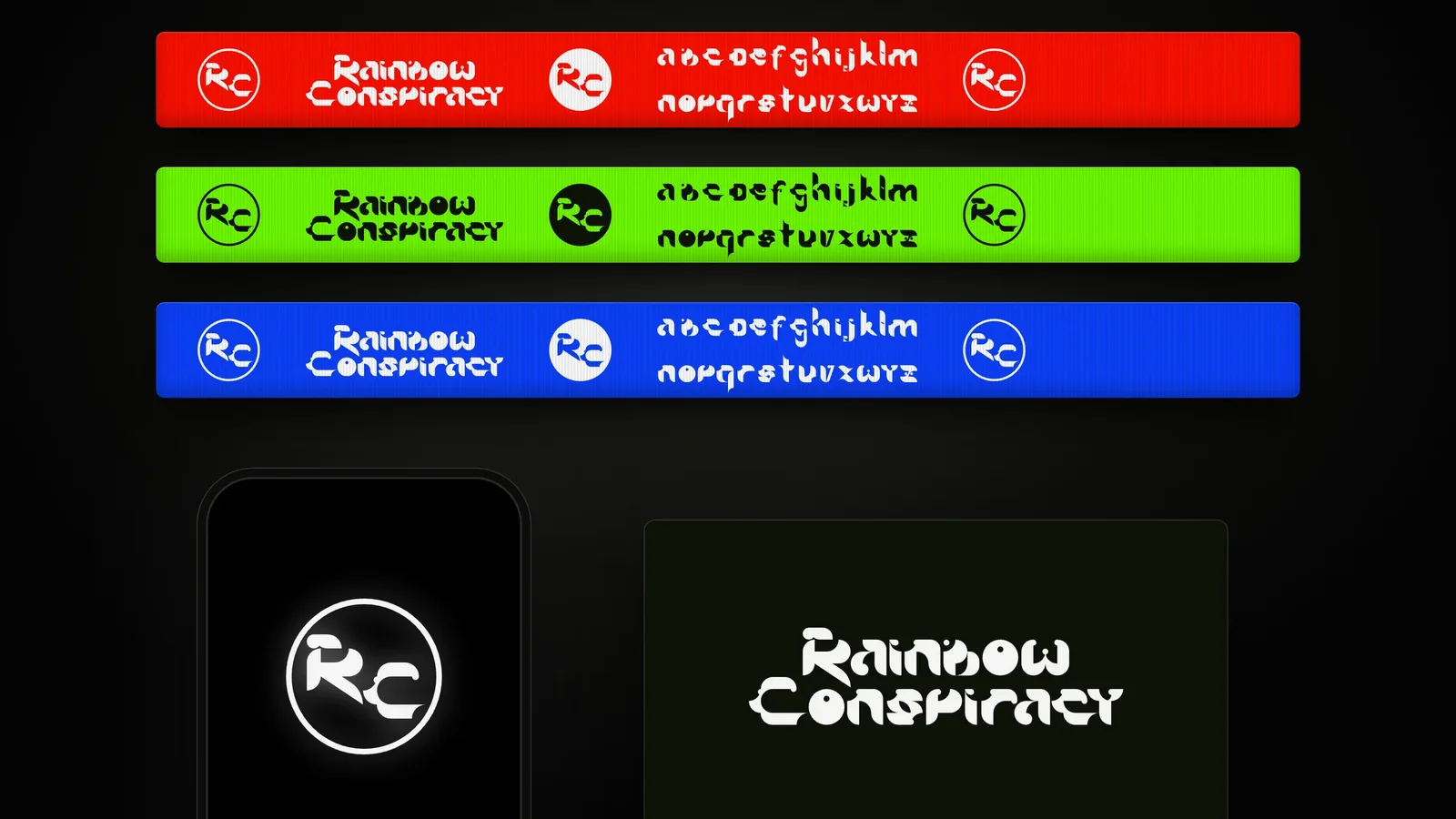
Image is not the same as reputation
The two overlap, but they are not identical. Reputation usually refers to trust and esteem built over a long time: is this company reliable, honest, good at what it does? Brand image is wider. It includes reputation, and also style, personality and the associations people make: modern or traditional, playful or serious, expensive or accessible.
How do identity and image relate?
Identity and image are not opposites; they are two ends of one process. When they match, a company is understood the way it intends, marketing gets easier, and prices are easier to defend. When they drift apart, every message costs more, because it first has to undo what people already believe.
| Situation | Identity | Image | What it usually means |
|---|---|---|---|
| Aligned | Clear and consistent | Matches the intention | Keep going and protect consistency |
| Identity ahead | Recently renewed | Still the old company | Give it time and proof; repeat the new story |
| Image ahead | Dated or vague | Better than the identity | Clients value you despite the brand; renew the identity to match |
| Disconnected | Promises one thing | Experience says another | Fix the experience first; a new logo will not help |
The “image ahead” case is more common than it sounds. Many owner-led companies are loved by their clients for the quality of the work, while their website, proposals and social profiles look like they belong to a smaller, older business. Prospects who have not yet worked with them see only the identity, and judge on that.
Why does the gap between image and identity open?
- The identity was never finished. A logo was made, but positioning and voice were not, so every team and every supplier improvises.
- The guidelines are not used. They exist as a document nobody opens, or they describe the logo in detail and say nothing about voice, photography or layouts.
- The experience contradicts the promise. “Premium” on the website, then a late delivery and no apology.
- The company changed and the brand did not. New services, new markets, new size: old identity.
- Others tell the story. Directories, reviews, comparison pages and AI assistants describe the company in their own words when the company’s own words are missing or unclear.
- Too many voices. Sales, support, recruitment and social media each speak in a different register, and the audience hears several companies.
How do you measure brand identity?
Identity can be audited inside the company, in a morning.
- Collect twenty recent touchpoints: website pages, a proposal, a contract, social posts, an email signature, an invoice, a job advert, signage, packaging.
- Check each against the guidelines: logo use, colour, type, photography, layout, tone of voice, key messages. Mark each as consistent, close or off.
- Ask five colleagues in different roles to describe the company in one sentence, without preparing. Count how many say the same thing.
- Read the positioning statement aloud next to two competitors’ home pages. If the three are interchangeable, the strategic layer needs work.
The result is a simple score (how many touchpoints are consistent) and a list of the gaps that the company itself has created. The website usually carries the most weight, because it is where most prospects meet the identity first; if it is due for renewal, our guide to what a website costs helps set the budget.
How do you measure brand image?
Image has to be measured outside the company, with methods that let people use their own words.
- Client interviews. Ask recent clients why they chose you, what nearly stopped them, and how they would describe you to a colleague. Write down their exact words.
- Reviews and directories. Read what clients write, not the star rating. Note the adjectives they use.
- Search. In Google Search Console, look at the queries that contain your name. The words people add to it (“price”, “reviews”, “careers”, a city) show what they want to know about you.
- AI assistants. Ask two or three assistants to describe your company and its competitors. The answers show which public sources shape your image.
- Lost deals. Ask prospects who chose someone else why. These answers are often the clearest picture of the image you have.
- A short yearly survey to a sample of clients and prospects, with the same three or four questions every year, so the results can be compared over time.
Then write two columns: the words you use about yourself, and the words others use about you. The difference between the two lists is the gap you need to close.
How do you close the gap? Five steps
1. Decide what is true
Choose the image you want and can honestly deliver. A brand promise that the experience cannot keep widens the gap rather than closing it. If you want to be known for speed, check that you are fast; if you want to be known as premium, check that every detail can carry the word.
2. Fix the experience before the expression
If clients complain about response times, unclear invoices or missed dates, no identity work will help until those change. Start with the two or three moments that clients mention most often, good or bad.
3. Renew the identity where it is weak
Positioning first, then voice, then the visual system, so each layer serves the one before. A new logo on an unclear position produces a well-designed version of the same confusion.
4. Make consistency easy
Short guidelines that answer real questions, templates for the documents people make every week, a shared library of approved files, and one named person who answers “can I use this?”. Consistency fails when it depends on memory.
5. Repeat and measure
Say the same few things for longer than feels necessary: the audience notices repetition far later than the company does. Measure the image again in six to twelve months with the same questions, and compare.
A gap audit in five questions
Run this with your leadership team. Each “no” is a place where identity and image have drifted apart.
- [ ] Can five colleagues describe the company in the same sentence?
- [ ] Do twenty recent touchpoints follow the guidelines?
- [ ] Do clients use the words we use about ourselves?
- [ ] Does the everyday experience keep the promise the identity makes?
- [ ] Do directories, reviews, search results and AI assistants describe us the way we would?
When should you rebrand, and when not?
A rebrand changes the identity. It is the right answer when the identity no longer describes the company: a new offer, a new market, a merger, a name that limits growth, or a visual system that cannot work on the channels you now use. It is the wrong answer when the problem is the experience. In that case a new identity raises expectations that the company still cannot meet, and the gap grows.
A useful test: if your best clients describe you better than your own website does, the identity is behind and a rebrand will help. If your clients describe a company you do not recognise, look at the experience first.
When you do choose an agency for the work, judge it on evidence rather than on its age or size; our guide to choosing between a new and an established agency sets out how.
Questions people ask
What is the difference between brand image and brand identity?
Brand identity is how a company defines and expresses itself: its strategy, name, voice and visual system. Brand image is how people actually perceive the company, formed by every experience they have with it. The company controls the identity; the audience holds the image.
Which comes first, brand identity or brand image?
Identity comes first, because it is the company’s deliberate choice. Image forms over time in response to that identity and, above all, to the experience the company delivers.
Can a company control its brand image?
Not directly. It can influence image by making its identity clear and consistent, and by making sure products, service and communication keep the promise the identity makes. Over time, consistent experience is what moves the image.
How do you measure brand image?
Through client interviews, reviews, the search terms people use with your name, what AI assistants say about you, the reasons given for lost deals, and a short survey repeated every year with the same questions.
Is brand image the same as reputation?
They overlap. Reputation usually means trust and esteem built over a long time; brand image is wider and includes style, personality and the associations people have with a brand.
Run the five-question audit with your team, then write the two columns of words side by side. If the gap points to the identity, our branding service starts with positioning and builds the visual system from it; if you would like a second opinion on the results, talk to us about your brand.
Further reading: How to write a brand manifesto, with a structure to follow, Social media brand guidelines: what to include, How much does branding cost in 2027? What you pay for, How to create brand guidelines people actually use, Brand positioning: a definition and a worked method.