
Brand positioning is the place a brand chooses to hold in the mind of a specific audience, defined by the category it competes in, what makes it different and why anyone should believe that difference. A good positioning is a decision, written in one short statement, that every later choice about name, identity, words and product can be checked against. This guide gives a clear definition, separates positioning from identity and messaging, walks through a five-step method with a fill-in template and a worked example, and ends with how to test it and the mistakes to avoid.
Last updated: 21 October 2026.
What is brand positioning?
Positioning answers one question: when the right person thinks of this kind of product or service, why should they think of you, and what should they think? It is not a slogan and it is not a logo. It is the agreed idea behind both.
The word is useful because it is relative. A brand is never positioned in a vacuum: it is positioned against the alternatives the buyer already knows, including doing nothing or doing it themselves. That is why every sound positioning names three things at once: who it is for, what it is compared with, and what makes it the better choice for that person.
At Odduel, a creative and technology agency in Barcelona and São Paulo, positioning is the first piece of work in any branding project, because it is the brief that the identity, the website and the copy are all judged against later.
In short: positioning is a choice about who you serve and why you win with them. It is written down before anything is designed. It is narrow on purpose. It is internal first, and the public only ever sees its effects. If it cannot be checked against a real decision, it is not finished.
Why does brand positioning matter to a buyer?
A clear position makes every later decision cheaper. Designers know what the identity has to express. Copywriters know which claims to lead with and which to leave out. Sales teams know which prospects to chase and which to decline. Without it, each of those people invents a positioning of their own, and the brand says slightly different things in every place.
It also protects the budget. Most of the cost of a rebrand sits in making things: the identity system, the website, the templates, the launch. When positioning is skipped, those things are made, judged by taste, and then made again. Our guide to what branding costs explains how that rework shows up in a quote.
Finally, it gives a small brand a way to compete with a larger one. You rarely beat a bigger competitor at being everything to everyone. You can beat them at being exactly right for one group of buyers with one particular need.
Brand positioning, brand identity or messaging: what is the difference?
These three terms are often used as if they meant the same thing. They are layers, and they are made in order: positioning first, then the identity and messaging that express it.
| Brand positioning | Brand identity | Messaging | |
|---|---|---|---|
| What it is | The chosen place in the buyer’s mind | The visual and verbal system that makes the brand recognisable | The words used to explain the brand in each situation |
| Question it answers | Who is this for and why choose it? | What does it look and sound like? | What do we say, to whom, where? |
| Typical outputs | Positioning statement, audience, frame of reference, proof points | Logo, colour, type, imagery, tone of voice, guidelines | Tagline, value proposition, key messages, page and pitch copy |
| Who sees it | Mostly internal | Everyone | Everyone |
| How often it changes | Rarely: every few years | Occasionally, refreshed over time | Often, by campaign and channel |
| Judged by | Is it true, different and relevant? | Is it distinctive and consistent? | Is it clear and persuasive for this reader? |
The practical rule: you can argue about a typeface, but the argument should end by asking which option better expresses the positioning. Once the identity is set, a brand guidelines document keeps it consistent, and a brand manifesto can put the beliefs behind the positioning into words people outside the company will read.
How do you position a brand?
The method below takes a position from blank page to a statement you can test. Each step produces one written answer. Do them in order: each depends on the one before.
- Define the audience. Name the people you most want to win, by situation and need rather than age bracket alone.
- Choose the frame of reference. Decide which category or set of alternatives you want to be compared with.
- Find the point of difference. State the one thing you do that matters to this audience and that the alternatives do not do as well.
- Gather the reason to believe. List the facts that make the difference credible: how you work, what you own, what you have done.
- Write the statement. Put the four answers into one sentence, then cut it until every word earns its place.
Step 1: define the audience
Start with the buyer whose problem you solve best, not with everyone who might buy. A useful description names a situation (“owners of independent shops replacing a tired shopfront”), a need (“look established without looking like a chain”) and a trigger (“they are about to open a second location”).
Write down who you are deliberately not for. That sentence is often the most useful one in the whole exercise, because it is where the choice becomes real.
Step 2: choose the frame of reference
The frame of reference is the category the buyer puts you in when they compare. It sets their expectations before you say anything. A coffee subscription framed as “a speciality roaster” is compared with other roasters; framed as “a better morning routine” it is compared with the café on the corner.
Pick the frame where your difference looks largest and is still believable. A frame that is too broad makes you invisible; one that is too narrow has no buyers in it.
Step 3: find the point of difference
The point of difference must pass three tests at once. It must be relevant: the audience cares about it when choosing. It must be distinctive: the alternatives in your frame do not offer it, or not as well. And it must be deliverable: you can keep the promise every time.
Beware of differences that every competitor also claims, such as quality, passion or service. They are table stakes in most categories. Ask instead what you would lose if a competitor copied you tomorrow.
Step 4: gather the reason to believe
A claim without proof is decoration. The reason to believe is the evidence: a process, a guarantee, a material, an ingredient, a track record, a team’s specific expertise. Write down only what you can show today.
If you cannot find a reason to believe, the point of difference is a wish. Either change the claim or change the business so that the proof exists.
Step 5: write the positioning statement
Combine the four answers into one sentence using the template in the next section. The first version will be long and full of adjectives. Cut it. A finished statement is short enough to say aloud in one breath and specific enough that a competitor could not sign it.
A brand positioning statement template
Fill in the brackets in order. The structure forces the four choices of the method into a single line.
For [audience, described by situation and need], [brand] is the [frame of reference] that [point of difference], because [reason to believe].
Two rules keep it honest. First, every bracket must contain something that could be wrong: if no one could disagree with it, it says nothing. Second, the statement is a tool, not a tagline. It is written for the people building the brand, so plain words beat elegant ones.
A worked example (fictional)
The brand below is invented for this article to show the method. It is not a client of ours and not a real company.
Lumen Ledger is a fictional bookkeeping service. Working through the five steps:
- Audience: founders of small creative studios, five to twenty people, who do their own books at night and dread the periodic VAT return.
- Frame of reference: accountancy firms, not bookkeeping software. Being compared with a firm makes its speed look remarkable; being compared with software would make its price look high.
- Point of difference: books closed every week, not every quarter, so the founder always knows where the money is.
- Reason to believe: a fixed weekly routine with a named bookkeeper, read-only access to the studio’s bank feed, and a short report every Monday morning.
The statement: For founders of small creative studios who run their own books after hours, Lumen Ledger is the accountancy service that closes your books every week instead of every quarter, because a named bookkeeper works from your live bank feed and sends a one-page report every Monday.
Notice what it leaves out: no “passionate”, no “innovative”, no list of every service offered. Every later decision can be checked against it. Should the website lead with software features? No: the frame is a firm. Should the identity look playful? Possibly, but calm and dependable first, because the promise is regularity.
What does brand positioning look like by strategy?
Most positions are built on one of a handful of familiar foundations. Knowing them helps you see which one you are actually choosing.
| Positioning strategy | The difference it claims | Works when | Risk |
|---|---|---|---|
| Specialist | Best for one audience or need | The audience is large enough and underserved | Growth needs a second position later |
| Approach or process | A different way of doing the job | The process changes the result the buyer feels | Easy to copy if it is only a method |
| Experience | How it feels to buy and use | The category is functional and dull | Hard to prove before purchase |
| Price and value | More for less, or worth paying more | You control costs or quality at the source | A price position invites a price war |
| Values and belief | What the brand stands for | Buyers choose partly on identity | Must be lived, or it reads as empty |
| Challenger | Against the category’s habits | The leader has a real weakness | Needs constant energy to stay credible |
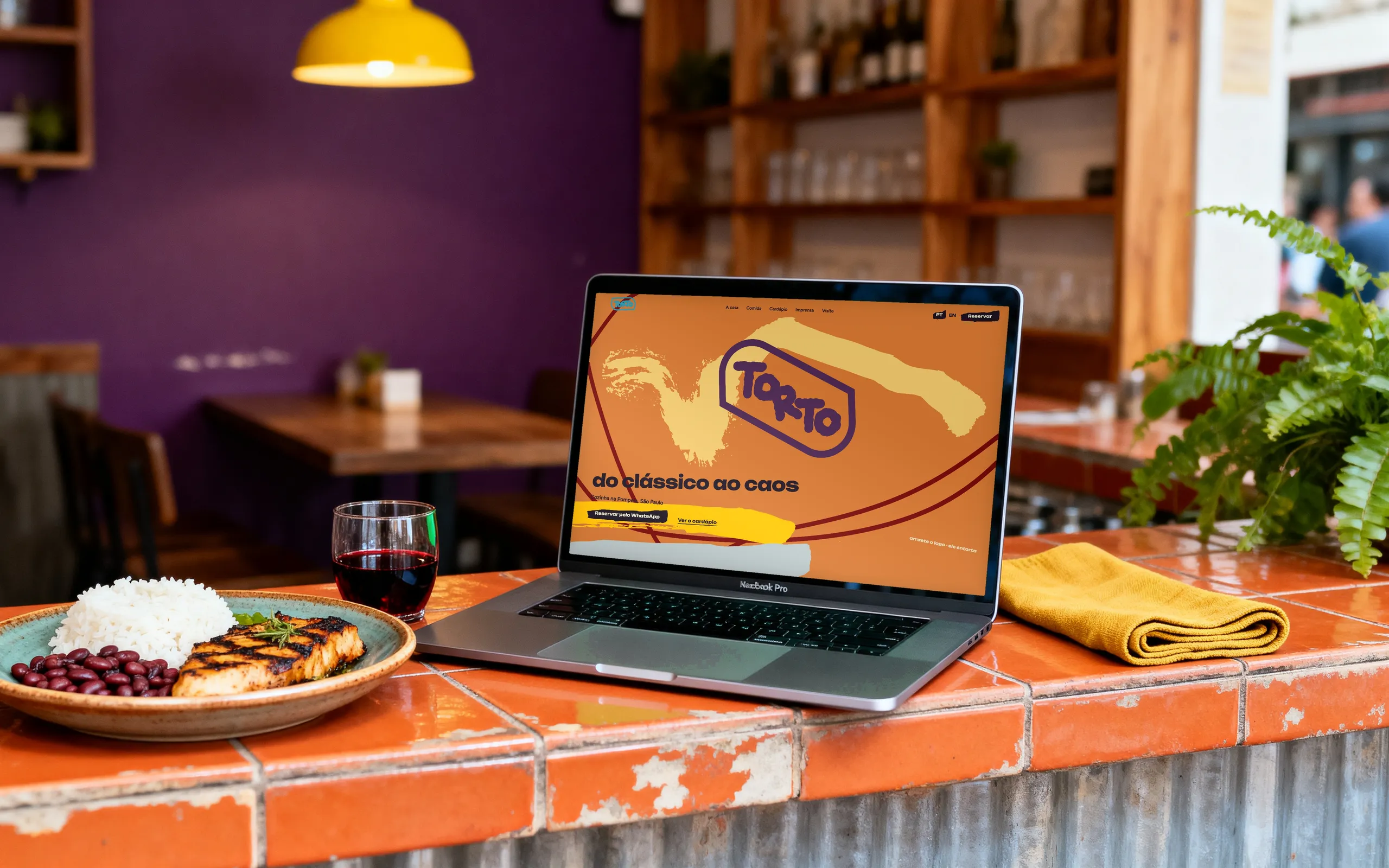
Our own projects show how the strategy shapes the visible work. MONU Molduras, a framing shop, and Torto Cozinha, a restaurant, needed identities that made their own character legible from the street and the screen; the positioning came first and set what each identity had to say.
How do you test your positioning?
A statement that sounds right in a workshop can still fail in the market. Test it before money goes into design and build. None of these tests needs a large research budget.
- The swap test. Replace your brand’s name with a competitor’s. If the statement still reads as true, it is not a position yet.
- The decision test. Take five real decisions coming up (a hire, a feature, a partnership, a campaign, a price change) and ask what the statement says about each. If it says nothing, it is too vague.
- The customer test. Read the point of difference aloud to five people from the audience and ask what they would expect. Listen for whether they care, not whether they agree.
- The proof test. For every claim, point to the evidence. Anything you cannot show moves to a list of things to build.
- The sales test. Ask the people who sell or answer enquiries whether it describes why customers already choose you. If it describes a different business, it is aspiration, not positioning.
After launch, watch the signals that tell you whether the position is landing: the words customers use when they describe you, the enquiries you receive and those you do not, and whether the audience you named is the audience that arrives.
What are the common brand positioning mistakes?
Most failed positions fail for one of a few reasons, and almost all of them come from avoiding a choice.
- Trying to be for everyone. A position that excludes no one attracts no one in particular.
- Claiming table stakes. Quality, care and good service are expected, not chosen.
- Confusing positioning with a tagline. The statement is for the team; the tagline is one expression of it.
- Writing the aspiration, not the truth. If the business cannot deliver the difference today, customers find out quickly.
- Changing it every campaign. Messaging changes often; the position should hold for years.
- Skipping the frame of reference. Without it, the buyer chooses the comparison for you, and rarely the one you would pick.
- Leaving it in a slide deck. A position that never reaches the identity, the website and the hiring brief has not been used.
Questions people ask
What is a brand positioning statement?
A brand positioning statement is one internal sentence that records the choices behind a brand: who it is for, which category it competes in, what makes it different and why that difference is believable. It guides the identity, copy and product decisions. It is not usually published, and it is not the same as a tagline.
How long should a positioning statement be?
Short enough to say aloud in one breath, which usually means one sentence of thirty to fifty words. If it runs longer, it is probably listing services or stacking adjectives. Cut until every word reflects a choice someone could disagree with, then check it still names the audience, frame, difference and proof.
What is the difference between positioning and a value proposition?
Positioning is the overall place a brand holds against its alternatives in one audience’s mind. A value proposition is the promise of value made to a buyer, often for a specific product or offer. A brand usually has one positioning and several value propositions, each written to express that positioning for a different situation.
How often should a brand revisit its positioning?
Review it once a year and change it only when something fundamental moves: the audience, the category, a competitor taking your difference, or the business itself changing. Messaging can change every campaign, but a position needs years of consistent use to settle in people’s minds. Frequent repositioning usually resets that work to zero.
Can a small business or start-up do brand positioning itself?
Yes. The five steps need honesty and time more than budget, and founders know their customers well. An outside view helps most with the frame of reference and the swap test, where insiders tend to be too generous. Many start with a short workshop, then bring in help to express the position as an identity.
If you have worked through the method and have a statement that survives the swap and decision tests, the next step is to turn it into an identity, a website and words that say the same thing everywhere. Our branding service starts with exactly this positioning work before any design begins. Talk to us about your project and we will send a fixed quote after a short brief.