For most companies, the choice between an agency, a freelancer or an in-house team for a website redesign comes down to scope, deadline and what happens after launch. An agency suits a redesign that touches brand, content, design and code at once; a freelancer suits a defined piece of work with a clear owner on your side; an in-house team suits a site that changes every week and is already central to how you sell. That is the short answer to agency vs in-house website redesign.
This guide adds the third option most comparisons leave out, sets all three side by side in a decision table, looks at the true cost of each beyond the price on the quote, describes the hybrid set-ups that often work best, and ends with a checklist you can use in your next meeting.
Agency vs in-house website redesign in short
If you only read one section, read this one.
- Choose an agency when the redesign is a project with a start and an end, when it involves positioning, content and visual identity as well as code, and when you need it live within a few months without hiring.
- Choose a freelancer when the scope is narrow and well defined (a new template, a performance fix, a set of landing pages), and someone in your company has the time and the knowledge to brief, review and accept the work.
- Choose in-house when the website is a product in its own right, changes weekly, and you can afford to hire, manage and keep the people it needs for years, not months.
Many companies end up with a mix: an agency for the redesign itself, then an in-house owner and a light support contract for what follows. We come back to that below.
Three options compared
Each option buys you something different. The table below compares them on the four questions that usually decide the matter.
| Agency | Freelancer | In-house team | |
|---|---|---|---|
| Budget | Fixed or phased project fee; highest single invoice, no hiring costs | Lowest day rate; total depends on how well the scope holds | Salaries, benefits and tools every month, whether there is a redesign or not |
| Deadline | Fastest for a full redesign: several disciplines work in parallel | Good for small scopes; slow when one person must cover everything | Slowest to start (hiring), fastest for small changes once the team exists |
| Skills | Strategy, content, design, development, SEO and testing available at once | Deep in one or two crafts; the rest is on you | Whatever you hire; gaps show when someone leaves or is on holiday |
| Risk | Dependence on an outside partner; mitigated by a clear handover | Single point of failure; illness or a new client can stop the work | Hiring risk, retention risk and the cost of a wrong hire |
| Best for | Full redesigns, rebrands, new markets | Defined tasks with an internal owner | Sites that are the product |
The agency
An agency brings a set of crafts that rarely exist in one company: strategy, information architecture, copy, UX and UI design, front-end and back-end development, SEO, accessibility and quality checks. On a full redesign they work in parallel, which is why a well-run agency project is usually the fastest route from an old site to a new one.
What you give up is some control over the day-to-day, and you take on a dependency. A good agency reduces both with a clear process, shared files from the first week and a proper handover at the end: documentation, access, training for the people who will edit the site. Our article on how to choose between a new agency and an established one covers what to look for.
The freelancer
A good freelancer is often the best value per hour in the market. They are excellent when the problem is clear: a developer to rebuild templates on a design you already have, a designer to refresh pages within an existing system, a copywriter for a set of service pages.
The limits appear when the brief is wide. A redesign that needs strategy, design, content and code from one person either takes much longer or quietly drops some of those parts. Someone on your side also has to act as project manager: writing the brief, chasing feedback, testing and deciding. If nobody has that time, the cheaper option becomes the slower and dearer one.
The in-house team
An in-house team knows the business better than anyone outside it can. It answers quickly, understands the product and the sales cycle, and builds knowledge that stays in the company.
It is also the slowest option to set up and the most expensive to keep. A complete web team means several roles, and few companies need all of them full time once the redesign is done. The usual pattern is a capable internal developer or marketer asked to deliver a redesign alongside their normal work, which stretches the timeline and the person.
What is the true cost of each option?
The figure on a proposal or a payslip is only part of what a redesign costs. Before you compare, list the costs that do not appear on the first page.
Hiring and onboarding
An in-house team carries recruitment costs (time, fees, job boards), notice periods, onboarding and the months before a new person is fully productive. In much of Europe, employer social contributions and notice rules add more on top of the gross salary than many founders expect. None of this appears in an agency or freelance quote, which is the main reason a project fee often looks higher than it is.
Management time
Every option needs someone on your side. With an agency, that is a decision-maker for a few hours a week. With a freelancer, it is closer to a part-time project manager: briefing, reviewing, coordinating other suppliers. With an in-house team, it is line management, holidays, reviews and career paths. Put a value on this time; it is real money even when it is not invoiced.
Tools and licences
Design software, a hosting plan, staging environments, testing devices, analytics, SEO tools, a password manager and the content management system’s paid add-ons. An agency or an established freelancer already pays for these and spreads the cost across clients; an in-house team pays the full price.
What happens after launch
A redesign is not finished on launch day. Security updates, small fixes, new pages and content changes continue. Ask every option the same question: who does this in the six months after launch, and at what cost? Our guide to how much a website costs breaks down the costs that continue after the first invoice, and a maintenance and support contract is one way to cover them without hiring.
The cost of getting it wrong
The largest cost is often a redesign that has to be redone: a site that looks new but converts no better, loses search rankings because redirects were missed, or cannot be edited by the people who own it. Weigh each option by how likely it is to avoid those outcomes, not only by its price.
How does AI change the sums?
AI has changed the economics of a redesign, and it is fair to ask how. In our work, AI carries the repetitive production: components of the design system, first versions of front-end code, image preparation, test runs and first-pass translations. That makes a project cost less and reach launch in weeks rather than months.
What it does not replace is the work that decides whether a redesign succeeds: strategy, structure, concept, art direction, the brand’s voice, the final craft and the review of every page. That is where the budget should go. In practice this narrows the gap between options: an agency that uses AI well can be closer in price to a freelancer than it used to be, while still bringing the full set of crafts.
Which hybrid set-ups work?
The choice is rarely all or nothing. These four set-ups are the ones we see succeed most often.
- Agency builds, in-house owns. The agency handles strategy, design and build; an internal marketer or developer is involved from the first workshop and takes over editing after launch. This is the most common and, in our experience, the most reliable pattern.
- In-house leads, agency fills the gaps. An internal team keeps control and brings in an agency for the crafts it lacks: brand and visual design, UX research or a complex integration.
- Agency plus support contract. For companies without a web role, the agency stays on a small monthly contract for updates, security and small changes.
- Freelancers under an internal lead. Works when you already have a strong product or marketing lead with time to manage several specialists. Without that lead, it tends to drift.
Whatever the mix, decide early who owns three things: the content, the design system and the technical access (domain, hosting, code repository, analytics). Those three must stay in your name.
How do you decide? A checklist
Answer these questions honestly with the people who will sign off the redesign.
- Scope: does the redesign touch positioning, content and visual identity, or only layout and code?
- Deadline: is there a fixed date (a launch, a funding round, a new market) or can it take as long as it takes?
- Internal time: who on your side can give the project several hours a week, and for how many months?
- Skills you already have: which of strategy, copy, design, development, SEO and accessibility are covered internally?
- Frequency of change: after launch, will the site change weekly, monthly or a few times a year?
- Budget shape: is it easier to approve one project fee, a monthly cost, or new salaries?
- Risk tolerance: what happens if the one person doing the work is unavailable for a month?
- Ownership: will you own the code, the design files and every account at the end?
- Markets: does the site need several languages, local search work or different legal texts across European countries?
If most answers point to a wide scope, a fixed date and little internal time, an agency is the safer choice. If the scope is narrow and you have a strong internal owner, a freelancer will do. If the site changes every week and is central to your revenue, start building the in-house team, possibly with an agency for the redesign itself.
A European point to remember
Selling across several European countries adds work that is easy to underestimate: translated pages and addresses, consent and cookie rules, accessibility requirements and local search. The European Accessibility Act now applies to many consumer-facing services, so accessibility belongs in the brief from the start. Check whether each option has done multilingual and accessible sites before, and ask to see them live.
A real example
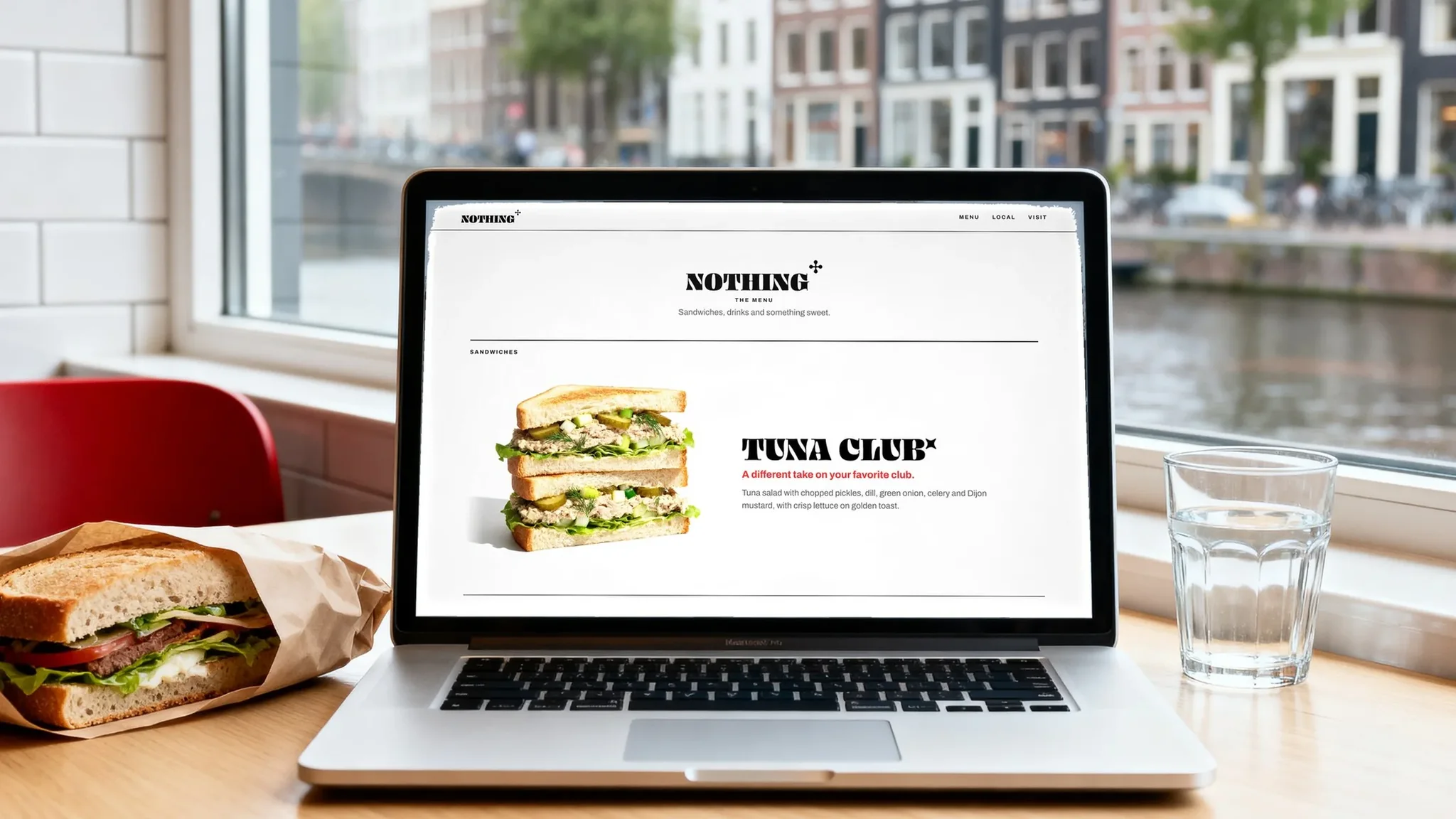
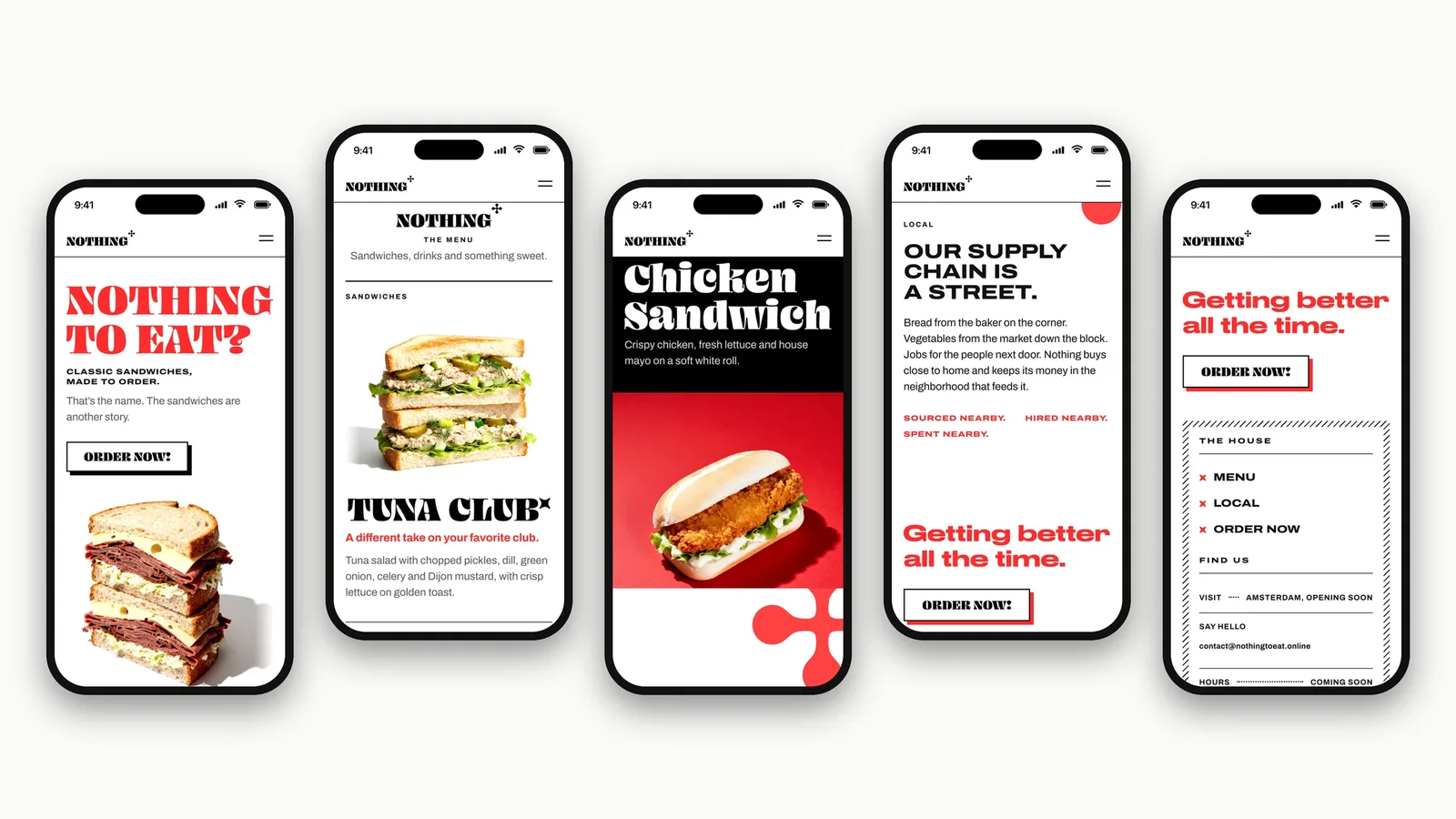
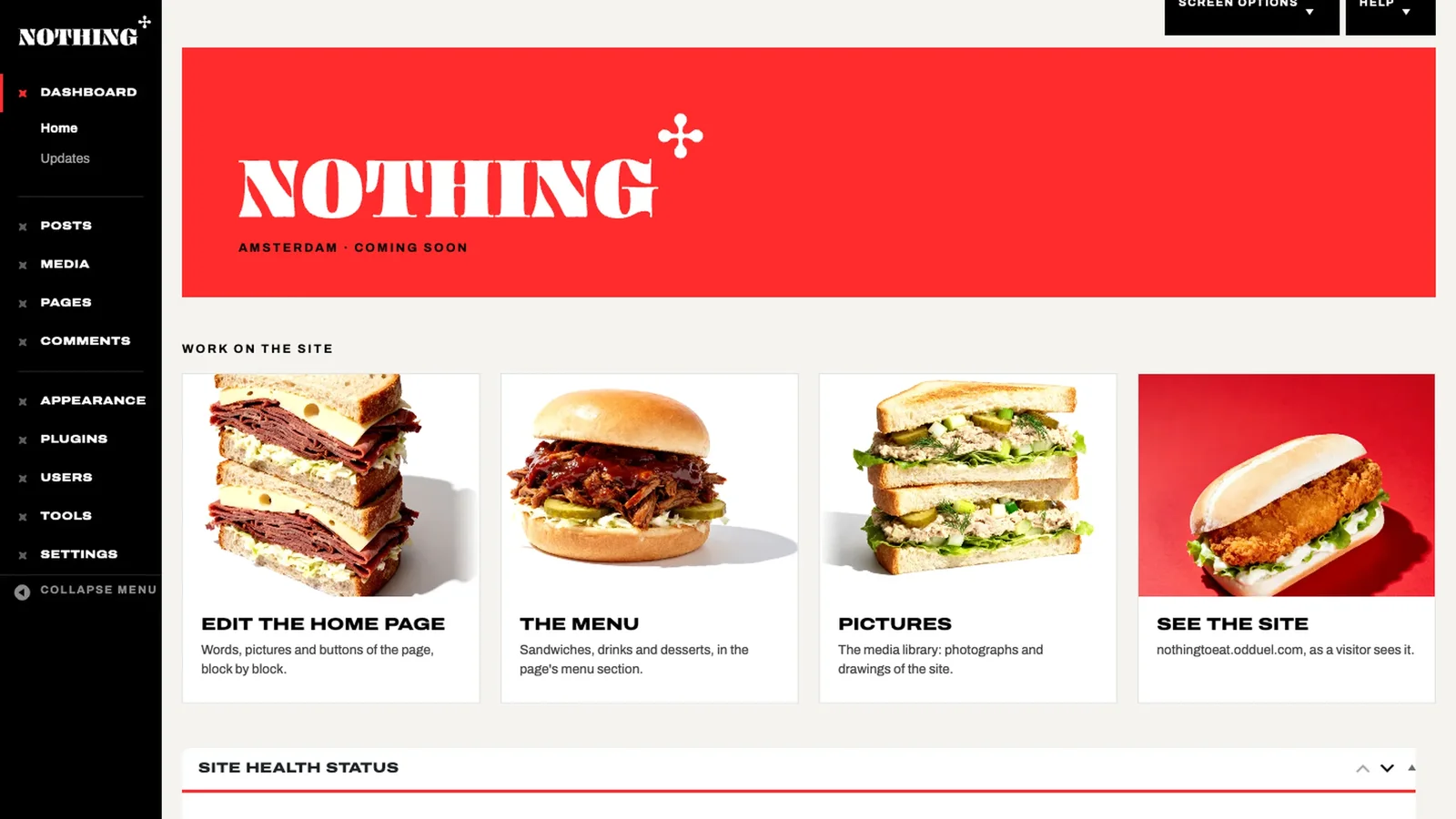
When we built the website for Nothing To Eat, a sandwich brand in Amsterdam, the brand, the content and the site were designed together, and the site was handed over in WordPress with an editor shaped around the people who run it: the home page, the menu and the pictures each have their own entry. That is the agency-builds, client-owns pattern in practice: the crafts arrive together for the project, and the day-to-day editing stays with the client. You can see the result at nothingtoeat.online.
Questions people ask
Is it cheaper to redesign a website in-house?
Only when you already have the team and it has spare time. Once you count recruitment, salaries, social contributions, tools and management time, hiring for a single redesign usually costs more than an agency project. In-house becomes the cheaper option when the site needs continuous work for years.
How long does a website redesign take with an agency?
It depends on the size of the site and how quickly decisions are made on your side. A focused redesign can launch in a matter of weeks; a large site with many templates, languages and integrations takes a few months. Ask for a phased plan with dates for each stage before you sign.
Can a freelancer handle a full website redesign?
Some can, especially on small sites, but a full redesign asks for strategy, copy, design, development and SEO at once. A single freelancer either covers some of those lightly or brings in others, and you manage the result. It works best with a clear brief and an internal owner who has the time to run it.
What should we own at the end of a redesign?
Everything that keeps the site running: the domain, hosting account, code repository, content management system, design files, analytics and search console access. Agree on this in the contract, not at the end. A good agency hands it over with documentation and training as a matter of course.
Do we need a new brand before we redesign the website?
Not always. If your positioning and visual identity still describe the company well, a redesign can work within them. If the site feels wrong because the brand no longer fits, start with the brand; our article on brand image vs brand identity helps you tell which problem you have, and our branding service covers the work.
If your answers point to a full redesign with a fixed date, we can take it from strategy to launch and hand it over so your people can run it: see our website redesign service for how we work, or talk to us about your project and we will tell you plainly which option fits.