
Influencer marketing is a brand working with content creators, from people with a few thousand engaged followers to well-known personalities, so that they present its products or services to their own audience in their own voice. For European brands, influencer marketing works best when creators are chosen for the fit of their audience rather than its size, briefs leave room for the creator’s style, every paid post is clearly labelled as advertising, and results are tracked against sales or sign-ups rather than likes. This guide covers where to start, the types of creators and collaborations, what a campaign involves, what drives the cost, the EU rules, how to choose a partner and how to measure results.
Last updated: 3 November 2026.
What is influencer marketing?
Influencer marketing is a form of marketing in which a brand pays or rewards creators to feature it in content for their audience. It works because people trust recommendations from someone they chose to follow more than they trust an advert from a brand they do not yet know.
The creator is a partner, not a billboard. The best collaborations look and sound like the creator’s normal content, while carrying the brand’s message clearly and honestly. That balance is what separates campaigns that sell from campaigns that only spend.
At Odduel, a creative and technology agency in Barcelona and São Paulo, influencer campaigns are part of our social media and influencer marketing service, alongside the content, identity and online stores they send people to.
In short: set one goal and a way to track it. Choose creators for audience fit and engagement, not follower count. Write a brief with the message and the rules, then let the creator create. Label every paid post as advertising. Agree usage rights in writing. Measure clicks, codes and sales per creator, and keep working with those who perform.
Where should a company start with influencer marketing?
Start with what you want people to do after they see the content, and how you will know they did it.
- Set the goal. Awareness in a new market, sales of a product, app installs, sign-ups or content you can reuse in ads.
- Define the audience. Who you want to reach, in which countries and languages, and what they care about.
- Choose the platforms. Where that audience spends time, and which formats suit your product (short video, photos, long video, live).
- Set the tracking. Unique links, discount codes or landing pages per creator, so results can be attributed.
- Set a budget and a test size. Start with several smaller creators to learn what works before scaling.
- Prepare your foundations. A clear offer and a landing page or online store that converts the visitors creators send.
Influencer marketing works best as part of a wider plan; our digital marketing guide shows how it fits with search, email and paid media, and our article on social media strategy covers your own channels.
What types of influencers are there?
Creators are usually grouped by audience size, but size is only a rough guide to cost and reach. Engagement and audience fit matter more.
| Type | Audience | Strengths | Watch out for |
|---|---|---|---|
| Nano-influencers | Small, close-knit communities | High trust and engagement, affordable, authentic | Small reach per post; more creators to manage |
| Micro-influencers | Engaged niche audiences | Strong fit with specific interests, good engagement | Quality varies; vetting takes time |
| Mid-tier creators | Larger audiences with a clear niche | Balance of reach and engagement, often professional | Higher fees and more negotiation |
| Macro-influencers | Large audiences | Broad reach, polished production | Lower engagement rates, less niche fit |
| Celebrities | Very large, general audiences | Instant awareness | Highest cost, weakest audience targeting |
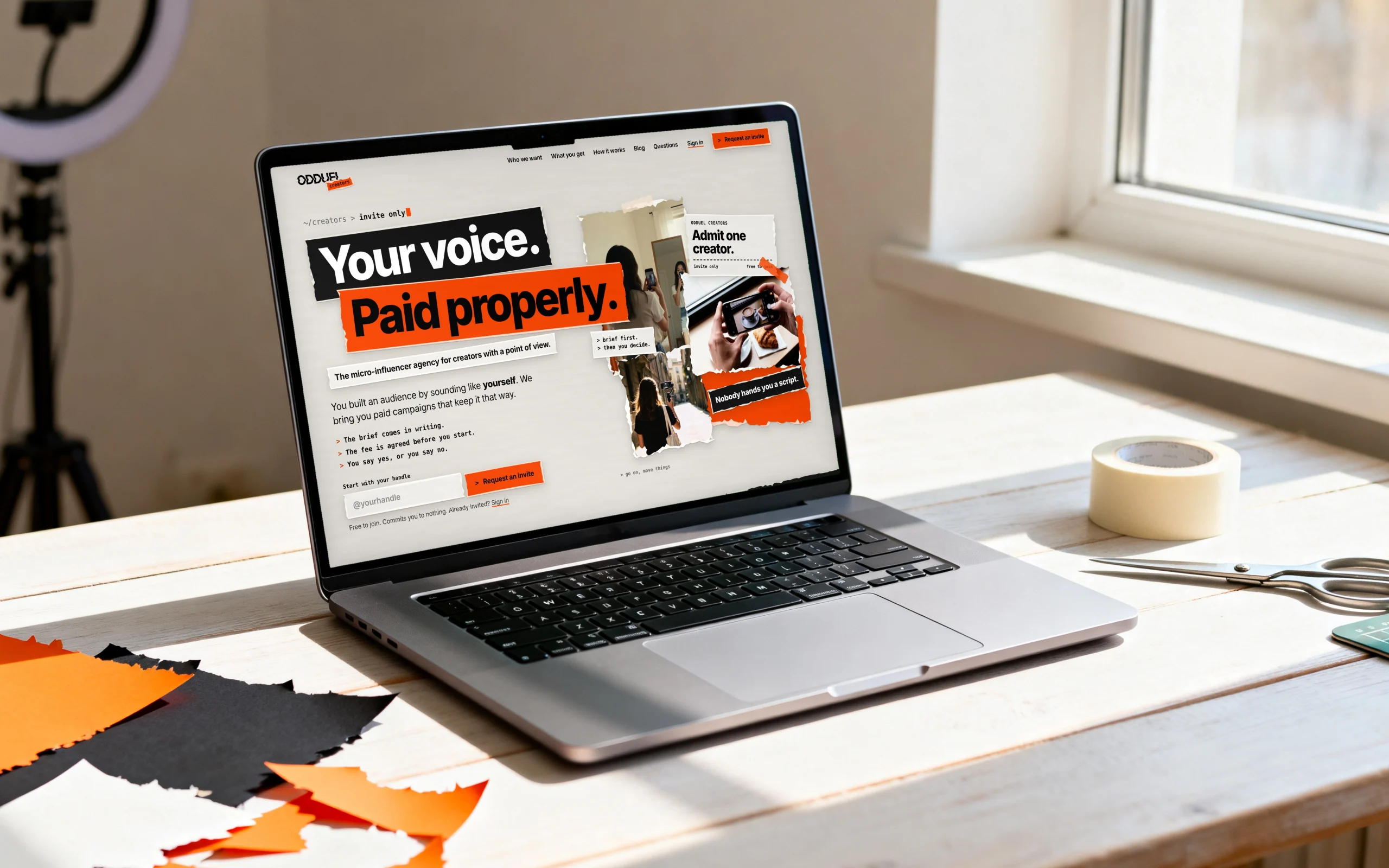
For many European brands, a group of well-chosen micro-influencers across several countries gives more trusted reach than one large name. Odduel is building its own roster of creators; our article inviting micro-influencers explains how we select them.
What kinds of influencer collaborations work?
The collaboration type should match the goal and how much control you need.
- Sponsored posts: the creator produces agreed content for a fee. The most common format.
- Product seeding: products are sent with no obligation to post. Low cost, uncertain results, useful for discovery.
- Affiliate and commission deals: the creator earns a share of sales through a tracked link or code. Aligns pay with results.
- Long-term ambassadorships: repeated content over months. More credible than one-off posts and better value per post.
- Content creation for your channels: the creator makes content you publish or use in ads, with usage rights agreed.
- Takeovers and live sessions: the creator hosts your account or a live event, useful for launches.
What does an influencer campaign involve in practice?
An influencer campaign involves seven steps, from selection to reporting.
- Research and shortlist. Find creators whose audience matches yours by country, language, interests and age, and whose content and values fit your brand.
- Vet. Check engagement quality, audience location, past brand work and any content that would conflict with your brand.
- Brief. Set out the goal, key message, must-say and must-not-say points, deliverables, deadlines, labelling rules and tracking. Leave the creative execution to the creator.
- Agree terms. Fees or commission, deliverables, approval steps, usage rights, exclusivity and payment terms, in a written contract.
- Review and publish. Check content for accuracy and labelling before it goes live, without rewriting the creator’s voice.
- Amplify. Reuse the best content on your own channels or in paid ads, where rights allow.
- Report and learn. Compare results per creator and decide who to work with again.
What drives the cost of influencer marketing?
The cost of influencer marketing depends on who you work with, what they produce and how you use it. We do not publish price ranges because rates vary widely between creators and markets, but these are the lines every budget contains. Our article on influencer marketing cost explains each in more depth.
- Creator fees: set mainly by audience size, engagement, niche and platform. Usually the largest share.
- Deliverables: the number and format of posts; video costs more than photos.
- Usage rights: using creator content in your own ads or on your site, and for how long, adds to the fee.
- Exclusivity: asking a creator not to work with competitors for a period costs extra.
- Products and shipping: samples and delivery, including across borders.
- Paid amplification: media budget to boost the best-performing content.
- Management: research, vetting, briefing, contracts, review and reporting, in-house or through a partner.
Which EU rules apply to influencer marketing?
The core rule across Europe is simple: advertising must be recognisable as advertising.
- Disclosure: the Unfair Commercial Practices Directive treats hiding the commercial purpose of content as misleading. Any post that is paid for, or given in exchange for free products or other benefits, must be clearly labelled, using the platform’s paid partnership tools and plain words such as “advert” in the local language.
- National rules on top: several countries have specific guidance or laws for influencer advertising, and some sectors such as alcohol, health products and financial services carry extra restrictions. Check the rules of each market.
- Truthful claims: the brand remains responsible for what the creator says about its products. Claims must be accurate and supportable.
- Data protection: if a campaign collects personal data (competitions, sign-ups), the GDPR applies.
- Contracts and rights: usage rights, image rights and payment terms should be in writing.
Make labelling part of the brief and the contract, and check it before each post goes live.
How do you choose an influencer marketing partner?
Choose a partner who selects creators on evidence and measures on results.
- Ask how they vet creators. Audience location, engagement quality and brand safety checks should be routine.
- Ask about tracking. Links, codes and landing pages per creator should be standard.
- Ask about rights and contracts. They should handle usage rights, exclusivity and labelling in writing.
- Ask about local markets. Creators, languages and rules differ by country.
- Ask who owns the relationships. You should keep access to creators you have worked with.
- Ask what happens to the content. Good partners plan how creator content feeds your ads, site and online store.
How do you measure whether influencer marketing works?
You measure influencer marketing per creator, against the goal set at the start.
- Reach and views: how many people saw the content, from creator-shared statistics.
- Engagement quality: comments and saves that show genuine interest, not just likes.
- Clicks and visits: traffic from tracked links to your landing page or online store.
- Conversions: sales, sign-ups or installs attributed through links and codes.
- Cost per result: total cost per creator divided by the conversions they drove.
- Content value: how reused creator content performs in your own ads and channels.
Expect a spread: a few creators will drive most of the results. Keep working with them and let the others go. If campaigns send people to an online store, our e-commerce guide covers how to make sure the store converts them.
Questions people ask
What is the difference between influencer marketing and social media marketing?
Social media marketing covers everything a brand does on social platforms, mainly through its own accounts and paid ads. Influencer marketing works through other people’s accounts: creators present the brand to their own audience in their own voice. The two work best together, with creator content often reused on the brand’s channels.
Are micro-influencers better than big influencers?
Often, for brands with a clear niche. Micro-influencers usually have closer relationships with their followers, higher engagement and lower fees, so several of them can reach a well-matched audience more credibly than one large name. Large creators make sense when broad awareness matters more than precise targeting.
How do influencers have to label sponsored posts in the EU?
Any content that is paid for, or given in return for free products or other benefits, must be clearly identifiable as advertising. Creators should use the platform’s paid partnership label and plain words such as “advert” in the audience’s language, visible at the start of the post. Some countries add more detailed national rules.
How do you find the right influencers for a brand?
Start from your audience, not from follower counts. Look for creators whose followers match your customers by country, language and interests, whose content fits your brand, and whose engagement looks genuine. Check past brand collaborations and audience data, then test with a small group before committing to larger deals.
How do you track sales from influencer campaigns?
Give each creator a unique tracked link and a personal discount code, and send traffic to a landing page or product page that works well on phones. Record clicks, orders and code use per creator in your analytics and store reports. Together, they show which creators drive real sales rather than only views.
Set one goal, choose a small group of creators who truly fit your audience and track every link: a first test teaches more than a long plan. When you want help running it, see our social media and influencer marketing service or tell us about your brand.