E-commerce is selling products or services online, through your own online store, through marketplaces or through social platforms, with payment, delivery and customer service handled digitally. For European brands, successful e-commerce starts with the right platform for the catalogue and team, a checkout that feels local in every country you sell to, clear consumer information and returns, and steady work on traffic and conversion after launch. This guide covers where to start, the sales models and platforms, what building an online store involves, what drives the cost, the EU rules, how to choose a partner and how to measure results.
Last updated: 2 November 2026.
What is e-commerce?
E-commerce is the buying and selling of goods and services over the internet, together with everything that makes it work: the online store, product data, payments, taxes, delivery, returns and customer service. For a brand, it is both a sales channel and the most detailed view it has of its customers.
The online store is the visible part. Behind it sit stock and order systems, payment providers, carriers, accounting and marketing tools, all of which must exchange data reliably. Most e-commerce problems happen in those connections, not on the product page.
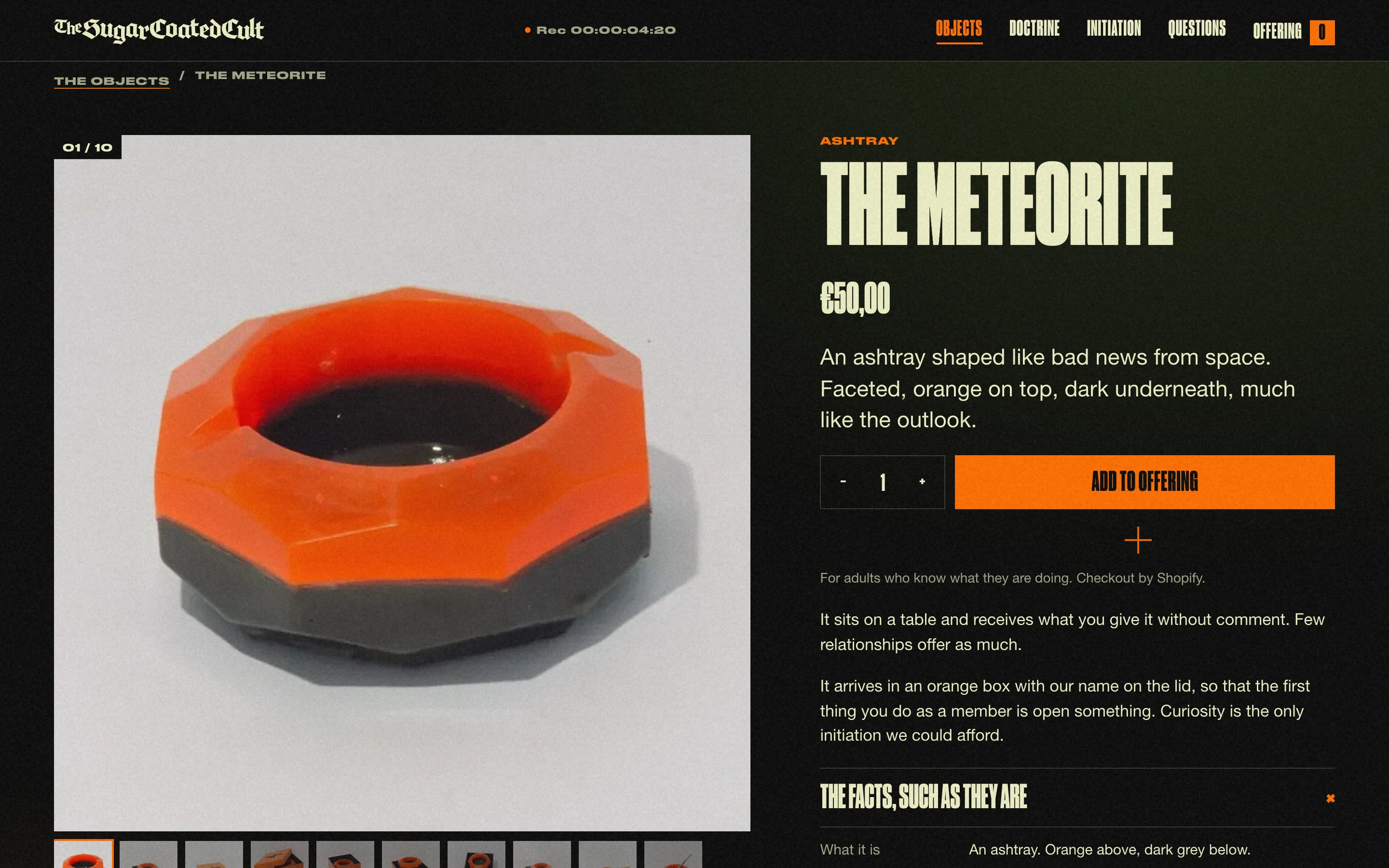
At Odduel, a creative and technology agency in Barcelona and São Paulo, our e-commerce service designs and builds online stores, mostly on Shopify, with the identity and content that make a brand worth buying from. Our work for The Sugar Coated Cult, a Shopify store built on a theme we wrote, is one example.
In short: decide which channels you sell through and in which countries. Choose a platform that fits your catalogue, team and growth. Make product pages and checkout feel local: language, currency, payment methods, delivery and returns. Get consumer information, VAT and accessibility right. Plan traffic before launch. Measure conversion, order value and repeat purchases every month.
Where should a company start with e-commerce?
Start with the business model, not the platform. The answers below decide almost every technical choice.
- Define what you sell. Number of products and variants, physical or digital, made to order or in stock.
- Choose your markets. Which countries, languages and currencies at launch, and which later.
- Choose your channels. Your own online store, marketplaces, social selling or a mix.
- Map operations. Who packs and ships, which carriers, how returns work and where stock is held.
- List your systems. Accounting, stock, CRM, email and any existing ERP the store must connect to.
- Set goals and a budget. Launch date, sales targets and the budget for both the build and the marketing after launch.
Our article on e-commerce website development goes deeper into planning the build itself.
Which sales model and platform should you choose?
Choose the model that matches where your customers already buy, and the platform your team can run day to day.
| Option | Best for | Strengths | Trade-offs |
|---|---|---|---|
| Hosted platform (such as Shopify) | Most brands, from first store to large catalogues | Fast to launch, secure checkout, apps and themes, updates handled | Platform fees and some checkout limits |
| Open-source platform (such as WooCommerce) | Brands with content-heavy sites and in-house technical care | Full control, large ecosystem | Hosting, security and updates are yours |
| Enterprise platform | Large catalogues, complex pricing, many markets and integrations | Deep customisation and scale | Higher build and running effort |
| Marketplaces | Reaching existing buyers quickly | Built-in traffic and trust | Fees, rules and little control of the customer relationship |
| Social commerce | Brands whose customers discover products on social platforms | Purchase close to discovery | Platform-dependent reach |
For brands weighing two enterprise options, our comparison of Shopify Plus and Adobe Commerce sets out the differences. Many brands combine their own online store with one or two marketplaces, keeping the store as the place where the brand and the customer relationship live.
What does building an online store involve in practice?
Building an online store involves six phases, from planning to growth.
Discovery and planning
Catalogue structure, markets, integrations, payment and delivery options, and the site map are agreed and documented.
Design
Design covers the home page, collection pages, product pages, cart, checkout steps the platform allows you to style, account pages and emails. Product pages carry most of the selling: photography, clear options, price, delivery and returns information, and reviews.
Product data and content
Product titles, descriptions, images, variants, prices and stock are prepared and imported. This is often the longest task and the one most often underestimated.
Development and integrations
The theme is built, apps are chosen with care, and the store is connected to payments, carriers, accounting, email and stock systems.
Testing
Every path is tested: browsing on phones, filtering, adding to cart, discount codes, each payment method, taxes per country, order emails, returns and refunds.
Launch and growth
The store goes live with analytics, consent, search basics and redirects from any old store. Then growth work begins: traffic, conversion improvements and new products.
Our article on essential e-commerce website features lists what a European online store needs at launch and what can wait.
How do you sell across Europe from one online store?
Sell across Europe by making each market feel local while running one set of operations.
- Language and content: product pages, emails and policies in each market’s language, written for that market.
- Currency and prices: prices in local currency, with VAT included for consumers, rounded the way local buyers expect.
- Payment methods: cards plus the methods each country prefers, such as local bank transfer or wallet options.
- Delivery and returns: clear delivery times and costs per country, and a simple returns process.
- VAT: for distance sales to consumers in other EU countries, VAT is generally charged at the rate of the customer’s country above an EU-wide threshold, with the One-Stop Shop scheme to declare it in one place. Your accountant should confirm your obligations.
- Search: language versions with correct hreflang tags so search engines show each market its own pages.
What drives the cost of e-commerce?
The cost of e-commerce has three parts: building the online store, running it, and marketing it. We do not publish price ranges because a fair figure follows a brief, but every proposal is built from the same lines.
- Catalogue size and complexity: variants, bundles, custom options and B2B pricing add work.
- Design depth: an adapted theme costs a fraction of a fully custom theme with bespoke interactions.
- Integrations: each connection to an ERP, stock, accounting or carrier system adds design, build and testing.
- Markets and languages: translation, local payment methods, taxes and delivery rules per country.
- Product data: writing, photography and import work.
- Platform fees and apps: monthly subscriptions, transaction fees and app fees.
- Marketing after launch: often the largest ongoing share, because a new store has no traffic until you bring it.
When comparing proposals, check that each line is visible and that running and marketing costs are estimated, not left out. Our guide on how to choose an e-commerce agency lists the questions to ask.
Which EU rules apply to e-commerce?
Selling online to consumers in the EU brings clear obligations. Most are routine once built into the online store.
- Consumer information and withdrawal: the Consumer Rights Directive requires clear information before purchase (total price, delivery costs, your identity and contact details) and gives consumers, as a general rule, 14 days to withdraw from most distance purchases.
- Accessibility: since 28 June 2025, the European Accessibility Act requires many e-commerce services to be accessible to people with disabilities, with exemptions for microenterprises providing services.
- Data protection and consent: customer data falls under the GDPR, and analytics and marketing tags need prior consent.
- Payments: strong customer authentication applies to most online card payments in the European Economic Area; payment providers handle it, but the checkout must support it.
- Pricing and promotions: announcements of price reductions must refer to the prior price under EU consumer rules, and reviews must not be presented misleadingly.
How do you choose an e-commerce partner?
Choose a partner who asks about your operations and margins, not only about the look of your online store.
- Buy from their stores. Order something, on your phone, and notice what helps or gets in the way.
- Ask about integrations. They should map how orders, stock and accounting flow before quoting.
- Ask about Europe. Payment methods, VAT, languages and returns should be familiar territory.
- Check ownership. Store, domain, payment and app accounts should be in your company’s name.
- Ask about apps. A good partner adds few, well-chosen apps and explains the monthly cost of each.
- Ask about growth. Who drives traffic and improves conversion after launch?
How do you measure whether e-commerce works?
You measure e-commerce on sales and the efficiency of getting them, reviewed every month.
- Conversion rate: the share of visits that become orders, by device, channel and market.
- Average order value: what customers spend per order.
- Customer acquisition cost: marketing spend divided by new customers, by channel.
- Repeat purchase rate and customer lifetime value: how many come back and what they spend over time.
- Cart and checkout drop-off: where buyers leave, and why.
- Returns rate and reasons: a signal of product information quality.
Improve the biggest leak first. A small gain in checkout completion often outweighs a large increase in traffic.
Questions people ask
What is the best e-commerce platform for a European brand?
For most brands, a hosted platform such as Shopify offers the best balance of speed, security and running effort, with good support for several languages, currencies and payment methods. Open-source platforms suit brands with strong in-house technical care, and enterprise platforms suit very large catalogues with complex pricing and integrations.
How long does it take to build an online store?
A store on a hosted platform with an adapted theme and a modest catalogue can launch in a matter of weeks. A custom theme, several markets and integrations with stock or ERP systems usually take a few months. Product data, photography and integrations are the most common sources of delay.
Do I need to charge VAT from the customer’s country?
For distance sales of goods to consumers in other EU countries, VAT is generally due at the rate of the customer’s country once your total cross-border sales pass an EU-wide threshold. The One-Stop Shop scheme lets you declare it in a single return. An accountant should confirm your exact position.
Is my online store affected by the European Accessibility Act?
Many online stores selling to consumers in the EU are covered by the European Accessibility Act, which applies since 28 June 2025. Microenterprises providing services are exempt. In practice, following the Web Content Accessibility Guidelines for design, code and content is the way to meet it.
Should we sell on marketplaces or only on our own online store?
Marketplaces bring ready buyers and trust, but take fees and keep most of the customer relationship. Your own online store builds the brand and gives you customer data and margins. Many brands use both: marketplaces for reach, their own store for loyal customers and the full brand experience.
Write down what you sell, where you want to sell it and how orders will reach customers: those answers shape every decision that follows. When you want to turn them into an online store, see our e-commerce service or tell us about your brand.