To choose a graphic design agency, start with your own brief, then judge each candidate on the thinking behind its portfolio, not only the finish; score the shortlist against weighted criteria; meet the people who will actually do the work; and settle in writing who owns the source files, fonts and usage rights before you sign. Price matters, but it is the last filter, not the first.
This guide walks through that process step by step: what to prepare before you look, the questions to ask of every project in a portfolio, a scoring table you can copy, how to read an agency’s process and people, the ownership points most contracts leave vague, and the red flags worth walking away from.
What should you know before you look?
Most disappointing design projects go wrong before the first sketch. The client asked for “a logo” when the business needed a positioning, or asked for “a rebrand” when a tidy-up of the existing system would have done. An hour spent on your own brief saves weeks later and makes every agency’s proposal easier to compare.
Write a one-page brief
You do not need a formal document. One page that answers these questions is enough:
- Why now? A launch, a new market, a merger, a name that no longer fits, a look that embarrasses the sales team.
- Who must it speak to? The two or three audiences that matter most, in plain words.
- What must it do? Be recognised from across the street, look credible to investors, stand out on a crowded shelf, work at a tiny size on a phone.
- What already exists? A name, a logo, colours, photography, a website. Say what must stay.
- Where will it live? Packaging, signs, social posts, a website, presentations, uniforms, print.
- When do you need it? A real date, and what happens if it slips.
Define the scope
Graphic design covers very different jobs, and agencies are rarely equally strong at all of them. Decide which of these you are buying:
- A brand identity: logo, colour, type, graphic elements and the rules for using them. Our branding service sits here, and our guide on brand image vs brand identity explains why the system matters more than the mark.
- Applications: packaging, signage, stationery, menus, campaign material, built on an identity that already exists.
- Digital design: social templates, presentation decks, the look of a website or app (often with UX and UI design alongside).
- Ongoing production: a steady flow of layouts and assets each month.
If you need several of these, ask whether the agency will carry the identity all the way to the website and the launch material, or hand you a guide and leave the rest to someone else.
Set a budget band, not a number
You will not get comparable proposals without some indication of budget, and you do not have to reveal a single figure. Give a band: the lowest you would be comfortable with and the most you could stretch to. A good agency will tell you what that band buys and what it does not. If you want a sense of how design and build costs are put together, our article on what a website costs breaks down the same logic for web projects.
How do you read a portfolio properly?
A portfolio is a sales tool, curated to show the best results under the best light. That is fine, but it means you have to read it actively. Pretty pictures prove that someone in the studio has taste. They do not prove that the agency can solve your problem.
Questions to ask of each project
Pick three projects that sit closest to your own situation and ask the same questions of each:
- What was the problem? Does the case study state a business reason for the work, or only show the result?
- What was the idea? Can you say in one sentence why the design looks the way it does? If the agency cannot, neither will your customers.
- Does it work beyond the hero shot? Look for the small sizes, the black-and-white version, the awkward formats, the boring documents. A logo that only works on a perfect poster is a liability.
- Is it a system? Count the pieces: versions of the logo, colour, type, patterns, layouts. A system lets your own staff produce new material without calling the agency each time.
- Is the work live? Can you see it on a real shop front, a real package or a real website, not only in a mock-up?
- Who did it? Ask whether the people who made it are still there and whether they would work on your project.
What a good case study shows
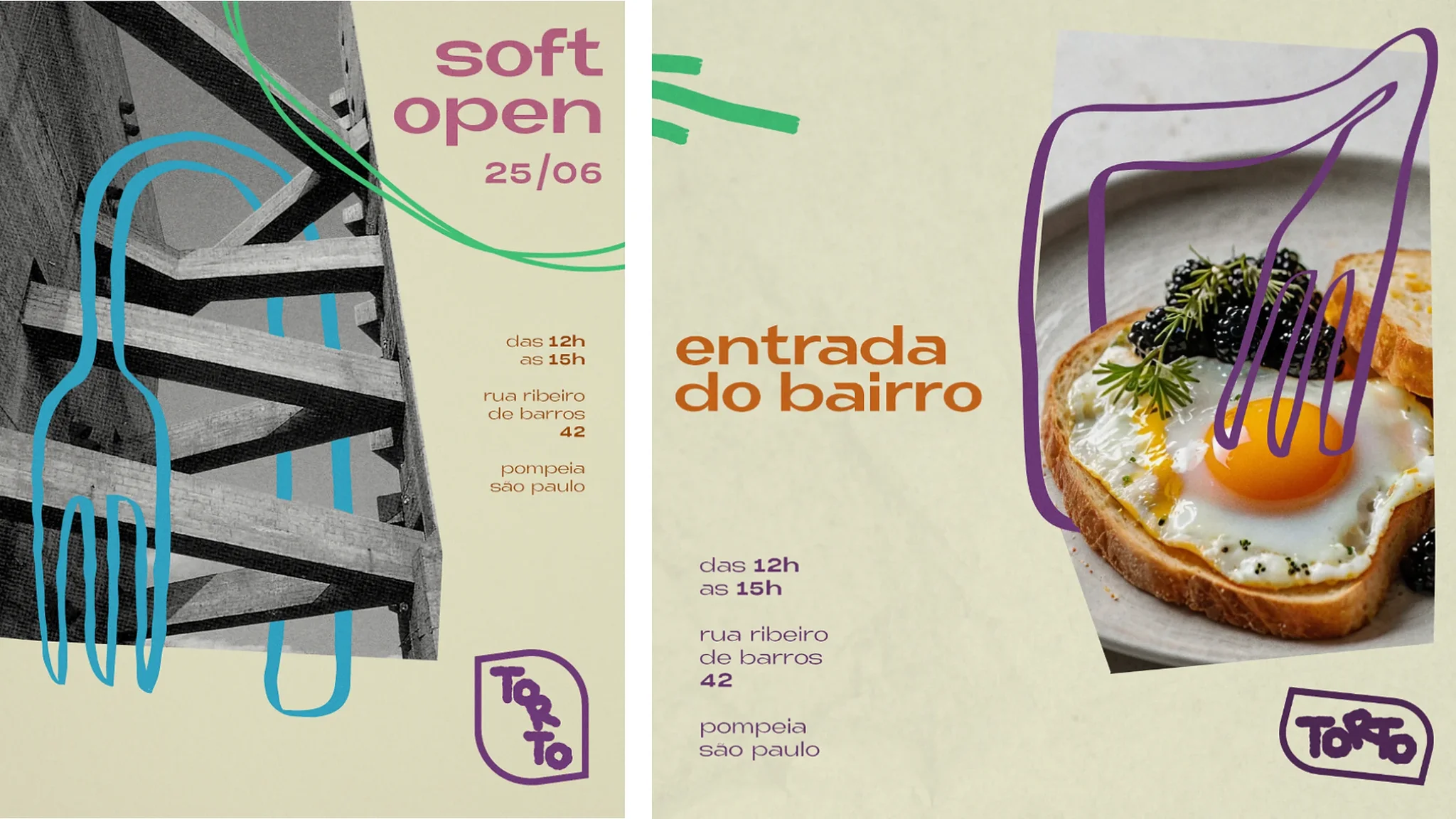
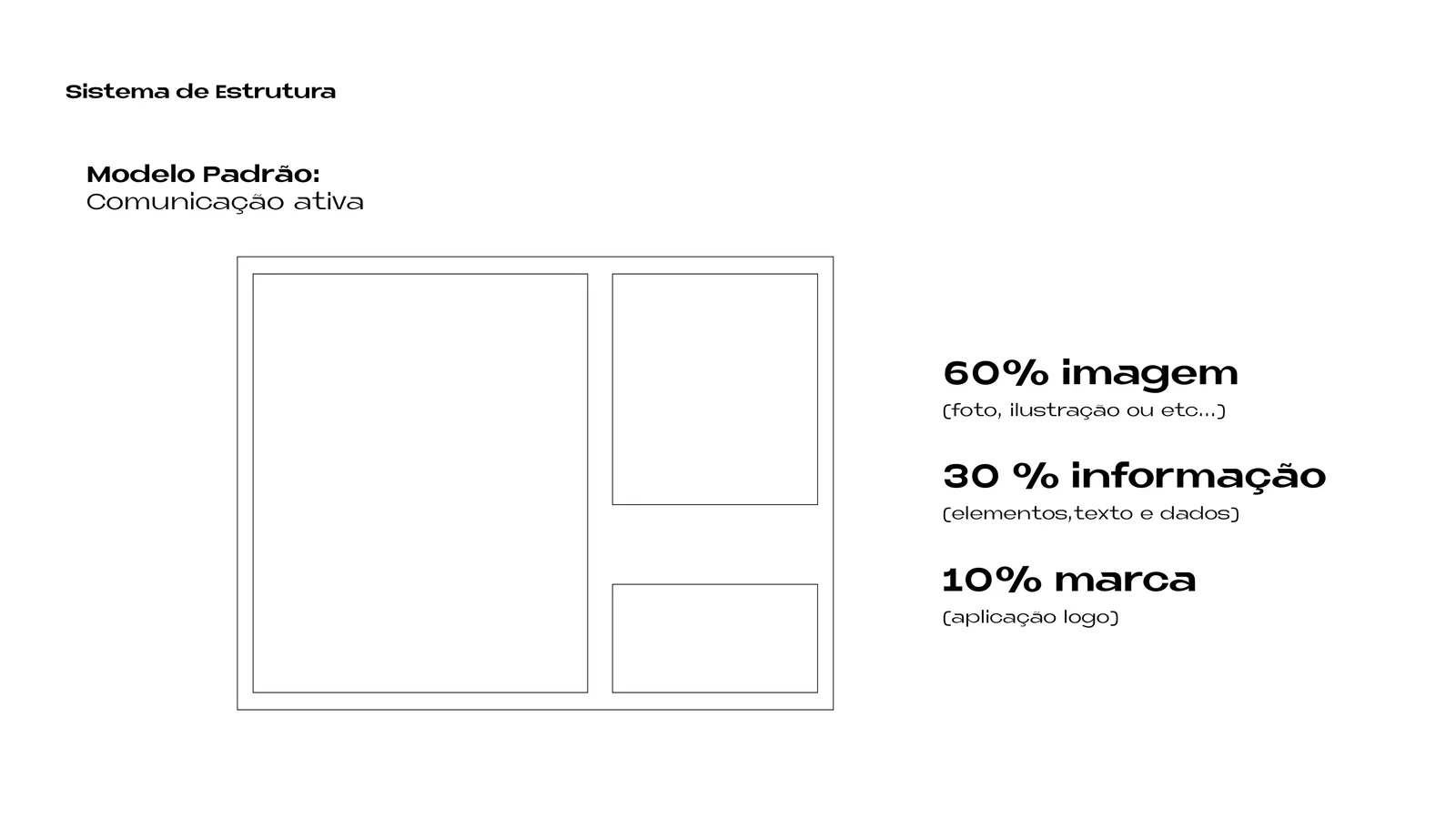
Take our own Torto Cozinha case study as an example of what to look for. It states the brief (a new restaurant in São Paulo that needed an identity ready before the first table was laid), the idea in one line (a name drawn by hand, every letter leaning its own way, on a structure strict enough to be taken apart and still read as the brand), and then everything built from it: sixteen versions of the logo, colour, two typefaces, illustrated forks, textures and three ready layouts so that a post or a poster comes together in minutes. You may like the style or not; what matters is that the reasoning is visible and the system is shown in use.
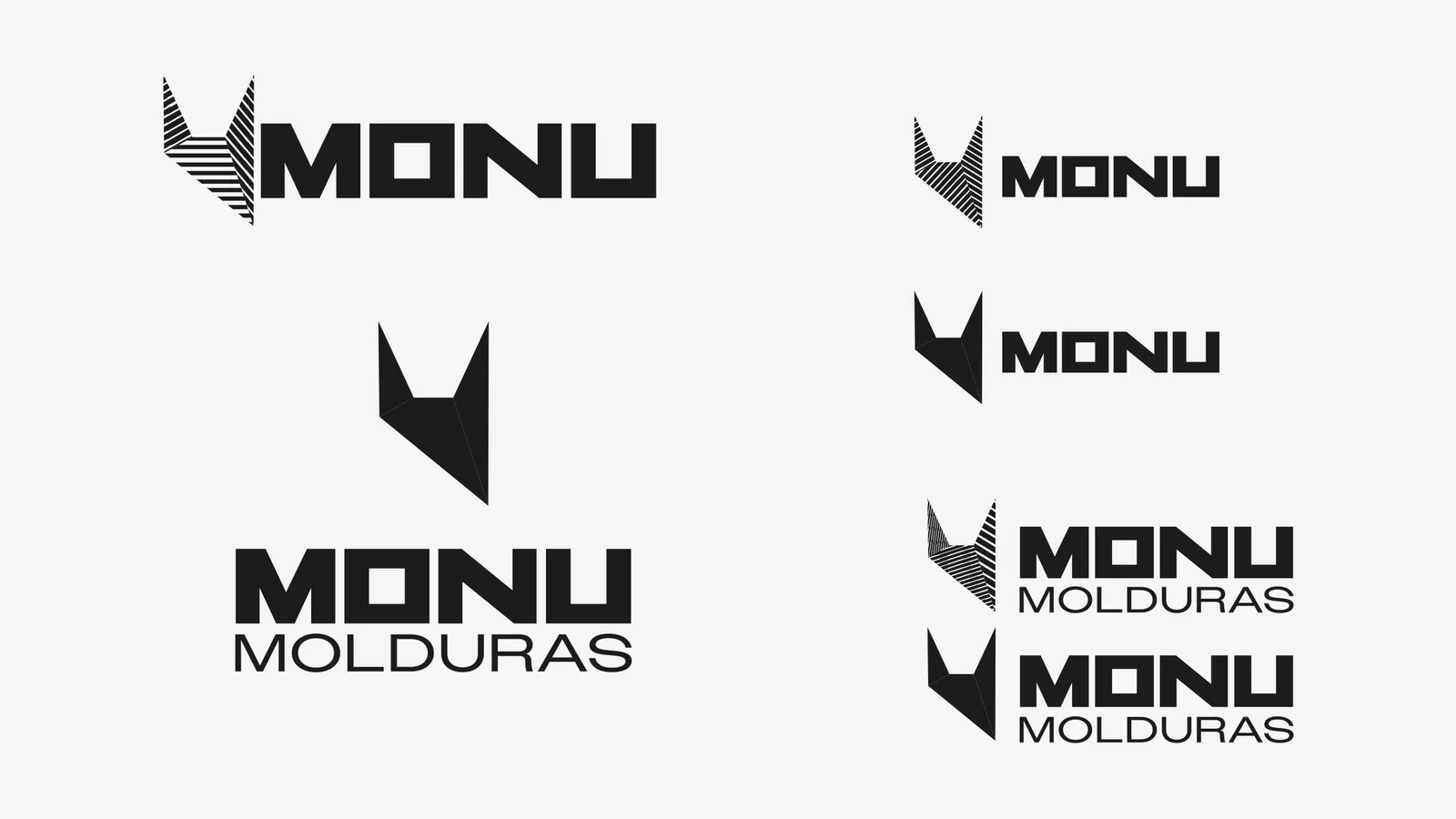
The MONU Molduras rebranding makes the same point differently: the case study explains why the logo is built from square corners and clean joints, like the frames the shop makes, and shows the versions for every space, from a sign to a stamp.
A scoring table for your shortlist
Once you have three to five candidates, score them against the same criteria so that the decision does not come down to whoever gave the most charming presentation. Agree the weights with your team before you see the proposals, then score each agency from 1 to 5 on each line and multiply.
| Criterion | Weight | What a 5 looks like |
|---|---|---|
| Relevance of past work | 20% | Several projects close to your problem, explained, not only shown |
| Quality of thinking | 20% | They questioned your brief and improved it |
| Craft and finish | 15% | Detail holds up at every size and in every format |
| Process and timeline | 15% | Clear stages, decisions, review points and dates |
| People and chemistry | 10% | You met the people who will do the work and want to work with them |
| Ownership and licences | 10% | Source files, fonts and rights spelled out in the proposal |
| Price and value | 10% | Clear about what is included, what is extra, and why |
Adjust the weights to your situation. A start-up with a hard launch date might raise process and timeline; an established company replacing a much-loved logo might raise quality of thinking. The point is to decide what matters before you are dazzled.
Process and people
Good design looks effortless at the end because the process behind it was not. Ask every agency to walk you through how a project like yours would run, stage by stage.
The stages you should hear about
Whatever names an agency uses, you should recognise these steps:
- Discovery: interviews, a look at your market and competitors, an audit of what you already have.
- Strategy: a short statement of positioning and personality that the design must express, agreed before any drawing starts.
- Concepts: usually two or three directions, each shown in real use, not just as a logo on a white page.
- Development: one direction refined into a full system.
- Delivery: files, guidelines, templates and a hand-over session.
Ask how many rounds of changes are included at each stage, and who signs off. Vague answers here become disputes later.
Who will do the work
In larger agencies, the people who pitch are often not the people who design. That is not necessarily a problem, but you should know. Ask to meet the designer or art director who will lead your project, and ask how many other projects they carry at the same time.
It is also fair to ask how an agency uses AI today. At Odduel, AI carries the repetitive production: preparing images, building out template variations, first drafts of supporting copy, resizing a system for dozens of formats. Strategy, the concept, art direction and the final craft stay human work, and that is where the budget goes. The result, in our experience, is that an identity project costs less and arrives in weeks rather than months, without the thinking being cut. Whether an agency is new or long established matters less than how it works; our piece on a new agency vs an established agency looks at that choice in more detail.
Where the agency works
Time zones and language still matter. We work from Barcelona and São Paulo, which covers European and South American working hours, and most of our client conversations happen on video calls. Ask any agency how and when you will be able to reach the person running your project.
Who owns the files, fonts and rights?
This is the section most buyers skip and most regret. A beautiful identity is worth little if you cannot edit it, cannot use its typeface on your website, or find out later that a key illustration belongs to someone else.
Source files
You should receive the editable source files of everything you pay for, not only flattened exports. For a logo that means vector files (such as SVG, EPS or the original design-tool file) in every version and colour, plus the exports you will use day to day: PNG for screens, PDF for print. Ask for the files to be named clearly and organised by use. Ask, too, for any templates (social posts, presentations, documents) in an editable format your team can actually open.
Fonts
Typefaces are software, and they are licensed, not bought outright. Many identities use a commercial typeface. Check three things:
- Who holds the licence? It should be your company, not the agency. An agency’s own licence usually does not cover your use.
- Which uses are covered? Desktop (for documents), web (for your site), app and broadcast are often separate licences, priced separately.
- How many users? Desktop licences are often counted per computer or per user.
A good proposal names each typeface and states what licences you will need and roughly what they cost, so there are no surprises.
Copyright and usage rights
Under the law of most countries, copyright in a design belongs to its creator until it is transferred in writing. Your contract should say clearly that, on final payment, the rights in the delivered work pass to you (or that you receive an exclusive licence broad enough for every use you can foresee). Watch for three exceptions:
- Concepts you did not choose: usually these stay with the agency. That is normal, but agree it.
- Third-party material: stock photography, illustrations or icons bought under a licence. Ask what the licence allows and in whose name it is.
- Portfolio rights: most agencies ask to show the work in their portfolio. That is normal too; if your project is confidential, agree a delay or an exclusion.
If anything here is unclear, ask a lawyer to read the contract before you sign. It costs far less than a dispute.
What are the red flags when choosing?
None of these is fatal on its own, but two or three together should make you think again:
- Logos before questions. Free designs or spec work before a single meeting. It usually means the work is not based on your business at all.
- A fixed number of logo “options”. Twenty sketches are not twenty ideas. You want a small number of directions, each argued for.
- A portfolio of mock-ups only. No live work, no real clients you can check.
- No mention of files or licences. If the proposal does not say what you will receive, assume it will be less than you expect.
- Unlimited revisions. It sounds generous; in practice it means no one has thought about how decisions will be made.
- Pressure to decide fast. Discounts that expire on Friday say more about the agency’s pipeline than about your project.
- The pitch team disappears. If the people you liked are not named in the proposal, ask why.
How to choose a graphic design agency in five steps
To pull it together, here is the process in short:
- Write a one-page brief and define the scope.
- Build a longlist of six to ten agencies from work you admire, then cut it to three to five by reading their portfolios with the questions above.
- Send each the same brief and budget band, and ask each to explain how they would run the project.
- Meet the people who would do the work, then score each agency in the weighted table.
- Before signing, check the contract for stages, revisions, dates, files, fonts and rights.
Questions people ask
How long does a graphic design project take?
It depends on the scope. A focused identity project usually runs over a few weeks from discovery to delivery; a full rebrand with packaging, signage and a website takes longer. The biggest variable is usually how quickly decisions are made on the client side, so agree review dates at the start.
Should I hire a freelancer or an agency?
A strong freelancer can be ideal for a single, well-defined piece, such as a logo refresh or one campaign. An agency makes more sense when the work spans several disciplines (strategy, identity, packaging, website) and needs to be carried through consistently, or when you need cover if one person is unavailable.
How many design concepts should I expect?
Two or three distinct directions is common and usually enough. More concepts often means less thinking behind each one. What matters is that each direction is shown in real use and explained against your brief.
Do I own my logo once I have paid for it?
Only if the contract says so. Copyright normally stays with the creator until it is transferred in writing, so make sure your agreement transfers the rights in the final work to your company on payment, and that you receive the source files.
What should be in a brand guidelines document?
At minimum: the logo and its versions, clear space and minimum sizes, colour values for print and screen, typefaces and how to use them, and examples of the system in use. The most useful guides also include ready templates, so your team can produce new material without guesswork.
If you are preparing a brief or comparing proposals, we are happy to read it with you and tell you honestly what it needs. See how we approach identity work on our branding service page, or talk to us about your project.