The startup digital foundations of a new company are a short list: a name you can own, an identity that looks credible from the first day, a website that explains the offer and captures interest, a small set of connected tools, a first marketing plan the founders can run themselves, and the legal basics that let all of it operate. Getting them right early is far cheaper than changing a name, rebuilding a site or moving data after launch. This guide takes each in order, with a realistic view of the budget and the mistakes we see most often.
Last updated: 25 October 2026.
One thing has changed for this generation of companies: production costs much less. At Odduel, AI carries the repetitive part of a project (the first components of a design system, front-end code, first drafts, image preparation, testing, first-pass translations), so a starting identity and a focused website are delivered in weeks rather than months. The budget goes where it shows: strategy, concept, art direction, brand voice and the final craft, which stay the work of people.
Startup digital foundations: the short list
The whole list on one page: the middle column before you talk to customers or investors in earnest, the last once the company has a pulse.
| Foundation | Needed before launch | Can follow later |
|---|---|---|
| Name | Company, trademark, domain and handle checks | Registration in further markets |
| Identity | Wordmark, symbol, type, colours, a short statement | Full brand system, motion, photography |
| Website | Five to eight clear pages on your own domain | More languages, account areas, a blog |
| Tools | Email suite, CRM, invoicing, one task board, analytics | Marketing automation, data warehouse |
| Marketing | Profiles, outreach list, two or three useful pieces | Paid campaigns, partnerships, PR |
| Legal | Privacy, cookies, terms, company details | Contracts for scale, further filings |
How do you choose a name and identity?
Your name will appear on every invoice, contract and conversation for years. A good one is easy to say and spell in your main markets, distinct from competitors, available as a company name, a trademark in your classes, a domain and social handles, and open enough not to tie you to one product or one city. Check trademarks before you print anything: a forced rename in year two costs far more than a week of searching now.
Startup branding does not need to be a full brand system on day one, but it needs more than a logo made in an evening. A sound starting kit:
- A wordmark and a simple symbol that work small, in one colour and on dark grounds.
- Two typefaces and a small colour palette with contrast rules written down.
- A short statement of what you do and for whom, in the words you would use aloud.
- Templates for a presentation, a social post, a proposal and an email signature.
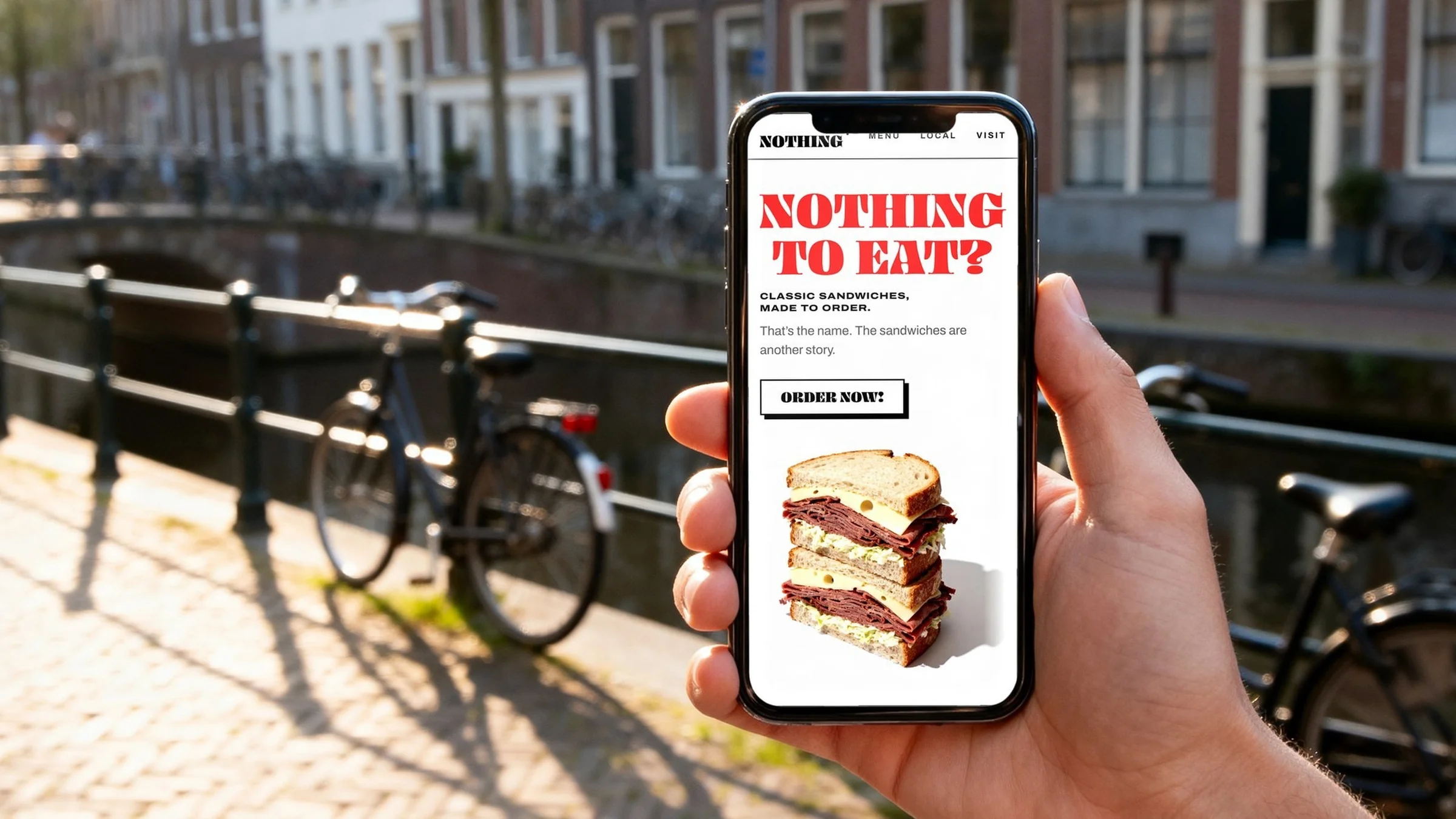
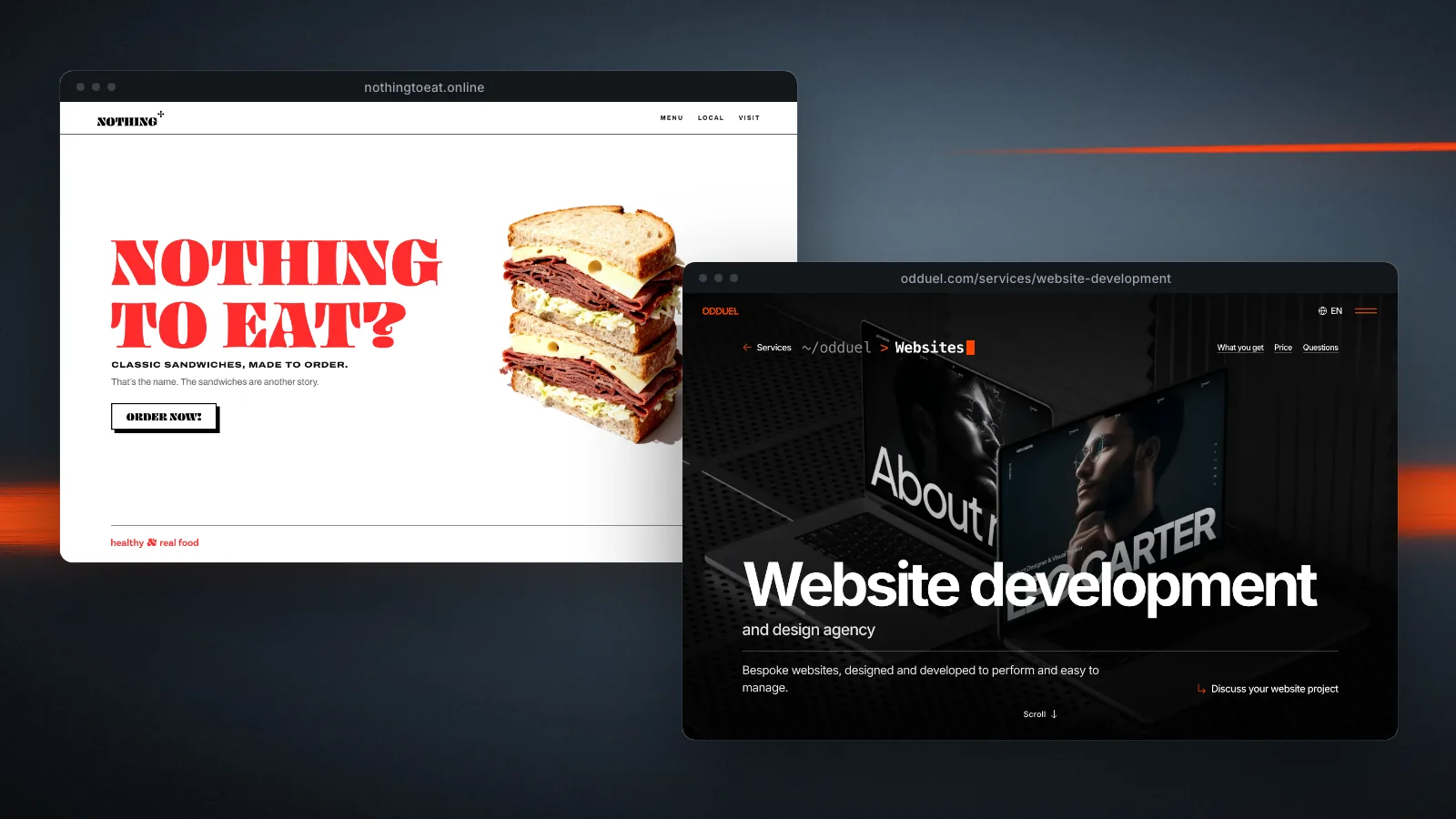
That kit makes the company look trustworthy to investors, early clients and first hires, and grows into a full identity without starting again; our branding guide for 2027 says what a full identity contains and when each part earns its place. For a young brand we often build the identity and the first website in one project: Nothing To Eat, a sandwich brand in Amsterdam, got its wordmark, pattern, packaging and a one-page site in one go, so nothing had to be redrawn when the site came.
What website does a startup need?
A startup website has one job: to make the right person understand the offer and take the next step, whether that is booking a demo, joining a waiting list or buying. Everything on the page serves that step or stands in its way.
What to decide first
Four decisions come before the first page:
- The one action you want visitors to take, and the one page that leads to it.
- The audience you most need to convince now, not the one you hope for in three years.
- Domain and ownership: register the domain in the company’s name, with access the founders control, and keep every account the same way.
- A platform that lets you edit without help and move later if you must. Our guide on choosing a CMS sets out the trade-offs.
With those settled, a clear, fast site of five to eight pages is a small project: home, what you offer, how it works, about, contact and the legal pages, with case studies as soon as you have real ones. Our website development service builds this on the company’s own domain and hands over the keys; what a website costs in 2027 gives the ranges we work to.
What to leave for later
A blog with a schedule you cannot keep, several languages before you have customers in those markets, account areas and heavy integrations can all wait. A finished small site beats a sprawling half-built one.
The same goes for the interface: a consistent set of components reused with discipline is enough at launch, and becomes the start of a proper UX and UI design phase when the product grows.
Which tools should a startup set up?
The tools you choose at two people decide how organised you are at twenty. Pick a small, connected set and resist adding to it.
| Need | What to set up |
|---|---|
| Email and documents | A business suite on your own domain, never personal addresses |
| Contacts and sales | A simple CRM, even a free tier, used from the first conversation |
| Finance | Accounting software that sends invoices and chases payment |
| Projects | One shared task board for the whole company |
| Analytics | Website analytics behind consent, plus a search console account |
| Security | A password manager and two-step sign-in everywhere |
Invoicing deserves attention from the first sale: clear terms and automatic reminders prevent most early cash problems. Analytics belongs in the first week, because the first months of data show which pages and messages work.
AI assistants now cover a good part of early administration: drafting documents, summarising calls, preparing first versions of policies and proposals for a lawyer or an adviser to check. Used with care, they give founders more hours with customers. The rule we apply to our own work applies here: AI drafts, a person decides.
What should the first marketing be?
Early marketing is direct and personal. Before any paid campaign, most young companies win their first clients through the founders’ own contacts, outreach to a well-defined list that respects data protection rules, profiles that explain the company clearly, a few useful pieces that answer what prospects actually ask, and the local and sector communities around them: events, associations, accelerators.
The website carries all of this: every introduction and profile sends someone to it, and a page that explains the offer in thirty seconds turns visits into conversations. Write the two or three pieces that answer the questions you hear most and let search bring the rest; our SEO guide for 2027 explains how to set up a new site so that it can be found from the start.
Where you base the company matters too. Barcelona and São Paulo, where Odduel works, each have active founder communities that make early introductions easier. Once the first clients are in, a written digital marketing strategy decides where paid effort goes.
How should a startup budget for this?
A practical way to think about a startup’s digital budget is in three tiers:
- Must have now: name checks, domain, a starting identity kit, a clear website, legal pages, core tools.
- Within the first year: a fuller identity, case studies, a content plan, the first paid tests.
- When there is traction: a full brand system, a larger site, sustained marketing and maintenance and support that keep it all running.
Spend where first impressions are formed: the identity, the main pages of the website and the way the offer is presented. Save on tools with free and entry tiers, and on scope by leaving later what the first table puts in its last column.
In our experience the first tier is a project of weeks and a fraction of what the same work cost two years ago: the production that used to fill those months is carried by AI and reviewed by a designer or a developer, so the budget reaches further into design, copy and the thinking behind them, the parts customers see. A full-service partner can carry all of it, from the first name on the list to the day the site goes live.
Which mistakes should a startup avoid?
The mistakes we see most often, and how to avoid them:
- Registering the domain or accounts in a freelancer’s name. Always the company’s, from the first day.
- Choosing a name without trademark checks. A forced rename is expensive and disruptive.
- Building for every audience at once. Speak to the first customers clearly.
- Too many tools, poorly connected. Data scattered across apps is data you cannot use.
- Waiting for perfection. A modest launch teaches more than a delayed one.
- No measurement. Set up analytics before launch, not after the first campaign.
- Choosing a partner on price alone. Ask who owns the files, the domain and the accounts at the end; our note on how to choose a digital agency lists the questions.
Which legal basics apply?
Digital foundations include a few legal ones; missing them can stop a launch or cause trouble later.
- Privacy policy and cookie consent that reflect what the site actually collects, in line with the GDPR.
- Terms for your service or sales, including payment terms and liability.
- Company details where the law requires them, usually in the footer or a legal notice.
- Data processing agreements with the tools that store customer data.
- Trademark filing in your main markets.
Have a qualified lawyer review these before launch. AI can prepare a first draft, but it does not know your business or your jurisdiction well enough to be relied on alone.
Questions people ask
How much does it cost to set up a startup’s digital foundations?
Enough for a proper name check, a starting identity, a clear website of five to eight pages and the core tools, most with free or entry tiers. In our experience the identity and site together are a project of weeks, and under-investing in them costs more in lost credibility than it saves.
Should a startup do its branding before its website?
Together, or the identity first by a short margin. A website designed before the identity exists gets redrawn once it arrives, and an identity designed without the site in mind often fails on screen. A starting kit of wordmark, type and colours is enough to design the site from.
Which website platform should a startup choose?
One the founders can edit without a developer, on the company’s own domain, that lets you leave with your content if you outgrow it. For most young companies that means a mature content management system with a custom theme rather than a locked-in builder.
Can a startup build its digital foundations with AI tools alone?
AI can produce a usable draft of almost everything on this list. What it cannot do is decide what the company stands for, judge whether the result looks credible to a buyer, or take responsibility for the legal texts. Use it for drafts and production, and put experienced people on the decisions.
If you are starting a company and want the foundations done properly once, our branding service takes a young company from name and identity to a first website in one project. Or talk to us about your project: we will say what the first tier would take.