
A digital marketing strategy is a short plan that links a business goal to the channels, messages and budget that will reach it, with a clear way to measure progress. For a growing company it fits on a few pages: who you need to reach, what you want them to do, which three or four channels will carry the effort, what you will spend, and which numbers you will review each month. This guide walks through goals and budget, choosing channels, content, paid media, measurement, and how to work with an agency without losing control of the plan.
Last updated: 25 October 2026.
What does a digital marketing strategy contain?
Most plans fail because they are a list of channels with no goal behind them, or a goal with no decision about where the money goes. A plan that works answers five questions in order.
| Question | What the answer looks like |
|---|---|
| What must happen? | One business outcome with a number and a date |
| Who must act? | A buyer you can describe in a sentence |
| Where will we reach them? | Three or four channels you can sustain |
| What will it cost? | A budget split into media, production and management |
| How will we know? | A handful of numbers reviewed on a fixed day |
Everything else hangs off those answers; a tactic that cannot be traced back to one of them does not belong in the plan.
A word on how we work, because it shapes the advice below. At Odduel, AI carries the repetitive production: first drafts of articles and ad copy, variations of a creative, image preparation for every format, landing-page code, tracking checks and first-pass translations. That is why a campaign can be set up in weeks rather than months, and why it costs less than it did. Strategy, the concept, art direction, the brand’s voice and the final review stay human work, and that is where a marketing budget should go. We work this way across every service, from Barcelona and São Paulo.
How do you set goals and budget?
Start with the business goal, not the channel. “Be on TikTok” is a tactic; “sign twenty new distribution partners this year” is a goal.
A useful goal has three parts:
- The outcome: revenue, qualified leads, sign-ups, applications.
- The audience: who exactly must act.
- The timeframe: by when.
Budget follows from the goal. Two common approaches:
- Work back from the target. If you need a number of new clients, estimate how many leads that takes and what a lead costs in your sector, using your own past data wherever you have it.
- Set a share of revenue and allocate it by channel, then adjust as results come in.
Whichever method you use, separate the budget into three lines: media (what you pay the platforms), production (content, creative, landing pages) and management (the people running and improving it). Plans that fund only media tend to run tired ads to weak pages. In our experience the production line is where AI makes the largest difference: the same budget now buys more creative, more pages and more tests, so the media line is spent on things that have been tried rather than guessed.
Which channels should you choose?
There are more channels than any growing company can use well; the skill is choosing the few that reach your audience at a cost you can sustain.
What to decide first
- Where your buyers already look. Business buyers research on search and professional platforms; consumers discover on social and video.
- What your sales cycle needs. A long, considered purchase needs content and follow-up; an impulse purchase needs reach and a fast path to buy.
- What you can produce consistently. A channel you cannot feed every week will fade.
For many business-to-business companies, search, LinkedIn and email form the core. For consumer brands, social, video and search usually lead. Search deserves a place in almost every plan because it reaches people at the moment they are looking; our SEO guide for 2027 covers how that work has changed. The choice between paid social and search ads depends on whether people already know they need what you sell: search catches demand that exists, social creates demand that does not yet.
What to leave for later
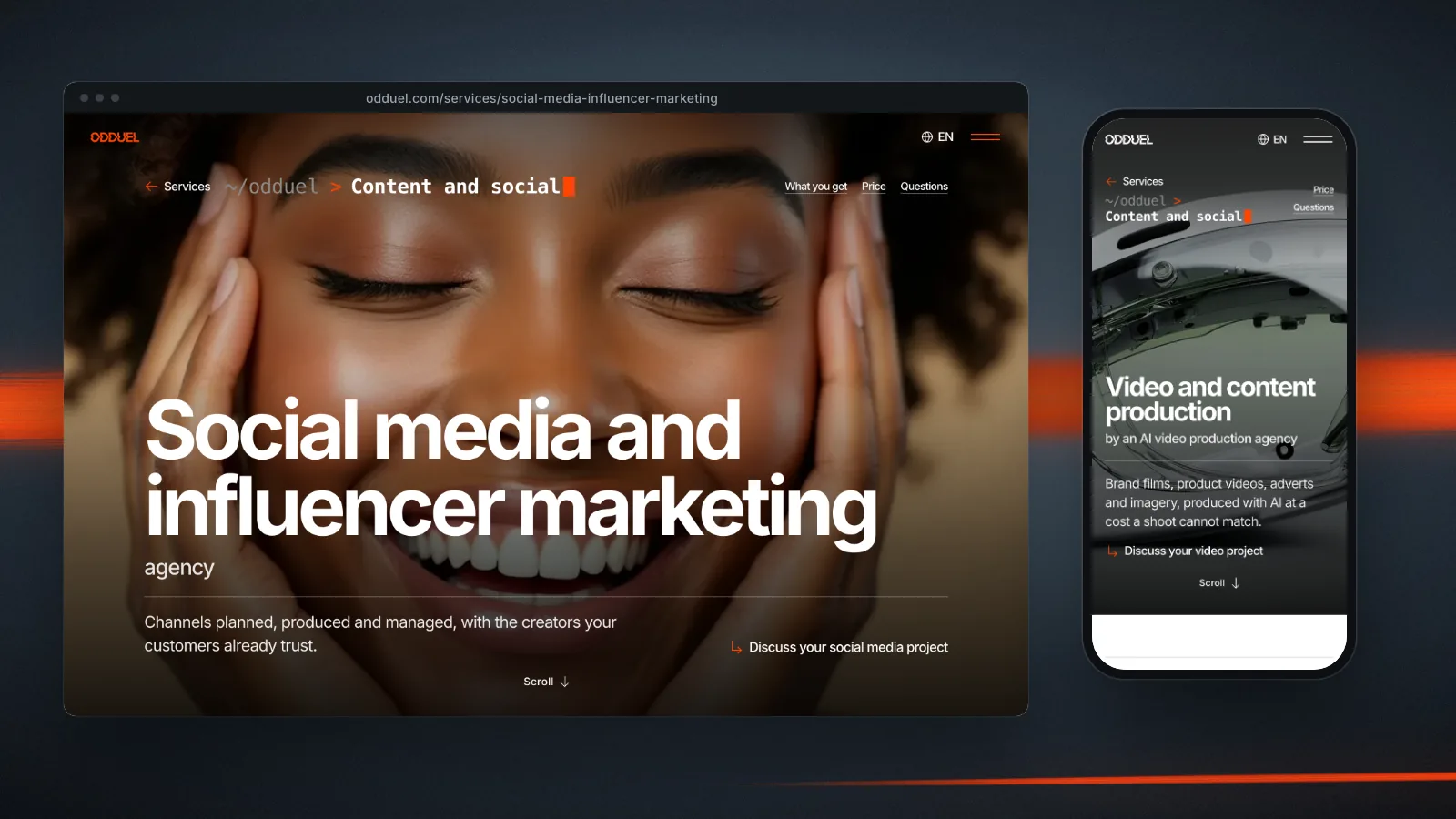
New platforms, influencer programmes, events and experimental formats can wait until the core channels perform. Add one at a time and give each a clear test period with a number it must reach. When a programme with creators is the right next step, our social media and influencer marketing service runs it as a measured campaign rather than a scatter of posts.
Do not overlook channels that cost little but need effort: press, referrals, partnerships and the direct conversations that bring a company its first clients. For a company at the very start, the digital foundations a startup needs explains what to put in place before paid marketing makes sense.
What content does the plan need?
Content feeds every channel: articles for search, posts for social, guides for email, case studies for sales. A practical content plan includes:
- Pillars: three to five subjects you know well and your audience cares about.
- Formats: articles, short video, carousels, case studies, newsletters.
- A calendar: realistic frequency, owners and deadlines.
- Reuse: one strong piece becomes several. A guide becomes a series of posts, a short video and an email.
AI has changed the economics of content. We use it for research, outlines, first drafts, variations and repurposing, with writers and editors responsible for accuracy, voice and substance. The result is more output for the same budget without the generic feel that unreviewed AI content tends to have. Video follows the same logic: the edit and the platform versions go faster, the idea and the direction do not; that is how our video and content production work is scoped.
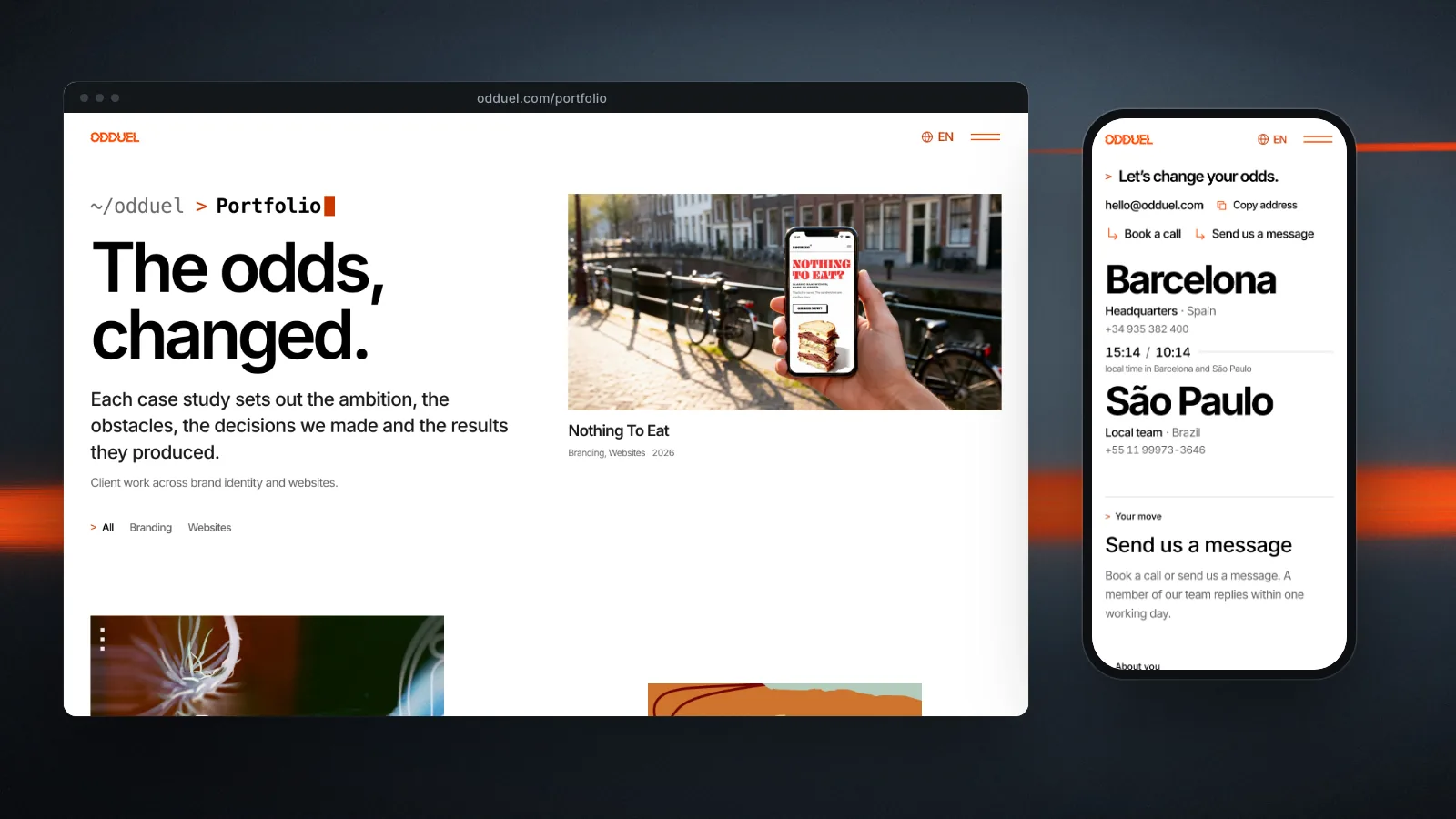
One example from our own work. For Nothing To Eat, a sandwich brand in Amsterdam, the brand kit and the website were built so that every piece of content shares one pattern, one voice and one set of pictures. A post, a poster and a page look like the same company, so each piece builds on the last.
When does paid media make sense?
Paid media buys reach and speed. Set up carelessly, it is also the fastest way to spend money without learning anything.
Good practice:
- One clear objective per campaign and a landing page built for it. If the pages are not ready, fix them first; that is the usual starting point of our website development work for marketing-led clients.
- Tight audiences at the start, widened as you learn.
- Several creative variations tested against each other. AI makes producing them quick; people decide which are on brand.
- Spend caps and review dates agreed in advance.
- Tracking set up and tested before launch, with consent respected.
For email and direct-message outreach to companies, data protection rules apply in Europe: a legitimate business reason, a clear sender, an easy way to opt out, and no messages to people who have objected.
How do you measure progress?
Measure what the business cares about, then the steps that lead to it.
| Level | Example metrics |
|---|---|
| Business | Revenue, new clients, pipeline value |
| Conversion | Leads, sign-ups, cost per lead, conversion rate |
| Engagement | Time on page, return visits, email clicks |
| Reach | Impressions, visitors, followers |
Review the top two levels monthly and the lower two weekly. Reach without conversion is a warning sign, not a success.
Set up analytics with consent mode, connect your customer records so leads can be traced to revenue, and agree a single dashboard everyone reads. Keep attribution simple at first; complex models on thin data produce confident nonsense.
How do you work with an agency?
An agency can bring skills and capacity you do not have in-house. To keep the relationship productive:
- Own the strategy. The agency should help shape it, but the goals and budget are yours.
- Own the accounts. Ad accounts, analytics and data should be in your company’s name.
- Agree reporting that ties activity to outcomes, monthly, in plain language.
- Keep production close to performance. When the people who make the content also see how it performs, it improves faster.
- Review quarterly: what to stop, what to scale, what to test next.
A full-service partner can join the dots between brand, website and campaigns, so that ads lead to pages built for them and content follows the same voice. Ask any candidate where AI sits in their process and who reviews its output. Our guide on how to choose a digital agency lists the other questions worth asking, and how AI changes web design and development sets out what the saving looks like in practice.
What does a simple ninety-day start look like?
If you are starting from little or nothing, a ninety-day plan keeps the effort focused:
- Days 1 to 30: agree goals, audience and budget; set up analytics, consent and lead tracking; fix the website pages that campaigns will send people to.
- Days 31 to 60: launch two or three channels with modest budgets and clear tests; publish the first pieces of content; start an email sequence for new leads.
- Days 61 to 90: review results against the goals; stop what does not work; increase what does; plan the next quarter.
The aim of the first ninety days is learning, not perfection: by the end you should know which channels bring the right people, what a lead costs, and which messages work.
Questions people ask
How much should a growing company spend on digital marketing?
Work back from the goal: how many customers you need and what each is worth to you. Split the budget into media, production and management so that none of the three starves the others. Start with enough to test properly in two or three channels rather than spreading thinly across many.
How long does it take to see results?
Paid campaigns produce data within weeks; search and content build over months. A first plan and set-up with Odduel typically take a few weeks, because the production is AI-assisted and the people’s time goes to the strategy and the creative. After that, results are reviewed monthly and the plan adjusted each quarter.
What should I ask before choosing a marketing partner?
How they set goals, which channels they would use for you and why, who owns the accounts and the data, how they report, and how they produce content. Ask where AI is used and who reviews what it produces. Ask for an example of a plan they changed after looking at the results.
Do I need a new website before I start marketing?
Not always, but the pages a campaign sends people to must be ready: fast, clear about the offer, with one obvious next step. Often a few new landing pages and a tidy of the existing site are enough. If the site cannot be made to convert, a redesign comes before the media budget, not after it.
How does AI change the cost and timeline?
It speeds research, content production, creative variations, tracking checks and reporting, which lowers the cost of a campaign and lets you test more for the same money. Strategy, judgement about what fits the brand, and accountability for results remain with people, and that is where the budget should go.
If you want a plan that connects your goals to a few channels you can sustain, our digital marketing service starts there and carries through to production and reporting. Or talk to us about your project.