
The main agency pricing models are fixed price (one agreed price for an agreed scope), time and materials (you pay for the time actually spent, at agreed rates) and the retainer (a recurring fee for a reserved amount of work each month). Value-based pricing and phased hybrids, which fix the price of each phase in turn, complete the picture, and the right model depends on how well the scope is known and who should carry the risk of it changing. This guide explains each model, compares them side by side, shows how they fit websites, apps and branding, and lists what a good proposal must state.
Last updated: 26 October 2026.
Why does the pricing model matter as much as the price?
Two quotes with the same total can lead to very different projects. The pricing model decides who pays when the work takes longer than planned, how easily you can change your mind, how much of your time the project needs and what you can hold the agency to at the end.
We see this every week as Odduel, a creative and technology agency in Barcelona and São Paulo. When a buyer compares quotes for website development or a new identity, the line that most often decides whether the project goes well is not the total. It is the paragraph that explains how scope, changes and payments work.
In short: fixed price suits work you can describe completely before it starts. Time and materials suits work you will discover as you go. A retainer suits work that never really ends. Most good projects combine them, phase by phase.
What is fixed price pricing?
In a fixed price contract the agency agrees to deliver a defined scope for a set amount. The price does not move if the work takes longer, provided the scope stays the same. Anything outside the scope is handled as a change request, priced separately.
Fixed price gives you certainty about the budget, which is why finance teams and boards prefer it. It also makes the agency responsible for its own estimate: if it underestimated, it absorbs the overrun. That is the strength of the model and its hidden cost, because a careful agency builds a margin for risk into a fixed price. The less clear the scope, the larger that margin has to be.
Fixed price works well when the deliverables can be written down in detail: a set number of page templates, a defined list of features, a brand identity with named outputs. It works badly when the brief says “we will know it when we see it”, because every discovery then becomes a negotiation.
What is time and materials pricing?
In time and materials (often shortened to T&M) you pay for the hours or days actually worked, at rates agreed for each role, plus any agreed costs such as licences or stock imagery. The agency usually gives an estimate, but the estimate is not a promise.
The strength of time and materials is flexibility. You can change priorities every week without a change request, stop when you have enough, and pay no risk margin for unknowns. The weakness is that you carry the overrun: if the work takes longer, you pay for it. That is why time and materials needs controls on both sides.
- Agree a rate card per role and say who will do the work.
- Set a budget ceiling, or a cap per sprint or month, that cannot be passed without your written approval.
- Ask for timesheets or a weekly report that ties hours to tasks.
- Review the remaining budget against the remaining backlog at every checkpoint.
With these in place, time and materials is often the fairest model for product work, because neither side pretends to know what it cannot know. For more on how the delivery method shapes the contract, see our comparison of agile vs waterfall.
What is an agency retainer?
An agency retainer is a recurring monthly fee that reserves a certain capacity: a number of hours or days, a set of services, or a defined output such as content, campaigns or maintenance. You pay whether or not the full capacity is used, and in return the agency keeps people available for you.
A retainer suits work that is continuous rather than a project with an end: site maintenance and security updates, ongoing design support, social content, search and paid media, a product roadmap after launch. It builds familiarity, because the same people learn your brand and your systems over months, and it smooths your budget into a predictable monthly line.
The risks are unused hours and vague output. A good retainer states what happens to hours not used in a month (whether a limited number roll over or they expire), how requests are made and prioritised, how quickly the agency responds, and what you receive each month as a report. It also has a notice period, so either side can end it cleanly.
What about value-based and phased hybrid pricing?
Two further models appear often in proposals. Neither replaces the three above; each changes how the price is set or when it is fixed.
Value-based pricing
Value-based pricing sets the fee by the value the work creates for the client, not by the time it takes. A naming project that a company will live with for decades may be priced well above the hours it needs, because the outcome matters more than the effort.
It can be fair when both sides understand the value in the same way and the agency takes real responsibility for the outcome. It becomes uncomfortable when the value is claimed but not shown. If an agency prices on value, ask what assumptions sit behind the number and what you get if the expected value does not arrive. Some agreements add a performance element tied to a measurable result, which must then be defined precisely and measured by tools both sides trust.
Phased hybrid pricing
A phased hybrid fixes the price of one phase at a time. A short discovery phase (research, workshops, scope, architecture or brand strategy) is priced first, on a fixed fee. Its output is a detailed scope, and that scope makes a reliable fixed price possible for design and build. After launch, the work moves to a retainer or to time and materials for improvements.
This is the model we recommend most often, because it removes the main weakness of each pure model. You never sign a large fixed price for a scope nobody has defined, and you never sign an open-ended time and materials arrangement for work that could have been described. Each phase ends with a decision point where you can continue, change course or stop.
How do agency pricing models compare?
The table sets out what each model means in practice for the buyer, including the two variants.
| Model | Your budget risk | Flexibility to change | Who carries the overrun | Best for |
|---|---|---|---|---|
| Fixed price | Low, once scope is agreed | Low: changes go through change requests | The agency, within the agreed scope | Well-defined deliverables and clear briefs |
| Time and materials | Higher, unless capped | High: priorities can change each cycle | The client | Products, apps and work that will evolve |
| Retainer | Predictable monthly cost | Medium: within the reserved capacity | Shared: extra work is quoted or waits | Continuous work: maintenance, content, growth |
| Value-based | Depends on how value is defined | Medium | The agency, in principle | High-impact strategic work with a clear outcome |
| Phased hybrid | Low per phase | High between phases, low within each | The agency within each fixed phase | Most websites, apps and brand programmes |
Read the table from the second and fourth columns first. They tell you where uncertainty goes. In every model someone pays for uncertainty: in fixed price through a risk margin you do not see, in time and materials through hours you do see. A good proposal makes that visible.
How do the models fit websites, apps and branding?
The kind of work shapes the best model more than any preference of the agency.
Websites
A brochure or marketing website with known templates is a natural fit for fixed price, preferably after a short paid discovery that settles the sitemap, content plan, integrations and languages. Larger sites with custom features, e-commerce or migrations fit the phased hybrid: discovery fixed, design and build fixed against the discovery output, then a maintenance retainer after launch. What drives the cost of a site itself is covered in how much does a website cost.
Apps
Apps and digital products almost always change once real users touch them. A fully fixed price for a whole app either carries a large risk margin or leads to arguments about what was “in scope”. Time and materials in fixed cycles, with a budget ceiling and a clear product owner on your side, usually serves an app better. A fixed price can still work for a tightly defined first version or prototype.
Branding
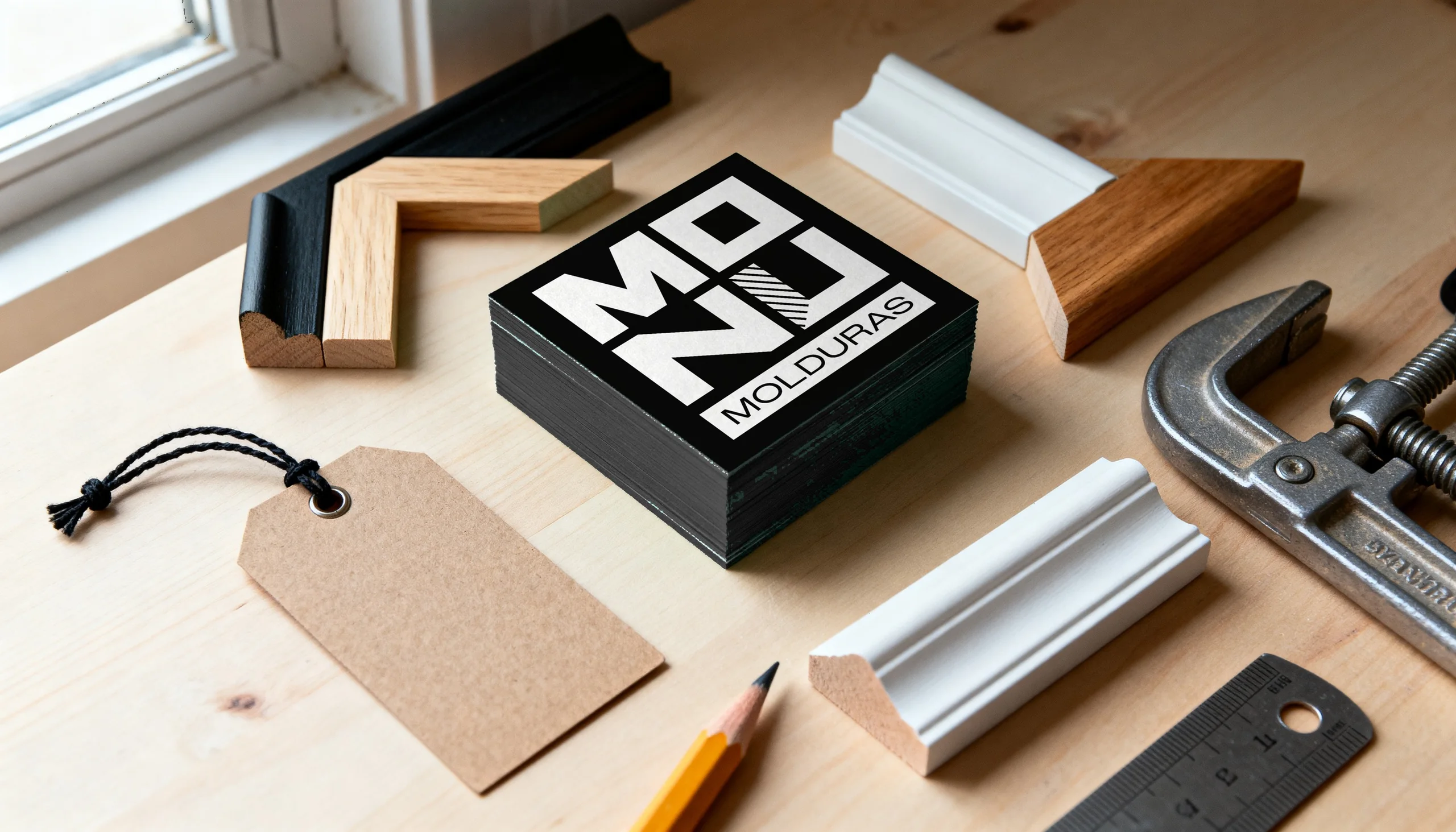
Brand identity work has clearly named deliverables (strategy, naming if needed, logo system, typography, colour, guidelines, key applications), so it usually suits fixed price, often split into a strategy phase and a design phase. When we built the identity for MONU Molduras, a framing shop, the outputs were listed from the start: the logo lockups, the stationery and the everyday applications. Our guide to branding cost explains what changes the size of such a quote.
What should a good agency proposal state?
Whatever the model, a proposal you can sign with confidence answers the same questions in writing. If one is missing, ask before you sign.
- Scope. The deliverables in specific terms: number of templates or screens, features, integrations, languages, brand outputs. Also what is explicitly not included.
- Assumptions. Who supplies content, imagery and access, and by when. Many delays start with an assumption nobody wrote down.
- Change requests. How a change is raised, estimated, approved in writing and added to the timeline and price.
- Acceptance. How each deliverable is reviewed, how many rounds of revisions are included, how long you have to approve, and what counts as accepted.
- Timeline and dependencies. Milestones, and what happens to the dates if feedback or content arrives late.
- Intellectual property. When ownership of designs, code and source files transfers to you (usually on full payment), and which third-party licences, fonts, stock or open-source components stay under their own terms.
- Payment milestones. The schedule tied to delivered work, for example a share at signature, at design approval and at launch, rather than to dates alone.
- Taxes. In the EU, prices should be shown before VAT, with VAT shown separately, because the rate and whether it is charged depend on where both businesses are established. The common rules come from the EU VAT Directive; between businesses in different member states the reverse charge often applies.
- Support and warranty. A period after launch during which defects are fixed at no cost, and what support costs after that.
- Ending the agreement. Notice periods, what is paid for work done so far, and how files and access are handed over.
A short brief is enough for a reliable fixed quote on most of these points. The more of them the agency raises before you do, the more experience it has with the problems they prevent.
Which red flags should you watch for?
Some warning signs show up in proposals regardless of the model.
- A fixed price with a one-line scope. Either the risk margin is large or the arguments will come later.
- Time and materials with no ceiling and no reporting. You cannot control what you cannot see.
- A retainer without stated output. If you cannot say what you receive each month, neither can the agency.
- Ownership that never transfers. Designs or code you pay for but cannot move to another provider.
- Unlimited revisions. It sounds generous and usually means nobody has thought about acceptance.
- Most of the payment before any work is delivered. Payments should follow progress.
- A price far below the others with the same scope. Ask what was left out or who will do the work.
- Prices with VAT mixed in or unclear. You need to see the net figure to compare quotes fairly.
None of these alone proves a bad agency. Each is a question to ask, and the quality of the answer tells you a lot.
How do you choose the right pricing model?
Choosing comes down to how much you know and how much risk you want to hold. Work through these steps with the agency.
- Describe what you already know and what you do not: users, content, features, integrations, brand foundations.
- If the unknowns are large, buy a short discovery phase on a fixed fee first.
- Fix the price for the parts that can now be described in detail.
- Use capped time and materials for the parts that will change as you learn.
- Move continuous work after launch to a retainer with a stated output and notice period.
- Write the change, acceptance, IP and payment rules into the contract before work starts.
Questions people ask
Is fixed price or time and materials cheaper?
Neither is cheaper by nature. Fixed price includes a margin for the agency’s risk, so it can cost more when the scope turns out simple. Time and materials avoids that margin but passes the overrun to you. With a clear scope fixed price is usually safer; with an uncertain one, capped time and materials is usually fairer.
What does an agency retainer usually include?
A retainer reserves a set capacity each month, measured in hours, days or defined outputs such as maintenance, content or campaigns. A good one states the services covered, response times, how requests are prioritised, what happens to unused hours, the monthly report you receive and the notice period for ending it.
How should change requests be handled in a fixed price project?
Every change should be raised in writing, estimated by the agency in time and cost, and approved by you before work starts. The approved change then updates the scope, the price and the timeline. Small changes can be grouped and reviewed together so the project keeps moving without constant renegotiation.
When do I own the designs and code?
Ownership normally transfers when you have paid in full, and the contract should say so in plain words. It should also list third-party elements, such as fonts, stock images, plugins and open-source code, that stay under their own licences. Ask for the source files and access you need to move to another provider.
Should agency prices include VAT in the EU?
Proposals between businesses in the EU should show prices before VAT and state VAT separately. Whether VAT is charged, and at what rate, depends on where both businesses are established; between member states the reverse charge often applies. Showing the net price lets you compare quotes from different countries on equal terms.
What is the best pricing model for a website?
For most websites a phased hybrid works best: a short fixed-fee discovery to settle the sitemap, content and integrations, a fixed price for design and build based on that output, and a maintenance retainer after launch. Simple sites with known templates can go straight to fixed price.
If you are comparing quotes or planning a project, start with the scope and the risk, then let the pricing model follow. We can turn a short brief into a phased proposal with a fixed price for each phase that can be described, and clear rules for the rest. See how we work on website development, or talk to us about your project.
Further reading: AI development company vs freelancer or in-house team.