To choose a web design agency in Barcelona, judge each one on the live sites it has built, the technology it proposes and why, and what you will own and be able to change after launch, not on the pitch deck. Ask to see two or three working sites, test them on your own phone, and ask for a fixed quote after a short brief. This guide covers what a web partner should bring, the kinds of partner compared, the questions to ask about stack, ownership, languages, accessibility and consent, a selection process and the red flags.
Last updated: 21 October 2026.
What does a web design agency deliver?
A web design agency plans, designs and builds a website, then hands it over in a state your team can run. The work normally covers discovery, the structure of the pages, interface design, content, development, testing, launch and the first period of care after it.
The phrase hides very different offers. Some partners only produce screens in a design tool and leave the build to someone else. Others only write code from designs you supply. A full-service partner carries the site from the first workshop to a tested launch, and can carry on with search, content and maintenance afterwards.
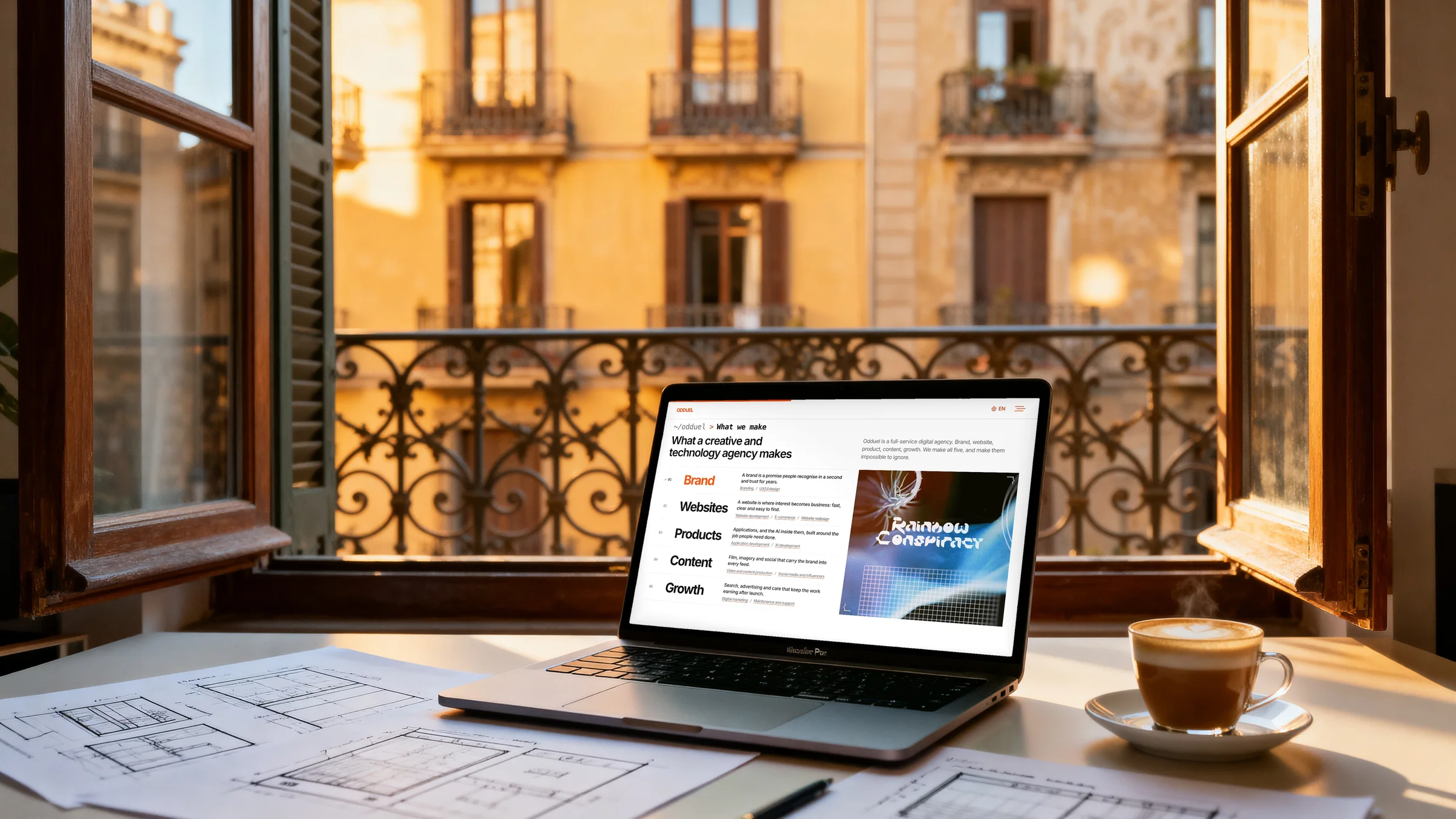
We write this as Odduel, a creative and technology agency in Barcelona and São Paulo, and our website development service is one of the options you might weigh. The advice below should help whoever you hire.
In short: test the live work, not the screenshots. Ask what the site will be built with and why that suits you. Settle ownership, languages, accessibility and cookie consent before you sign, not after launch. Compare written proposals on scope and the people involved, and start with a paid discovery stage.
What should you look for in a web design company in Barcelona?
A beautiful case study page proves little about how a site behaves. Open the agency’s past work in a browser, on a mid-range phone and on a slow connection, and look for these signs.
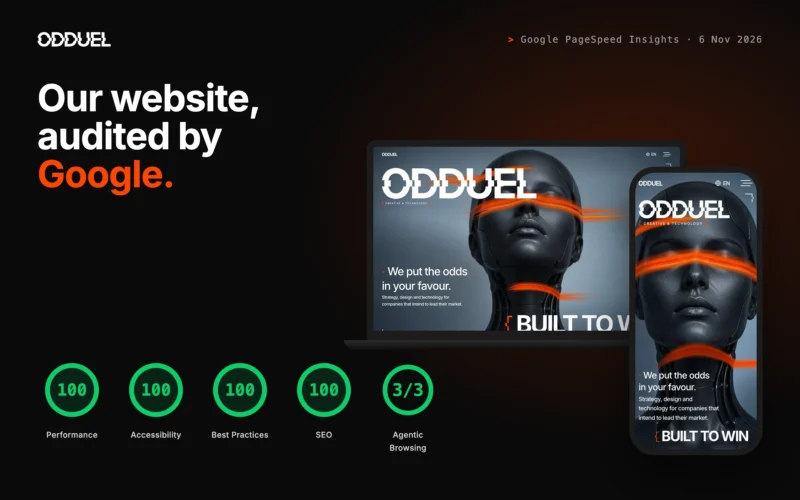
- Sites that load quickly and hold steady. Pages should appear fast and not jump while they load, because visitors and search engines both notice.
- Content your team can edit. Ask to see the editing screen of a past project. If a simple text change needs a developer, the site will age quickly.
- Design that comes from a reason. Each project should explain the audience, the goal and the decisions taken, not only the final look.
- Range. Sites for a restaurant, a shop and a service business should not look like the same template recoloured.
- Search built in. Clean addresses, one main heading per page, proper titles and descriptions and structured data belong in the build, not in a later invoice.
- Care after launch. Updates, backups, security and small changes need an owner. Ask who that is.
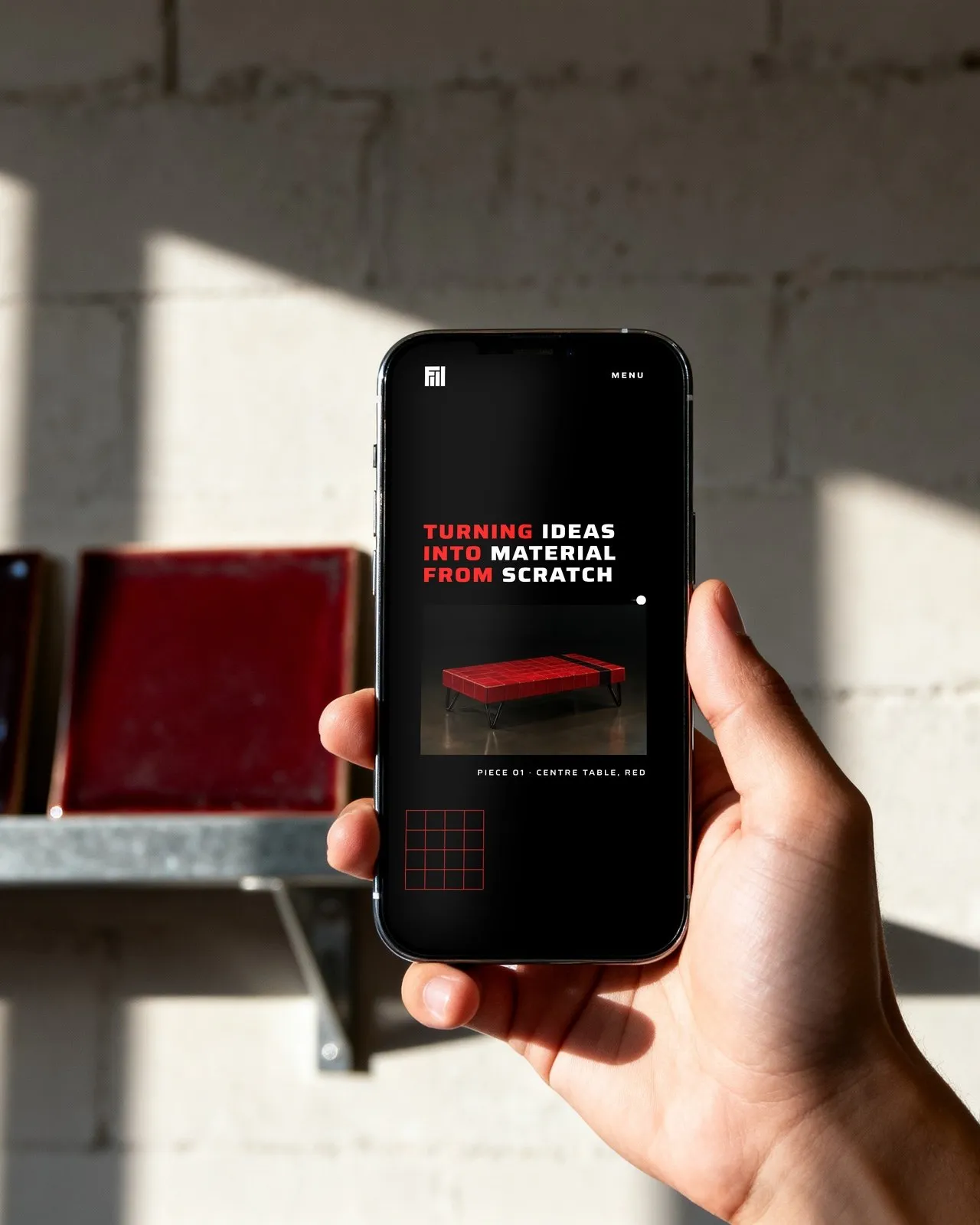
Our site for Torto Cozinha, a restaurant, is a small example of the second and third points: the brand had to carry into a site the owners could keep current, with booking by WhatsApp and the menu one tap away. The Torto Cozinha case study shows the reasoning. If the identity itself still needs work, our guide to choosing a branding agency in Barcelona covers that side.
Which kind of web partner suits your project?
Freelancers, studios, agencies and development shops all build websites, but they suit different scopes. The table compares them on the points buyers usually weigh.
| Partner | Best suited to | Strengths | Limits to plan for |
|---|---|---|---|
| Freelance web designer | A small brochure site, a tight scope, a single language | Direct contact, quick decisions, low overheads | One person’s skills and holidays; content, search and accessibility checks may sit outside |
| Design studio | A distinctive site where the visual work leads | Strong craft and a clear point of view | The build is often passed to a contractor; ask who writes the code |
| Web design agency | A company site, a shop or a multilingual site that must keep growing | Strategy, design, content, build, testing and care together; capacity for larger scopes | More people and more structure, so a clear brief and a named lead matter |
| Development shop | Complex logic, integrations, custom platforms | Engineering depth, testing discipline | Design and content are often expected from you; the result can feel generic |
The right choice depends on what the site must do. A one-page site for a new café may need nothing more than a capable freelancer. A company that sells online in several countries, with forms, consent and three languages, usually needs the breadth of an agency. If you are still deciding how to pay for the work, our article on agency pricing models explains fixed price, time and materials and retainers.
What questions should you ask about the build?
The first meetings are where you learn most. Bring questions that make an agency show its method and its trade-offs.
Stack and ownership
- Which platform do you propose, and why does it suit our team rather than yours?
- Who will own the domain, the hosting account, the code, the design files and the content?
- Can another developer take the site over without you, and what documentation will we receive?
- Which plugins, licences or paid services will we depend on, and who renews them?
Ownership deserves a clear answer in writing. The domain and hosting should be in your company’s name, the code and design files should be handed over, and any licensed fonts or photographs should be licensed to you.
Languages
- How will you build a site in Spanish, Catalan and English: separate pages, a translation layer or a separate site per language?
- Will each language have its own addresses, page titles and descriptions, with hreflang links between them?
- Who writes and checks the translations, and how are they updated when the English changes?
Many businesses in the city need at least Spanish, Catalan and English, and often more for buyers across Europe. Ask to see a multilingual site the agency has built and switch language on a deep page, not only on the home page. Google’s guidance on managing multi-regional and multilingual sites is a good reference for what to expect.
Accessibility and consent
- How do you design and test for accessibility, and against which standard?
- How does the cookie banner work, and does anything load before the visitor agrees?
- How are form submissions stored, and for how long?
Since 28 June 2025, the European Accessibility Act applies to many consumer services sold online in the EU, including e-commerce, so accessibility is no longer only good practice for many businesses. Our guide to website accessibility explains what that means for a site. On consent, the GDPR and the ePrivacy rules mean analytics and advertising tags should not run until the visitor has said yes; ask the agency to show you this working on a past site.
How do you choose a web design agency in Barcelona, step by step?
A short, structured selection gives you proposals you can compare like for like. This is the process we would suggest to any buyer.
- Write a one-page brief. Say what the business does, who the site is for, what it must do (sell, take bookings, generate enquiries, recruit), which languages it needs and when it must launch.
- List what exists. Note your current site, domain, hosting, brand files, photographs and content, and who has access to each.
- Agree an internal budget range. You need it to judge whether a proposal is realistic, even if you do not share it at first.
- Shortlist three to five partners. Choose on relevant live work and on the kind of partner the table above points to.
- Hold a first call with each. Use the questions above, and notice who asks you the sharper questions.
- Ask for written proposals. Each should set out scope, stages, the platform, the people involved, timing, what you will own and the care after launch, followed by a fixed quote.
- Compare scope, not totals. Line the proposals up page by page and feature by feature; a lower figure often leaves out content, languages or testing.
- Speak to past clients. Ask how the project ran and how the agency handled problems after launch.
- Start with discovery. Agree a first paid stage that ends with a sitemap, key page designs and a confirmed plan before the full build begins.
What are the red flags when hiring a web designer?
Some warning signs show up in the first conversation or the first proposal. Treat them seriously.
- Only screenshots. If an agency cannot show you live sites, you cannot judge speed, editing or accessibility.
- A platform chosen before your brief. Every project landing on the same tool suggests the tool suits the agency, not the client.
- The domain or hosting in the agency’s name. It makes leaving hard and can leave you without your own site.
- No word on languages until late. Adding languages after the build usually means reworking addresses, templates and search settings.
- Accessibility as an extra. It should be part of design and testing from the start, not a plugin added at the end.
- A banner that does nothing. If trackers run before consent on the agency’s own site, expect the same on yours.
- Promised rankings or traffic. No honest partner can guarantee a search position. Look for a clear method instead.
- No plan after launch. A site with no one responsible for updates and backups is a security risk.
How does Odduel approach website projects?
Our headquarters is in Barcelona and we have an office in São Paulo, and we build sites for clients across Europe and beyond. A website project with us starts with a short brief and a fixed quote, then moves through discovery, structure, design, content, development, testing and launch.
Strategy, structure, art direction, writing and final review are human work, and that is where most of the time goes. We use AI for repetitive production, such as building out design-system components, first drafts of front-end code, preparing images, first-pass translations and parts of testing, which keeps timelines in weeks. Every page is reviewed by the people responsible for it.
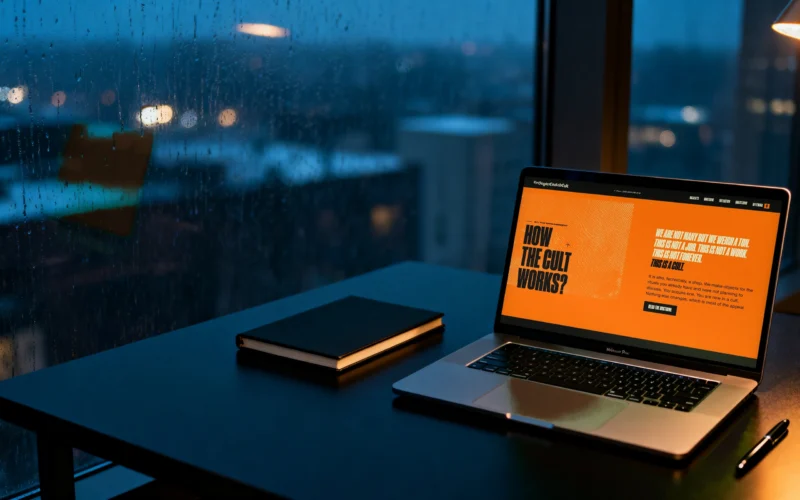
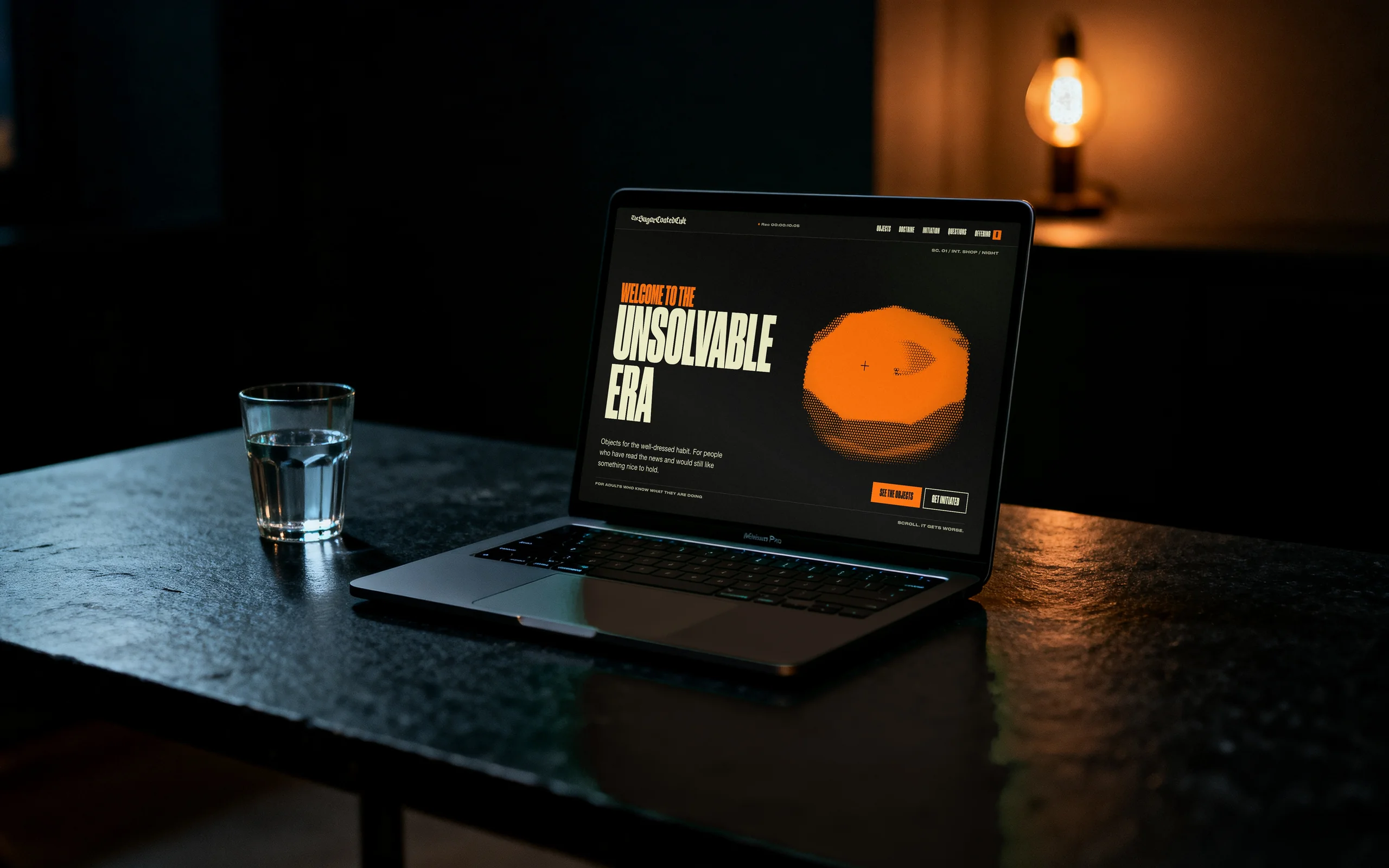
We plan languages, accessibility and consent from the first workshop, and we hand over the domain, the code, the design files and the editing access. Because we are full service, the same project can carry on into branding, e-commerce, search or maintenance without a new brief. Our work for Torto Cozinha, Fab Mater, Nothing To Eat and The Sugar Coated Cult shows sites in very different sectors, each with the thinking behind it.
Questions people ask
How long does it take to build a website?
A focused company site can be designed and built in a few weeks, while a multilingual site with a shop, integrations and a large amount of content takes considerably longer. The main factors are scope, how ready your content is, the number of languages and how quickly decisions come back. Ask every agency for a timeline broken down by stage.
Should I hire a local web design agency or work remotely?
Both work well. A local agency makes workshops and photography sessions in person easy, which helps early on, while remote work widens your choice and is routine for most web teams. What matters more is that the agency’s process, languages and working hours suit yours, and that you meet the people who will lead the project.
Which platform should my website be built on?
It depends on who will edit the site, what it must do and how it will grow. A content site is often well served by a mature CMS, a shop by a dedicated e-commerce platform, and a product with complex logic by a custom build. A good agency explains the trade-offs and recommends what suits your team, not its habits.
How much does a website from an agency in Barcelona cost?
The cost depends on scope rather than location: the number of page templates, the amount of content, languages, integrations, a shop, accessibility testing and the care after launch all change the figure. A credible agency gives you a fixed quote after a short brief, broken down by stage, so you can see exactly what each part of the work includes.
Do I need a website in Spanish, Catalan and English?
It depends on your customers. A business selling to people in Catalonia often benefits from Catalan and Spanish, and English widens reach across Europe and to visitors. Each language should have its own addresses, titles and descriptions and be written or checked by a person, so plan the languages before the build rather than adding them later.
If you are comparing web design agencies in Barcelona, start with your one-page brief and take the questions above into every first call. If you would like us on your shortlist, read more about our website development service or talk to us about your website, and we will reply with clear next steps and a fixed quote after a short brief.