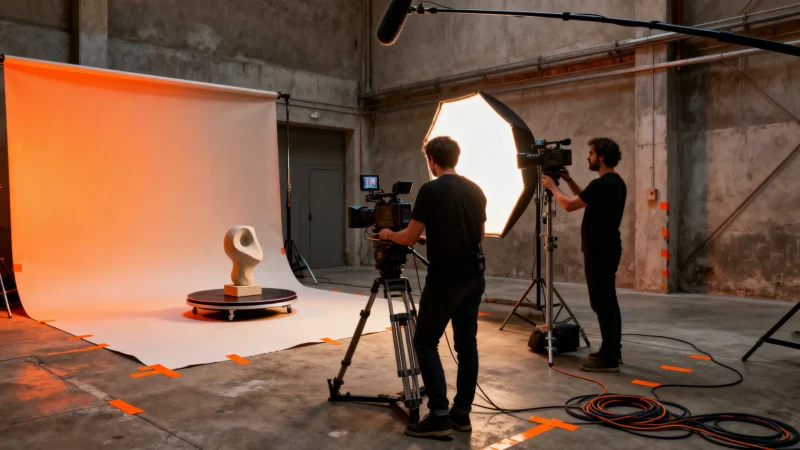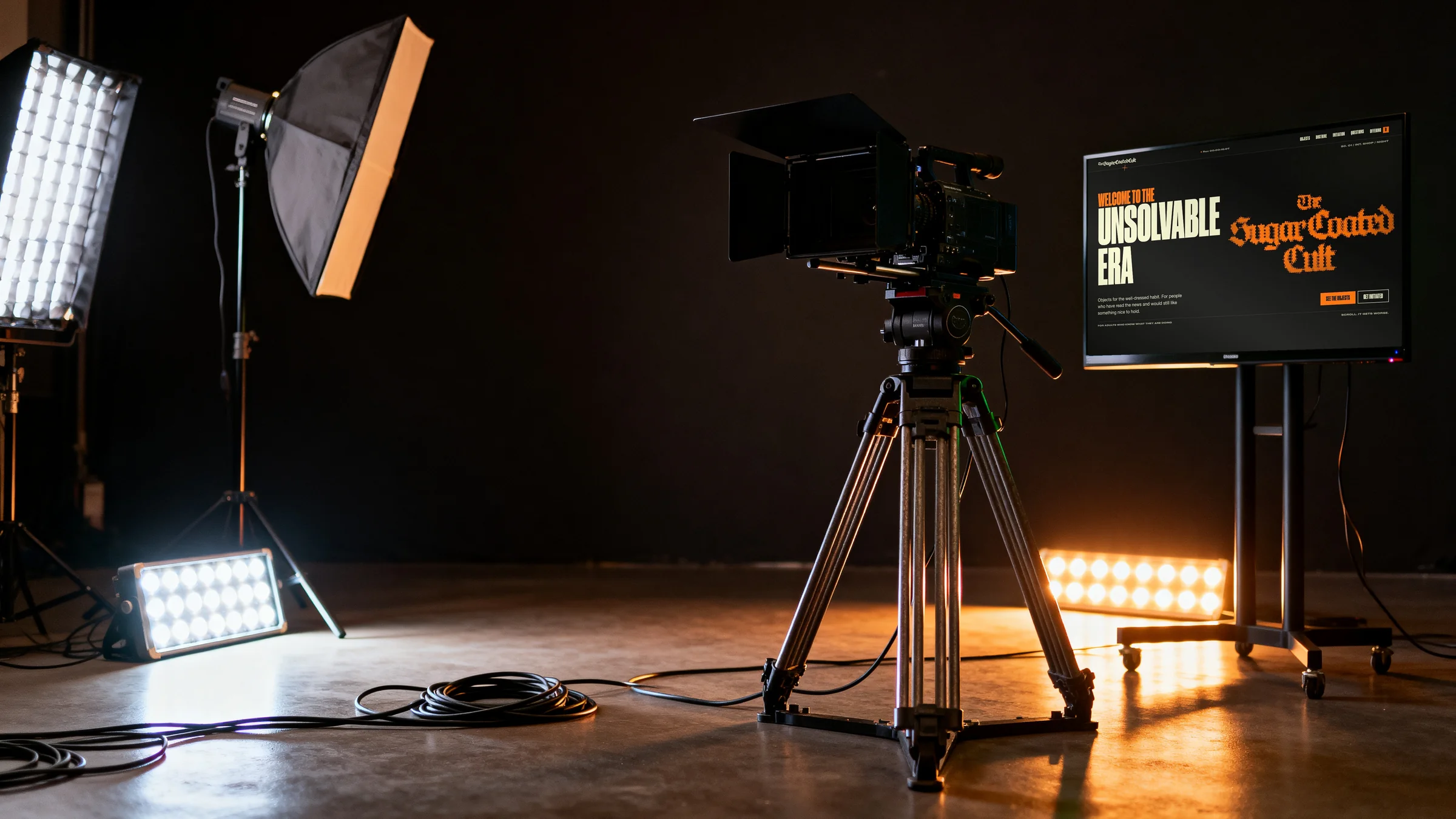
Corporate video production cost is set by the time a film takes to plan, shoot and finish, not by its running time: pre-production, crew, shooting days, locations, talent, editing, music licences and the number of versions are the lines that move the price. A two-minute brand film can cost more than a twenty-minute training video, because the first needs a larger crew, more locations and far more finishing per second on screen.
Last updated: 21 October 2026.
This guide explains each cost driver in plain words, compares the common types of corporate video side by side, shows how to read a quote line by line and lists the choices that lower the price without lowering the result.
What does corporate video production cost?
There is no honest single figure, and any page that gives you one without knowing your brief is guessing. What can be said with confidence is how the budget divides. On most commissioned films, the shooting days and the crew on them take the largest share. Post-production (editing, colour, sound, graphics) comes next and grows quickly with every extra version. Pre-production is a smaller line, yet it decides how much the other two will cost, because every hour of planning saves time on set.
At Odduel, a creative and technology agency in Barcelona and São Paulo, our video and content production work starts from that split. AI now carries much of the repetitive production: transcripts, rough cuts, subtitles, first-pass translations, background clean-up and, where it suits the brief, generated scenes and imagery. That shortens the days and the edit, so a project costs less and is delivered in weeks. The idea, the script, the art direction, the direction of people on camera and the final cut stay human work, and that is where the budget should go.
In short: the price of a corporate video follows its days, its people and its versions. Fewer shooting days, a smaller crew and a clear list of deliverables lower the cost more than anything else. A sharp brief lowers it too, because it removes guesswork from every later stage. A fixed quote follows a short brief, once the format, the length, the places and the versions are known.
What drives the cost, line by line?
Every quote for a corporate film, whoever writes it, is built from the same lines. Knowing them lets you compare two offers and see where the money actually goes.
Pre-production
Pre-production is everything before the camera rolls: the brief, the creative idea, the script or interview outline, the storyboard or shot list, casting, location scouting, permits and the shooting schedule. It is usually a modest part of the total, but a weak pre-production is the most expensive mistake in video, because it shows up later as an extra shooting day or a week of re-editing.
A good pre-production phase ends with three documents you approve: the script (or questions for interviews), the shot list and the schedule. Once those are signed, the rest of the quote can be fixed.
Crew
The crew is the people on set. A small interview shoot may need a director who also operates the camera and one sound recordist. A brand film may need a director, a director of photography, camera assistants, a gaffer for lighting, a sound recordist, a make-up artist, a producer and a runner. Each person is booked by the day, so crew size multiplied by days is the backbone of most quotes.
Ask who is on set and why. A larger crew is not a sign of quality in itself; it is right when the film needs controlled light, movement or several set-ups in a day.
Shooting days
Shooting days are the single strongest lever on corporate video production cost. Each day carries crew, equipment, transport, catering and often location and talent fees. A well-planned shoot fits more set-ups into fewer days; a vague one adds a day “to be safe”.
Half days exist but rarely save half: set-up, travel and the minimum booking of most crew stay the same. Grouping several films into one shoot (an interview series, product shots and social cut-downs on the same day) is usually the best value in the whole budget.
Equipment
Camera, lenses, lighting, grip, sound kit and sometimes a drone, a slider or a gimbal. Equipment is often bundled into the crew’s day rate; when it is listed separately, check that it matches the look you agreed. Cinema cameras and large lighting packages make sense for a brand film shown on large screens, much less for a recorded webinar.
Locations and permits
Filming in your own office costs little beyond disruption. A hired studio, a venue or an outdoor location adds hire fees, travel, sometimes a location manager, and in public places a filming permit from the local authority. Each change of location costs set-up time, so a film that moves between four places takes far longer to shoot than one that stays in two.
Talent
Talent means anyone on camera or on the soundtrack who is not your own staff: actors, presenters, models, voice-over artists, extras. Their fee has two parts: the session (the day or hour of work) and the usage (where the film will be shown, in which countries and for how long). Usage often costs as much as the session for advertising work, so define the channels and the period before casting. Your own people on camera cost no fee, but they need more direction and usually more takes.
Post-production
Post-production turns the footage into the film: logging and selecting, the edit, colour grading, sound design and mix, motion graphics, titles, subtitles and the final exports. It is measured in editor days, and it grows with the amount of footage, the number of review rounds and the amount of graphics. Animation and visual effects are the heaviest part of post, because every second is built rather than filmed.
This is also where AI saves the most time today: transcripts, rough selections, subtitle drafts, clean-up of backgrounds and noise. The cut itself, the rhythm and the final look remain an editor’s judgement.
Music and licences
Music can come from a stock library, be commissioned from a composer, or be a known commercial track. A library licence costs a fraction of the other two; a commercial track for a campaign can become one of the largest lines in the budget, and its rights are negotiated per use, territory and period. The same logic applies to stock footage, fonts and archive material. Read the licence terms, not only the price: a track cleared for your website may not be cleared for paid social or broadcast.
Versions and formats
One film rarely stays one file. You may need a long version, a 30-second cut, a 15-second cut, vertical and square formats for social channels, subtitles in several languages, a version without subtitles and a version with a different ending for each market. Each version is editor time and review time. Listing every version in the brief is the simplest way to avoid surprises on the final invoice.
What does a corporate video cost by type?
The table compares the common types of corporate video by the lines that weigh most in each. It describes relative size within each film, not prices.
| Type of video | Pre-production | Crew and days | Talent | Post-production | What raises the cost most |
|---|---|---|---|---|---|
| Brand film | Large: idea, script, storyboard | Large crew, several days | Often actors or models | Heavy: grade, sound, graphics | Locations, usage rights, music |
| Product video | Medium: shot list, styling | Small studio crew, short | Hand model or none | Medium to heavy | Number of products and set-ups |
| Explainer (animated) | Medium: script, storyboard | None | Voice-over only | The largest share | Length and style of animation |
| Interview or testimonial | Light: questions, schedule | Small crew, one day | Your own people | Light to medium | Number of people and places |
| Recruitment film | Medium: casting your staff | Small to medium, one or two days | Your own people | Medium | Locations across sites |
| Event film | Light: run sheet | Crew for the whole event | None | Medium, fast turnaround | Length of the event, same-day edits |
| Training or internal video | Light to medium | Small crew or screen capture | Presenter or staff | Light to medium | Number of modules and languages |
| Social media series | Medium: formats, scripts | One shoot for many pieces | Creators or staff | Many short edits | Number of cut-downs and formats |
Two patterns stand out. Filmed live action spends its money on set; animation spends it in post. And whichever type you choose, every extra version or format adds editing time, which is why social media series are cheaper per piece than one-off films only when they are shot together. If creators are part of the plan, our guide to influencer marketing cost explains how their fees and usage rights are set.
What changes the price of the same video?
Two quotes for the “same” two-minute film can be far apart, and the reasons are usually visible once you know where to look.
- Ambition of the look. Controlled lighting, camera movement and a full grade take more crew and more time than natural light and a fixed camera.
- Number of set-ups. Every new angle, room or scene means moving lights and camera. Ten set-ups in a day is a different shoot from three.
- Who is on camera. Professional actors take fewer takes but carry fees and usage; your own staff are free but slower.
- Travel. Crew travel, overnight stays and kit transport when the shoot is far from where the crew is based.
- Review rounds. Each round of comments on the edit costs editor time. Two rounds are standard; a fifth round is often where budgets slip.
- Deadline. A short turnaround may need more editors in parallel or weekend work.
- Rights. Talent usage, music and stock footage cleared for more channels, more countries or a longer period cost more.
- Accessibility and languages. Subtitles, transcripts and audio description are separate deliverables. For video shown in a digital service covered by the European Accessibility Act, which applies since 28 June 2025, plan them from the start rather than adding them at the end.
How do you read a corporate video quote?
A clear quote lets you see what you are paying for and what would change the price. Read it in this order.
- Check the deliverables first. The quote should list every final file: length, format, aspect ratio, languages, subtitled or not. If the list is vague, everything else is vague too.
- Find the shooting days and the crew. Count the days and the people on each. Ask what each role does; a quote that hides crew inside one “production” line is hard to compare.
- Look at pre-production. It should name the script, the shot list, casting and scouting. A very thin pre-production line often means the cost will appear later as extra days.
- Read the post-production line. It should say how many editor days, how many review rounds are included, and whether colour, sound mix, graphics and subtitles are in it.
- Separate the third-party costs. Locations, talent, music, stock and permits are often passed through. Check whether they are estimates or fixed, and whether a handling fee is added.
- Read the rights. Who owns the finished film, the raw footage and the project files? Where and for how long may you use the talent and the music? Rights you forgot to buy are expensive to add later.
- Check what is excluded. Travel, overtime, extra review rounds, extra versions and cancellation terms. The exclusions tell you where a fixed quote can still move.
- Compare like with like. Line up two quotes by the same lines: days, crew, post, rights, versions. The cheaper total often has fewer of one of them.
The shape of the fee matters as well as the total. A fixed price for a defined film, a day rate for crew and editing, or a retainer for a monthly series each suit different needs; our article on agency pricing models compares them.
How can you lower the cost without lowering the result?
The aim is to spend on what the viewer sees and hears, not on time lost to vague planning.
- Write a one-page brief. Audience, the one thing the film must say, where it will be shown, length, deadline and the list of versions.
- Approve the script before the shoot. Changes on paper are cheap; changes after filming are not.
- Shoot several pieces in one day. Plan the brand film, the interviews, product shots and social cut-downs together.
- Limit locations. Two well-chosen places beat five rushed ones.
- Use your own people where it is credible. Real staff often carry more conviction than actors, and cost no usage fee.
- Choose library music unless the track is the idea.
- Fix the number of review rounds and name one decision-maker.
- Use AI where it removes repetitive work: transcripts, subtitles, translations, rough cuts and, for some films, generated scenes instead of an extra shoot day. Keep the idea and the final cut human.
- Reuse your brand assets. Logo animations, typefaces and colour rules defined once in your brand guidelines save graphic time on every film.
Who owns the footage and the rights?
Ownership is part of the price, so settle it in the quote. Normally you own the finished film for the uses agreed. Raw footage and editable project files are sometimes included and sometimes priced separately; if you plan to re-cut the material later, ask for them now. Talent and music are licensed, not sold: their terms set where, how long and in which countries you may show the film.
Personal data matters too. Filming identifiable people, including staff and event guests, means collecting personal data under the GDPR: a signed release from everyone featured, and a clear notice at events, should be part of pre-production rather than an afterthought.
How long does corporate video production take?
Time and cost move together. A short interview film can go from brief to final file in a few weeks: about a week of planning, a day of shooting, a week or two of editing with review rounds. A brand film with casting, several locations and a full grade usually needs longer, mostly in pre-production and post. Animation takes longest per minute, because every frame is made. Using AI in the edit and in the subtitles shortens the finishing stage noticeably; it does not remove the time a good idea and a good script need.
Questions people ask
Why do corporate video quotes vary so much?
Quotes vary because they describe different films. One may include a larger crew, more shooting days, professional actors with wide usage rights, a licensed track and many versions, while another includes none of these. Compare quotes line by line: deliverables, days, crew, post-production, review rounds and rights. The gap usually sits in one or two of those lines.
Is animation cheaper than live-action video?
Not necessarily. Animation removes the crew, locations and talent, but moves the work into post-production, where every second must be designed and built. A simple animated explainer can be economical; a detailed character animation can cost more than a filmed piece. The style of animation and the length are what set its price.
How much of the budget goes on post-production?
It depends on the type of film. For live action, the shoot usually takes the largest share and post comes second. For animation, post-production is nearly the whole budget. In every case, post grows with the number of versions, formats, languages and review rounds, so listing them in the brief keeps that line under control.
Does using AI make corporate video cheaper?
Yes, where it replaces repetitive work. Transcripts, subtitles, first-pass translations, rough cuts, clean-up and some generated scenes take far less time than before, which shortens the edit and can save a shooting day. The idea, the script, direction and the final cut still need people, and that is where the budget is best spent.
What should a video production brief include?
A useful brief names the audience, the single message, where the film will be shown, the length, the deadline, the list of versions and formats, any brand rules, who appears on camera and who approves. With those points, a producer can propose a format, a schedule and a fixed quote instead of a range built on guesswork.
Who owns a corporate video once it is paid for?
Usually the client owns the finished film for the uses agreed in the contract. Raw footage and project files may be included or priced separately. Talent performances and music are licensed for set channels, countries and periods, not sold outright. Check all three points in the quote before you sign, because adding rights later costs more.
If you are planning a brand film, a product video or a series for your channels, start with a one-page brief and we will turn it into a format, a schedule and a fixed quote. See how we work on video and content production, or talk to us about your video.