Video content production is the process of planning, filming or animating, editing and delivering video that a brand uses to explain, sell and stay visible: product films, social clips, explainers, adverts, case studies and website loops. For brands selling in Europe, effective video content production starts with a clear purpose for each piece, plans every format and language from one shoot, gives sound and captions the same care as pictures, and secures rights for music, talent and footage before anything is published. This guide covers where to start, the main types of video, each phase of production, what drives the cost, rights and accessibility in Europe, how to choose a partner and how to measure results.
Last updated: 4 November 2026.
What is video content production?
Video content production is everything needed to turn an idea into finished video files ready for each channel: strategy, scripting, planning, filming or animation, editing, sound, colour, graphics, captions and delivery in every format required.
For brands, the shift of recent years is from single, large productions towards systems of content: one well-planned production that yields a main film, short cuts for social media, stills, loops for the website and versions for each market. Planning for that from the start is what makes video affordable and consistent.
At Odduel, a creative and technology agency in Barcelona and São Paulo, our video content production service covers concept, production, motion design, sound design and delivery for websites, social media and campaigns.
In short: give each video one purpose and one audience. Plan every format, length and language before the shoot. Write a script and storyboard, even for short clips. Treat sound design and captions as essential. Clear the rights to music, people and locations in writing. Measure on what viewers do after watching, not only on views.
Where should a company start with video content production?
Start with what the video must achieve and where it will be seen. The channel decides the format, length and style more than any creative idea.
- Set the purpose. Explain a product, drive sales, build awareness, recruit, or show a finished project.
- Define the audience. Who watches, on which device, with or without sound, and in which language.
- List the channels. Website, social platforms, ads, marketplaces, presentations, events. Each has its own aspect ratio and length.
- Gather existing assets. Brand guidelines, footage, photography, product samples and animations you can reuse.
- Set the budget and the deadline. Including how many versions and languages you need.
- Plan the series, not the single film. Decide what else the same production should yield: cut-downs, stills, loops, behind-the-scenes clips.
What types of video do brands produce?
Most brand video falls into a few types, each with its own purpose and production approach.
| Type | Purpose | Typical length | Production approach |
|---|---|---|---|
| Brand film | Show what the brand stands for | Medium | Live action, high craft |
| Product video | Show a product in use, its details and benefits | Short to medium | Studio or location filming, macro shots |
| Explainer | Make a service or process easy to understand | Short to medium | Animation or motion graphics |
| Social clips | Stay visible and engage in feeds | Very short | Vertical, fast, often creator-led |
| Advert | Drive a specific action | Very short | Several versions for testing |
| Case study film | Show finished work and how it was made | Short to medium | Mix of footage, screens and motion |
| Website loops | Bring pages to life silently | A few seconds, looping | Motion design, small file sizes |
Animated explainers are a discipline of their own; our article on the explainer video covers when they work and how to brief one.
What does video content production involve in practice?
Video content production involves three classic phases, with distribution added as a fourth for brands.
Pre-production
Pre-production is where most of the quality and cost is decided. It covers the concept, script, storyboard, shot list, casting, locations, props, styling, schedule and the list of every deliverable. A detailed plan here saves days on set and in the edit.
Production
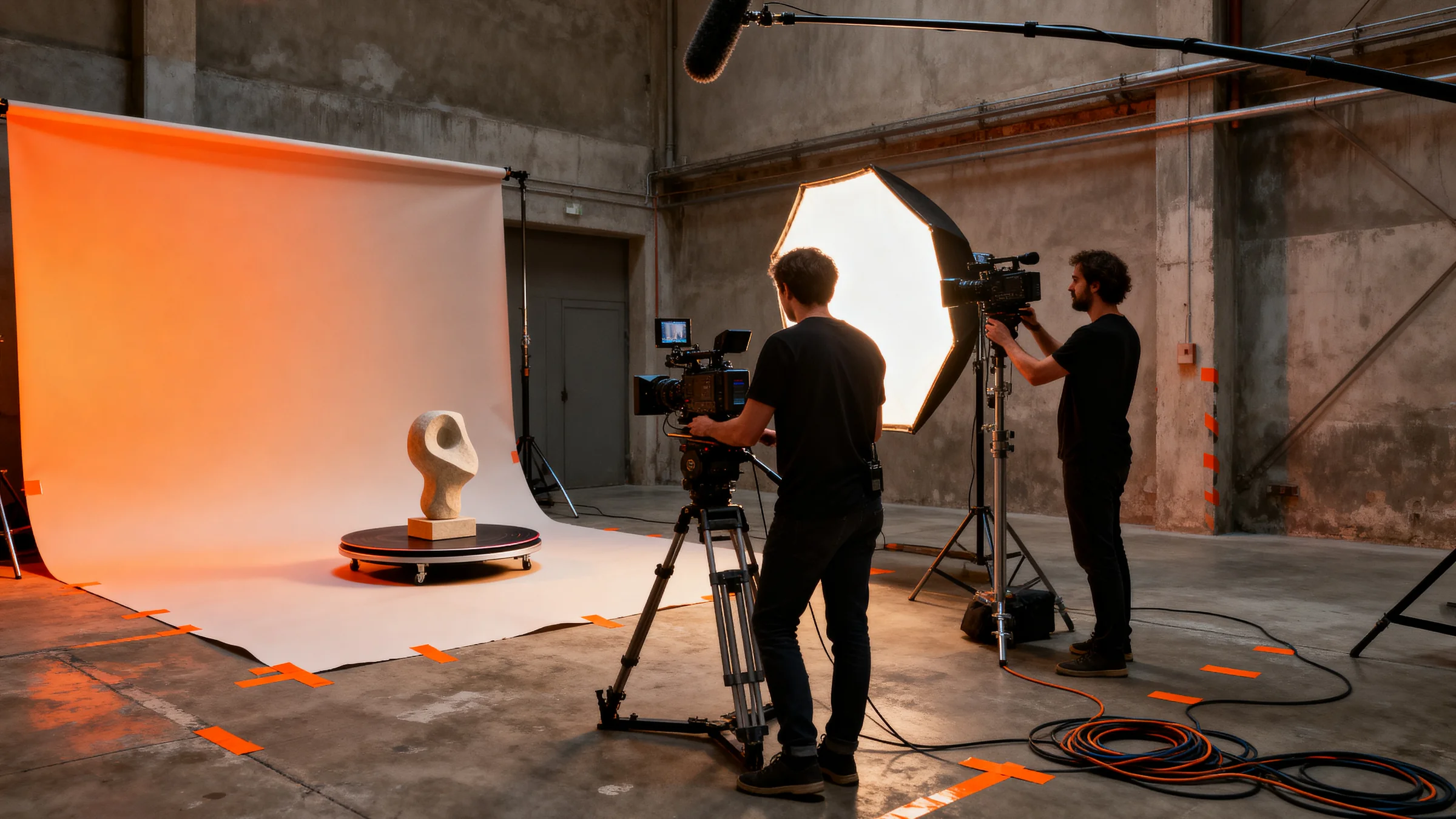
Production is the filming or animation itself: crew, camera, lighting, sound recording, art direction and direction of talent. For animation and motion design, it is the design and animation of every scene.
Post-production
Post-production turns raw material into finished films: editing, colour grading, graphics and titles, sound design, music, voice-over, mixing, captions and versions for each format and language. Sound deserves special attention: a film with careful sound design feels finished; silence or generic music rarely does.
Delivery and distribution
Delivery provides each file to the right specification for each channel, with thumbnails, captions files and titles. Distribution plans where and when each version is published, and how paid media will support it.
How do you plan video for social media, websites and ads?
Plan each channel’s needs into the shoot, because changing format afterwards is costly or impossible.
- Aspect ratios: vertical for most social feeds and stories, square or vertical for many ads, horizontal for websites and presentations. Frame shots with room for each crop.
- Length: the first seconds decide whether people keep watching in a feed; website loops need only a few seconds; brand films can take their time.
- Sound off: much social video is watched without sound, so the story must work with captions and pictures alone.
- Sound on: where people do listen, sound design and music carry emotion and quality.
- Website performance: video on a website must be compressed, lazy-loaded and given a still poster image so it does not slow the page.
- Languages: plan voice-over, on-screen text and captions per market, keeping on-screen text separate so it can be replaced.
When video is meant to sell products, our e-commerce guide explains where it fits in product pages and campaigns. When it is made by creators, our influencer marketing guide covers briefs, rights and labelling.
What drives the cost of video content production?
The cost of video content production depends on the days of work, the number of people and the complexity of post-production. We do not publish price ranges because a fair figure follows a script or brief, but every quote is built from these lines. Our article on video production cost explains each in more depth.
- Concept and pre-production: scripting, storyboarding, casting and planning time.
- Shooting days and crew: the largest share of most live-action budgets.
- Talent and locations: actors, presenters, models, location fees and permits.
- Animation complexity: simple motion graphics cost a fraction of detailed character or 3D animation.
- Post-production: editing, colour, graphics, sound design, music and mixing.
- Versions and languages: each format, length and language adds editing and checking.
- Rights: music licences, stock footage and usage rights for talent, scaled by channels, territories and duration.
Ask for every line to be visible, and for the list of deliverables to be part of the quote, so you know exactly which files you will receive.
Which rights and accessibility rules apply to video in Europe?
Rights and accessibility are the areas where video projects most often run into trouble after publication.
- Music: commercial use of music needs a licence covering your channels, territories and duration. Library music and commissioned tracks are simpler to clear than well-known songs.
- People: everyone recognisable on screen should sign a release covering how and where the footage will be used. Under the GDPR, images of identifiable people are personal data.
- Locations and property: filming on private property needs permission; some public places need permits from the local authority.
- Footage and assets: stock footage, fonts and third-party logos each carry their own licence terms.
- Accessibility: captions for speech and important sounds, and audio description or a text alternative where visual information carries the message, are part of the W3C’s Web Content Accessibility Guidelines, the reference for accessible websites and apps in Europe. Captions also help the many people watching without sound.
- Advertising rules: paid partnerships must be labelled, and claims in adverts must be truthful.
Your contract with a production partner should state who owns the finished films and the raw footage, and which rights are included.
How do you choose a video production partner?
Choose a partner whose work shows range and whose process starts with your purpose, not their camera.
- Watch their work with sound. Sound design and edit rhythm reveal craft quickly.
- Ask about planning. They should talk about scripts, storyboards and deliverable lists before equipment.
- Ask about formats. They should plan vertical, square and horizontal versions from the start.
- Check rights handling. Music licences, releases and permits should be routine.
- Ask about ownership. You should own the finished films and know whether raw footage is included.
- Ask about the whole system. Can they also produce stills, website loops and motion assets from the same production?
How do you measure whether video content works?
You measure video on what it was made to do, using the statistics each channel provides and your own analytics.
- View-through rate: the share of viewers who watch to the end or past a key point.
- Engagement: shares, saves and comments that show genuine interest.
- Click-through: visits to your site or online store from the video.
- Conversions: enquiries, sign-ups or sales influenced by the video, measured with tracked links or tests.
- On-site effect: time on page and conversion on pages with and without video.
- Cost per result: production and media cost divided by the results each version drove.
Test versions against each other, especially for adverts: the first seconds, the length and the call to action often change results more than the budget.
Questions people ask
What is the difference between video production and video content production?
Video production usually means making a single film, from script to final edit. Video content production is the wider practice of planning and producing video as an ongoing system of content: a main film, short cuts for social media, adverts, loops and stills, often from one production, in every format and language a brand needs.
How long does it take to produce a brand video?
A short social or product video can be planned, filmed and edited in a matter of weeks. A brand film with casting, locations and detailed post-production usually takes longer, often a couple of months. Pre-production and approvals take more time than filming, and many versions or languages add to post-production.
Should we choose animation or live action?
Choose live action to show real products, places and people, and to build trust through authenticity. Choose animation to explain abstract services, processes or data, to show what cannot be filmed, or to keep content easy to update and translate. Many brand videos combine both, with motion graphics over filmed footage.
Do brand videos need captions?
Yes. Captions make speech and important sounds accessible to people who are deaf or hard of hearing, as the Web Content Accessibility Guidelines expect, and they let the many people watching on social media without sound follow the message. Captions in each market’s language also make the same film work across countries.
Who owns the video after an agency produces it?
Ownership depends on the contract. Usually the client owns the finished films, while music, stock footage and talent are licensed for agreed channels, territories and periods. Raw footage and project files may or may not be included. Agree all of this in writing before production starts.
Write down the purpose, audience and channels for your next video, and list every format you will need: that brief makes any production sharper and better value. When you want to plan it, see our video content production service or tell us about your project.