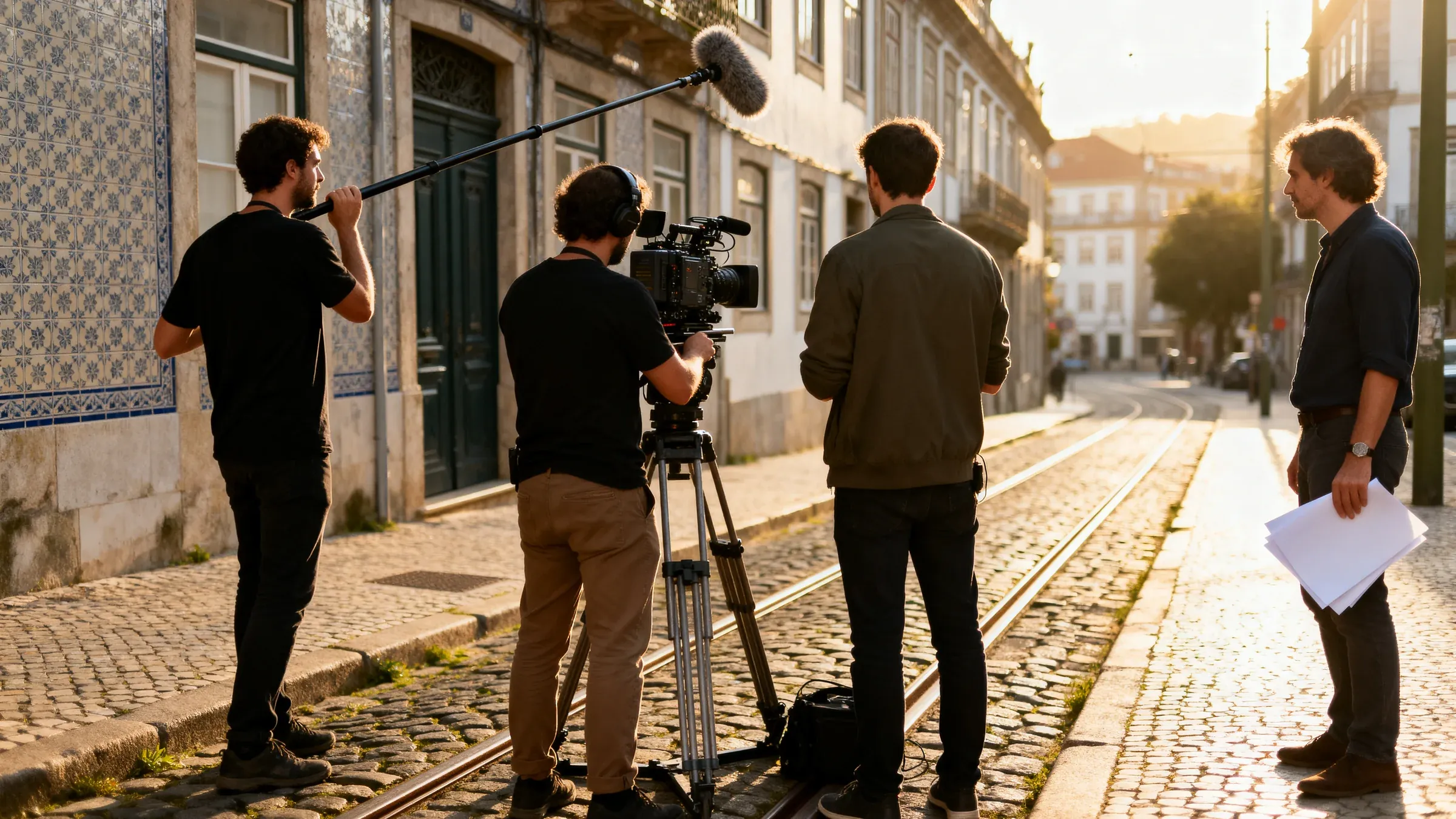
A video production company in Europe takes a business video from idea to finished film: concept, script, planning, filming or animation, editing, sound, subtitles and versions for each channel. Choose one by matching its style and formats to your goal, checking how it plans and manages a shoot, and agreeing in writing on rights, revisions and the versions you will receive. This guide explains what a video production company does, the types you will meet, how to compare them across European markets and the questions to ask before signing.
Last updated: 9 November 2026.
What does a video production company do?
A video production company is a business that plans and makes films for brands, products, campaigns, training and internal communication. Its work is usually divided into three phases.
- Pre-production: brief, concept, script, storyboard, casting, locations, crew, schedule, permits and a production plan.
- Production: the shoot itself, or the animation and motion design work if the film is not filmed.
- Post-production: editing, colour grading, sound design, music, voice-over, graphics, subtitles and exporting versions for each channel.
The best companies also help before the brief and after delivery: deciding which films you actually need, and how each will be used on your website, social channels, adverts and presentations.
At Odduel, a creative and technology agency in Barcelona and São Paulo, our video and content production service plans films together with the brand, the website and the campaigns they will live in, so each cut is made for the place it will be seen.
In short: a video production company handles pre-production, production and post-production of business films. Choose one whose work matches your goal and style, that plans thoroughly before filming, and that puts rights, revisions, versions, subtitles and accessibility in writing before the first day of the shoot.
What types of video production company are there?
“Video production company” covers very different businesses. Knowing which type you need saves time.
| Type | Strengths | Best suited to |
|---|---|---|
| Commercial production house | Large crews, high-end shoots, broadcast advertising | Television and major brand campaigns |
| Corporate video studio | Interviews, events, training and internal films | Steady volume of practical films |
| Animation and motion studio | Explainers, product animation, motion graphics | Abstract products, software, complex ideas |
| Social content studio | Fast, vertical, high-volume short films | Social channels and creator-style content |
| Creative agency with production | Concept, brand, film and channel use planned together | Brands that want film tied to a wider campaign or website |
| Freelance filmmaker | Direct, flexible, often economical | Smaller shoots with a clear brief |
Many projects combine types: an agency develops the idea and works with a production house or freelance crew for a larger shoot.
Which videos do businesses usually commission?
Most business films fall into a handful of formats. Being clear about format makes proposals comparable.
- Brand film: who you are and why it matters, for your website and launches.
- Product video: how a product looks and works, for product pages and adverts.
- Explainer: a short film, often animated, that makes a service or idea easy to grasp. Our guide to the explainer video covers formats, script and length.
- Social cuts: short vertical films for social platforms, often from the same shoot.
- Customer story: a real client explaining a result in their own words, with their permission.
- Recruitment and culture film: life at the company for candidates.
- Training and internal film: onboarding, safety and process videos.
One well-planned shoot can provide material for several formats. Ask companies how they plan a shoot to cover all the cuts you need.
How do you choose a video production company in Europe?
Choosing a video production company in Europe adds a few questions to the usual ones: where the shoot will happen, which languages the films need, and how subtitles, voice-overs and local versions will be handled. A simple process keeps the decision clear.
- Write a brief. Goal, audience, formats, channels, languages, deadline, any brand guidelines and the budget range you can work with.
- Short-list three companies whose past films are close to what you need in style and format, not only in polish.
- Ask each for a treatment. A short document with the idea, the approach, the look and the production plan.
- Meet the director or producer who will lead your project.
- Check references about planning, communication on shoot days and how revisions were handled.
- Compare proposals on the same criteria.
| Criterion | Good sign | Warning sign |
|---|---|---|
| Relevant work | Films close to your goal, format and audience | Only showreels with no context |
| Ideas | A treatment that answers your brief | Generic ideas reused from other clients |
| Planning | Clear pre-production steps, schedule and responsibilities | Planning left to the week of the shoot |
| Versions | Formats, lengths and aspect ratios listed | “Final video” with no detail |
| Languages | Subtitles, voice-over and local versions planned | Translation treated as your problem |
| Rights | Music, footage, talent and usage rights in writing | Stock music with unclear licences |
| Revisions | Number of rounds and what counts as a change | Unlimited promises or no mention at all |
Should the company be local to the shoot?
Not necessarily, but someone on the team must know the location. Permits, crew, studios and weather vary by city and country. A company based elsewhere can work well with local crew; ask who they will work with and how they manage the shoot.
Why do subtitles and captions matter?
Many people watch business video with the sound off, especially on social platforms, and people who are deaf or hard of hearing rely on captions. Captions are part of web accessibility guidance; the W3C explains the requirement for captions on prerecorded video. Ask for burned-in subtitles for social cuts and caption files for your website player, in every language you need.
Which questions should you ask before signing?
- Who will direct and produce our film, and will they be on set?
- What will pre-production include, and how much will we be involved?
- Which versions will we receive: lengths, aspect ratios, subtitled and clean versions?
- How are music, footage, talent and location rights handled, and for how long and where can we use the film?
- How many rounds of revisions are included, and what counts as a new request?
- How will subtitles, voice-overs and local language versions be produced and checked?
- Who owns the raw footage and project files, and can we have them?
- What happens if filming is delayed by weather, illness or access problems?
- How will the film be optimised for our website and each social channel?
Clear answers to these questions avoid most of the disputes that arise after delivery.
What affects the cost of video production?
Cost is driven by choices made before the camera rolls. The largest shares usually come from shooting days (crew, equipment, locations), followed by post-production (editing, grading, sound, graphics); talent, travel, music licences and language versions add to it. Animation shifts cost from shooting to design and motion time.
Our guide to video production cost explains each cost line and how to read a quote. When comparing proposals, check that each covers the same formats, versions, revisions and usage rights, and that a fixed quote follows a short brief rather than a single phone call.
How do you make sure the video gets results?
A film earns its cost when it is used well. Plan its use before production:
- Where will it live? Website pages, product pages, adverts, social channels, sales presentations.
- What should viewers do next? A clear next step on the page around the video.
- How will you measure it? Views and completion rates, clicks to the next step, enquiries or sales from pages with video.
- How will it load? Compressed files, a poster image and lazy loading so the video does not slow the page.
A strong film on a slow, cluttered page loses much of its effect. Working with a partner that also handles the website or campaigns avoids that gap.
Questions people ask
What does a video production company do?
A video production company plans and makes films for businesses. It handles pre-production (brief, concept, script, storyboard, crew, locations, schedule), production (filming or animation) and post-production (editing, colour, sound, music, graphics, subtitles and versions for each channel), and often advises on how each film should be used.
How do you choose a video production company in Europe?
Write a brief with goal, formats, channels and languages, then short-list three companies with relevant films and ask each for a treatment. Meet the director or producer, check references, and compare planning, versions, language handling, rights and revision terms on the same criteria before choosing.
Which questions should you ask a video production company before signing?
Ask who will direct and produce, what pre-production includes, which versions and formats you will receive, how music, footage and talent rights are handled, how many revisions are included, how subtitles and language versions are produced, who owns raw footage and how delays are managed.
Is animation or live action better for business video?
Live action builds trust by showing real people, places and products. Animation suits abstract services, software and complex processes, and is easier to update or translate later. Many businesses combine both. Choose based on what the viewer must understand and which channels the film will appear on.
How long does a business video take to produce?
A short, simple film may take a few weeks from brief to delivery; a larger shoot with several locations, talent and many versions takes longer. Pre-production often takes as long as filming and editing combined. Ask for a schedule that shows each phase, review points and the delivery date.
Start with a brief that names the goal, the formats and the channels each film will serve. If you want films planned together with your brand, website and campaigns, read more about our video and content production service or tell us about your project.