
A Shopify agency in Europe designs, builds and improves Shopify stores for brands selling to European customers, handling the theme, apps, payments, taxes, languages and markets that a cross-border online store needs. The right agency is chosen on proof of comparable Shopify stores, clear answers about apps and custom code, and terms that leave you owning the store and everything in it. This guide explains what a Shopify agency does, what to expect at each stage and the questions to ask before you sign.
Last updated: 8 November 2026.
What does a Shopify agency do?
A Shopify agency is a studio that specialises in building and running online stores on Shopify. Its work goes well beyond picking a theme. A typical engagement covers:
- Discovery: products, customers, markets, sales channels and the systems the store must connect to.
- Design: the brand expressed in a store layout, product pages, collection pages, basket and checkout extensions.
- Theme development: either adapting a ready-made theme or writing a custom theme in Shopify’s template language.
- Apps and integrations: choosing apps carefully and connecting the store to stock, accounting, shipping, email and customer service tools.
- International set-up: languages, currencies, domains, duties and taxes using Shopify Markets.
- Migration: moving products, customers, orders and redirects from another platform.
- Launch and growth: testing, launch, speed work, conversion improvements and ongoing support.
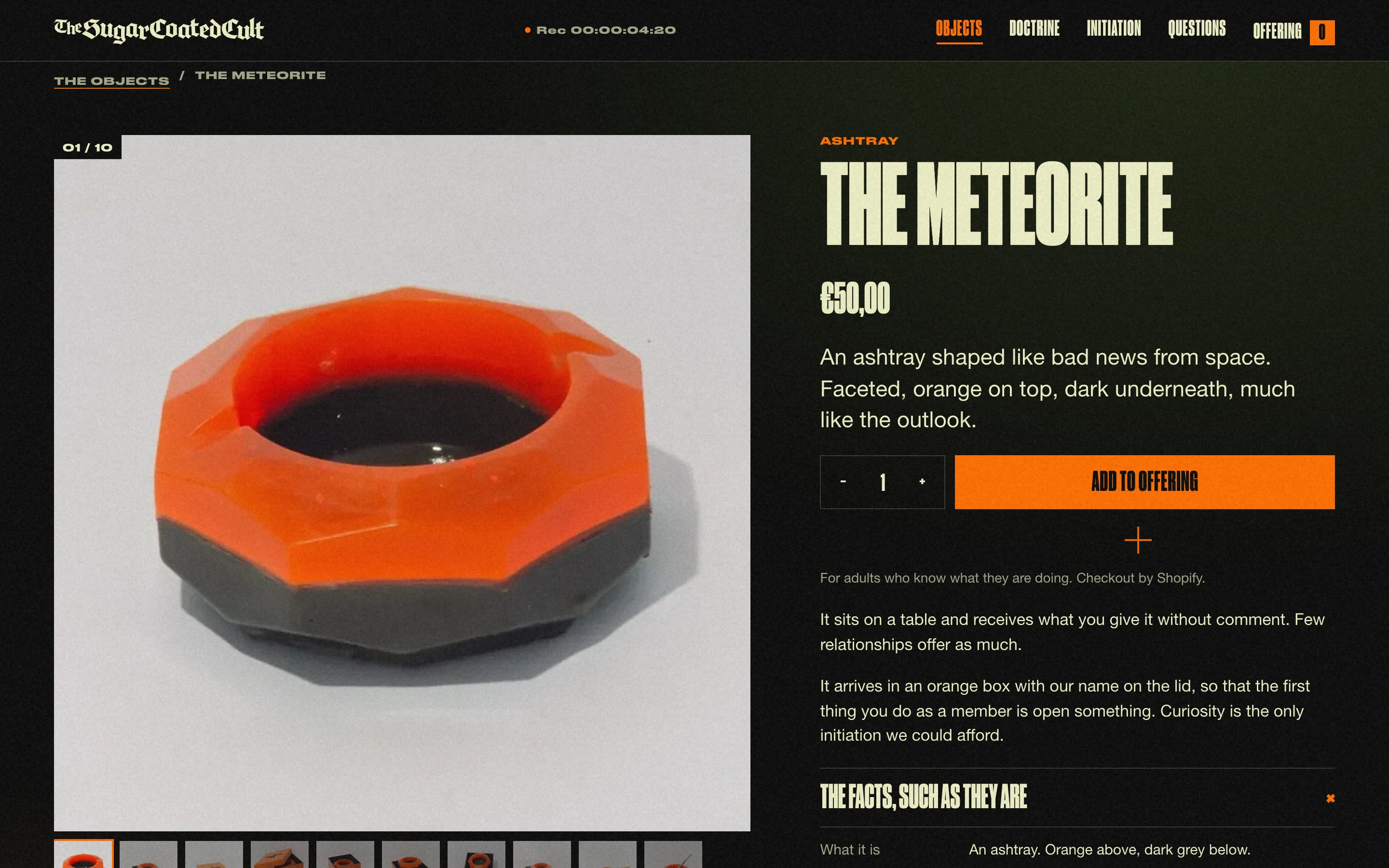
At Odduel, a creative and technology agency in Barcelona and São Paulo, Shopify work sits within our e-commerce service. For The Sugar Coated Cult we built the brand and a Shopify store on a theme written from scratch, with no app installed.
In short: a Shopify agency plans, designs, builds and grows your Shopify store, including the international settings European sellers need. Choose one with live stores you can test, a careful approach to apps, written answers on ownership and support, and a team that can explain trade-offs in plain words.
When does a brand need a Shopify agency?
Shopify is designed so that a merchant can start alone, and many do. An agency adds value when the store has to do more than a standard theme allows, or when mistakes would be costly.
- A new brand that wants to stand out: a custom design instead of a recognisable theme.
- A move from another platform: products, customers, order history and search rankings must survive.
- Selling across Europe: several languages, currencies, VAT settings and shipping zones.
- Growth that strains the set-up: too many apps, slow pages, manual stock updates.
- Wholesale or complex catalogues: price lists, bundles, subscriptions or configurable products.
If you sell a handful of products in one country and a well-chosen theme fits your brand, you may only need a few days of help with set-up rather than a full project.
What types of Shopify agency are there?
Shopify agencies vary in size and focus. The type matters more than the label.
| Type | Strengths | Watch for |
|---|---|---|
| Theme customiser | Fast and economical set-up on an existing theme | Limits when the brand needs a distinct experience |
| Custom theme studio | Distinct design, clean code, fast pages | Longer timelines; check how you edit content afterwards |
| Platform specialist for large merchants | Complex catalogues, Shopify Plus, integrations with business systems | Processes designed for large budgets |
| Full-service creative agency | Brand, store, content and marketing planned together | Check depth of Shopify development, not only design |
| Freelancer | Direct contact, flexible | Cover for holidays, illness and growth |
Shopify keeps a Partner Directory of agencies and developers. A listing shows that a business works with Shopify; it does not replace your own checks of work and references.
What should you expect from a Shopify project?
A well-run Shopify project follows clear stages. Timelines depend on scope, but the order rarely changes.
- Discovery and brief: goals, catalogue, markets, integrations and must-have features written down and agreed.
- Architecture: how collections, product types, variants, metafields and navigation will be organised.
- Design: key templates first (home, collection, product, basket), then the rest, on desktop and phone.
- Build: theme development, app selection, integrations and content entry.
- Migration and redirects: data import, testing and a redirect map from old addresses to new ones.
- Testing: orders, payments, taxes, emails, languages, speed and accessibility checks.
- Launch: domain switch, final checks and close watching during the first weeks.
- Handover and support: training on editing content, documentation and an agreed support plan.
Our guide on how to choose an e-commerce agency covers the platform-neutral side of this process; this article focuses on what is specific to Shopify. For larger merchants weighing platforms, see Shopify Plus vs Adobe Commerce.
How should a Shopify store handle selling across Europe?
Selling across Europe on Shopify mostly runs through Shopify Markets, which lets one store serve several countries with their own languages, currencies, prices and domains or subfolders, as described in Shopify’s Markets documentation. An agency should help you decide:
- Languages: which markets need a translated store, and who writes and checks each translation.
- Currencies and prices: whether prices are converted automatically or set per market.
- Domains: country domains or subfolders, and how this affects search visibility.
- Taxes: how VAT is shown and charged; your accountant should confirm your obligations.
- Shipping and returns: zones, rates, carriers and a returns process per country.
- Payments: the local payment methods customers in each country expect.
- Legal pages: terms, privacy and returns information adapted for each market.
Ask the agency which of these it handles, which it expects you or your advisers to decide, and how it tests each market before launch.
How do you choose a Shopify agency in Europe?
Choosing a Shopify agency in Europe should take a few weeks, not months. A simple sequence works:
- Write a brief with your catalogue size, markets, integrations, launch date and what success looks like.
- Short-list three agencies whose live stores are close to yours in catalogue, market or complexity.
- Test their live stores on your phone. Search, filter, add to basket, check speed and read the checkout flow.
- Ask for a written proposal with scope, timeline, team, approach to apps and support terms.
- Speak to a reference client about launch, communication and what happened after go-live.
- Score each agency on the same criteria.
| Criterion | Good sign | Warning sign |
|---|---|---|
| Live work | Stores you can open and test, similar to yours | Only mock-ups or screenshots |
| Apps | Each app justified, total kept small | A long list of apps by default |
| Code quality | Custom work explained, theme kept updatable | Edits that block theme updates |
| Content editing | You can change pages and sections without a developer | Every change needs a ticket |
| International set-up | Clear plan for languages, currencies, taxes and payments | “We just add a translation app” |
| Ownership | Store, theme, apps and data in your account | Store held in the agency’s account |
| Support | Defined response times and a monthly plan | Ad hoc help with no terms |
Which questions should you ask before signing?
- Which live Shopify stores have you built that are closest to ours, and what was your part?
- Will you adapt a theme or write a custom one, and why for our case?
- Which apps do you expect us to need, and what will each cost us monthly?
- How will our team edit content after launch?
- How will you handle languages, currencies, VAT display and payments for our markets?
- What is your plan for moving our products, customers and redirects from the current platform?
- How do you test speed and accessibility before launch?
- Will the store, theme files and all accounts be in our name from day one?
- What does support look like after launch, and how are changes priced?
How much does a Shopify agency charge?
Cost depends on scope more than on the platform. The largest share usually goes to design and theme development, followed by integrations and migration; content entry and translations can be significant for large catalogues and several languages. Monthly costs come on top: the Shopify plan, paid apps, payment fees and support.
When comparing proposals, check that each one covers the same scope, lists app subscriptions separately and states what is excluded. A fixed quote is only possible once a short brief has settled the catalogue, markets and integrations. If one agency’s proposal is much lower, find out what it leaves out.
Questions people ask
What does a Shopify agency do?
A Shopify agency plans, designs and builds Shopify stores. Its work includes discovery, store design, theme development, choosing and configuring apps, integrations with stock and accounting systems, international set-up through Shopify Markets, migration from other platforms, launch, and ongoing support, speed work and improvements once the store is live.
How do you choose a Shopify agency in Europe?
Write a brief, short-list three agencies with comparable live stores and test those stores yourself on a phone. Ask for written proposals covering scope, apps, content editing, international set-up and support, speak to a reference client, and confirm that the store and every account will be in your name.
Which questions should you ask a Shopify agency before signing?
Ask which comparable stores they built, whether they will adapt or write a theme, which apps they expect and their monthly cost, how you will edit content, how languages, currencies and VAT will be handled, how migration works, how speed is tested and who owns the store and accounts.
Do I need a custom Shopify theme?
Not always. A well-chosen theme, adapted with care, suits many brands and launches faster. A custom theme makes sense when the brand needs a distinct experience, when performance matters greatly or when the catalogue needs layouts no theme provides. Ask the agency to explain the trade-off for your specific case.
Can one Shopify store sell to several European countries?
Yes. Shopify Markets lets one store serve several countries with their own languages, currencies, prices, domains or subfolders, and shipping settings. Taxes, payment methods, legal pages and translations still need planning for each market, so ask your agency and your accountant how each country will be handled.
Start by writing down your catalogue, markets and integrations; that brief makes every proposal comparable. If you want a Shopify store designed and built around your brand, read more about our e-commerce service or talk to us about your store.