SEO friendly URLs are short, lowercase, readable addresses that say what a page is about before anyone opens it: /services/branding/ rather than /index.php?p=4821. The slug, the last part of the address, is chosen in a minute and then lives for years: it appears in search results, in shared links, in analytics and in every bookmark, and once a page is live it should rarely change. This guide sets out what makes a good slug, how addresses work on a multilingual site, how to change one without losing what it has earned, and the settings to check in your CMS before the first page goes out.
Last updated: 30 October 2026.
Why does the address matter?
Search engines can rank a page with an ugly address, so a clean slug is not a switch that lifts a page by itself. Its effect is quieter and longer. A readable address is easier to click in a results page, easier to paste into a message and easier to remember. Inside a company it keeps the structure of the site legible.
The lasting part is the other half. An address collects links from other sites, bookmarks, search history and the trust that search engines attach to a page over time. Keep the address and that value keeps growing; change it carelessly and most of it is left behind. That is why the slug deserves a moment of attention at the start and a rule for everyone who publishes after that.
What makes SEO friendly URLs work?
A good slug is accurate, short and easy to read aloud. In practice:
- Lowercase, with words separated by hyphens: website-redesign-cost. Google’s own guidance on URL structure recommends hyphens rather than underscores.
- Short: three to five words is usually enough. A slug is not the title.
- Descriptive: it carries the main keyword of the page, in the words a visitor would use.
- Stable: no dates, version numbers or campaign names unless the page really is tied to them.
- Clean: no stop words that add nothing, no capitals, no accents, no file extensions, no tracking parameters.
| Weaker | Stronger |
|---|---|
| /blog/2026/11/27/our-thoughts-on-the-importance-of-urls/ | /insights/seo-friendly-urls/ |
| /page?id=482 | /services/e-commerce/ |
| /Services/Web_Design/ | /services/web-design/ |
The permalink structure around the slug matters just as much. Group pages in a shallow hierarchy that mirrors the navigation (/services/…, /portfolio/…, /insights/…) and keep it to two or three levels. A visitor who deletes the last part of an address should land somewhere sensible.
Where the slug is decided
The slug is decided when a page is planned, not when it is published. On our own projects the site map, the addresses of every page type and the rules for new ones are agreed before design starts, because they shape the navigation, the internal links and the content model at once. It is one of the small structural decisions that cost nothing early and a great deal later; our guide to how much a website costs shows how they add up. Where production is carried by AI, as it is in our website development work, the address rules are written into the build from the first component, so no page ever ships with an address nobody chose.
Should slugs be translated?
On a multilingual site, each language should have its own addresses, and the slug itself should be translated, not just prefixed. A French reader should find /fr/services/creation-site-web/, not /fr/services/website-development/. On odduel.com the same service page answers at /services/website-development/ in English and /de/leistungen/webdesign/ in German: one page, one address per language, each in the words that language searches with.
Translated slugs help in three ways:
- Relevance: the address carries the keyword in the reader’s language, which is what they typed.
- Trust: an address in your own language says the page was made for you, not translated as an afterthought.
- Clarity in results and shares: people read the link before they click it, in search results and in messages.
The practical rules:
- Keep one map of slugs per language, so every page has exactly one address in each, and the map is the only place a translated slug is defined.
- Research the keyword in each language rather than translating the English slug word for word. The German word for a service is not always a translation of the English one.
- Write accents and special letters out the way the language’s readers expect (German “ü” as “ue”, for example), and never leave an encoded character in an address.
- Link the language versions with hreflang annotations, including a default, so search engines show the right version to the right reader.
- Redirect an English slug under a language prefix to its translated address in one step, so a guessed link still arrives.

How do you change slugs safely?
The best time to choose a slug is before publishing. Once a page is live, its address collects external links, bookmarks and search history, and a change without care throws that away. Sometimes a change is still right: a service was renamed, a section was restructured, a slug was left as a forty-word title. Then the order of work is this:
- Decide the new slug and check that nothing else uses it, in any language.
- Set a permanent (301) redirect from the old address to the new one, directly, never through a chain of earlier redirects.
- Update internal links so they point straight to the new address rather than through the redirect.
- Check every language version, so each translated address redirects to its own new one.
- Update the sitemap and ask Google Search Console to crawl the new address.
- Watch the 404 log for a few weeks and add redirects for anything you missed.
On odduel.com a renamed address gets its 301 the moment it is renamed, and the retired slug keeps answering, in one step and in every language, for as long as anything might still link to it. A website redesign is where most addresses are lost: a new structure, a new CMS, a new team, and a thousand old links pointing at pages that no longer exist. The redirect map belongs in the redesign plan, not in the week after launch.
Which CMS settings should you check?
Most content management systems can produce clean addresses; few do it by default. Check these settings before the first page is published, and if you are still choosing a system, our guide to choosing a CMS covers what else to look at.
- Permalink format: the page or post name, never numeric ids or dates in the path.
- Automatic slugs: most systems make the slug from the title at the first save. Edit it before publishing; a title is often longer than a slug should be, and a draft title can stick.
- Category and tag bases: decide whether archive addresses carry a base (/insights/category/seo/) and keep it consistent across the site.
- Trailing slashes and case: pick one form and redirect the other to it, so a page has one address rather than two or four.
- Pagination and parameters: filtered, sorted and paginated addresses must not become duplicate pages in search; a canonical link and noindex on the later pages take care of it.
- Duplicates with suffixes: a draft or a deleted page in the bin can hold a slug, so the next page gets -2. Empty the bin before you give a new page its address.
On WordPress a good SEO plugin creates a redirect by itself when a slug changes and keeps a log of addresses that answer 404. On other systems the redirects live in a configuration file or at the server, which is fine as long as one person owns the file and it is reviewed before each release.
What do good slugs look like on real pages?
A few cases from our own work and the questions clients bring us:
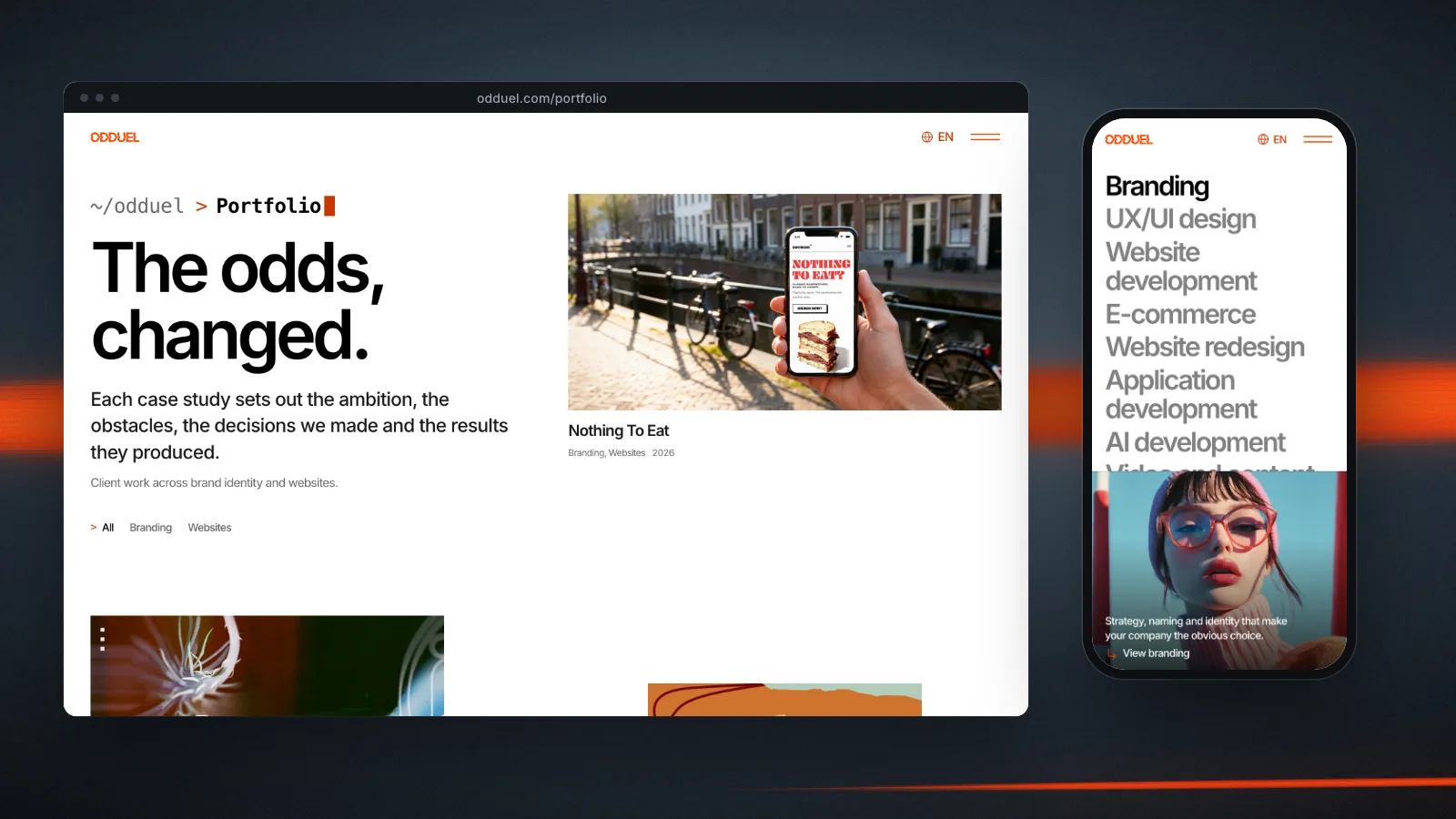
- A case study sits at /portfolio/rainbow-conspiracy/: the client’s name, inside the section it belongs to, readable at a glance. That record of branding for an electronic music label keeps the address it was published at.
- An article titled “URL slugs: small detail, lasting effect” lives at /insights/seo-friendly-urls/: the keyword, not the title, and no date in the path, so the guide does not look old the moment the year changes.
- A renamed service: when a section called “Work” became “Portfolio”, every old address under /work/… was given a one-step 301 to its new place under /portfolio/…, in every language, before the new section went live.
- A service page in several languages: one page, one translated address per language, linked by hreflang, so a search in German lands on the German address and a share in French reads as French.
For the wider picture of where addresses sit among everything else that decides a ranking, read our SEO guide for 2027.
What are the common slug mistakes?
A few mistakes appear on almost every site we are asked to look at:
- Slugs left as the full title, stop words, punctuation and all.
- Dates in evergreen content, which age a guide every January.
- Mixed case or underscores, which can make two addresses for one page.
- Changes without redirects, often made by a well-meaning editor tidying a title.
- Untranslated slugs under a language prefix, which tell a reader the translation was an afterthought.
Most of these are prevented by a short rule written into the editorial guidelines (lowercase, hyphens, three to five words, keyword first, no dates) and a check of the address before each page is published. It takes a minute, and it is the minute that lasts.
Questions people ask
Does changing a URL hurt SEO?
It can, if the old address is left to answer 404. A permanent redirect from the old address to the new one passes most of the value across, and updating internal links finishes the job. An unredirected change loses the links and the history for good.
Should a URL contain the keyword?
Yes, where it reads naturally. The keyword in the slug is a small ranking signal and a larger readability one: it tells a person in the results page what they will find. Do not force a second keyword in or repeat the category: /insights/seo-friendly-urls/ is enough, /insights/seo/seo-friendly-urls-seo-guide/ is not.
Hyphens or underscores in URLs?
Hyphens. Google reads a hyphen as a space between words and an underscore as a join, so web-design is two words and web_design is one. A hyphenated address is also easier to read aloud.
How long should a URL slug be?
Three to five words is a good rule, and under about sixty characters for the whole path. Long enough to say what the page is, short enough to read in a results page and type from memory. Drop stop words unless the sense depends on them.
Do translated slugs matter for a multilingual site?
Yes. A translated slug carries the keyword in the reader’s language, reads as made for them and makes the shared link understandable. Pair each language version with hreflang annotations so search engines serve the right address to the right reader, and keep one map of slugs per language so nothing is translated twice.
Addresses are one of many details that decide how a site performs in search, and they are among the cheapest to get right. If you want them, and the rest of the technical base, planned and built properly, see our digital marketing service, or talk to us about your project.